‘Sinners’ in the LGBTQIA+ Lens, Part 2: Protection of Youth
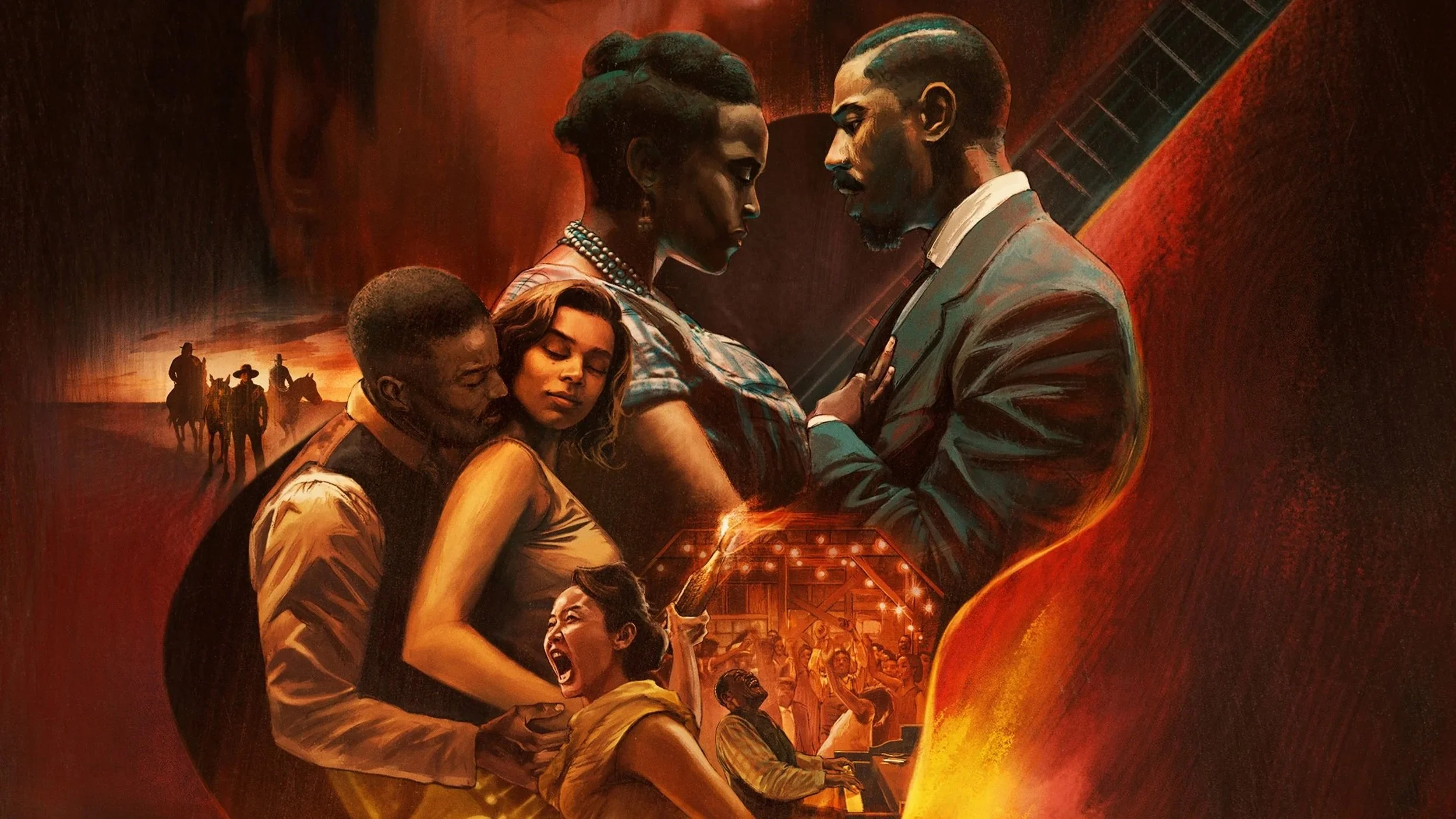
Illustrated ensemble of adult characters in Sinners within Sammie’s outlined guitar
Courtesy Sinners social media kit
Parker Dean (PD): My favorite scene in Sinners, hands-down, is Sammie’s (Miles Caton) rendition of “I Lied to You,” an original song co-written by Raphael Saadiq and Ludwig Göransson. This scene is immensely powerful, combining the raw vocals from Caton, entrancing lyrics, and some of the most divine camera and character work I’ve ever seen. The spectacle unites past and present, with our main character Sammie at the helm, showing the power of R&B and the history of Black music. It also serves as a turning point in the movie, as the vampires catch wind of Sammie’s magic in the distance and close in shortly after.
Raegan Ballard-Gennrich (RBG): With Sammie, one of the most notable themes in Sinners—the protection of youth—is carried through the film.
Before the night begins we learn that the Smoke/Stack twins have a dangerous reputation. This reputation has been carefully cultivated and maintained by the twins, but its foundation rests on the rumor that the twins murdered their father. The audience later learns alongside Sammie, who considers himself “old enough” now to learn the truth, that Smoke (Elijah) alone is responsible, after watching their father beat Stack (Elias) unconscious. This provides more context to the earlier scene of Smoke asking if Sammie’s father beat on him or his younger siblings when he first got in the car.
We also see friendly interactions of Smoke with the girl that watches his truck, a moment that indicates acknowledgement of her innocence as well as belief in her competence. He appreciates her hesitance to approach a grown man offering money from his car and upon confirming that she can tell time, teaches her to advocate for herself and her worth. This is a lesson that Black girls are rarely afforded and showcases the impact of community protection and aid—she can help him, and he can fairly compensate her without abuse. Smoke also takes the time to acknowledge Lisa while in the shop waiting to speak with her parents.
Stack engages in a different approach to mentoring for Sammie when they are out running errands. He respects that Sammie is becoming a man and speaks to him as one, providing frank advice for pleasuring a woman.
Sammie’s father is also visibly concerned about his son’s safety, though his approach is more tailored to the preservation of his immortal soul. He associates Sammie’s desire to play blues on (what we eventually learn is) his dead(beat) brother’s guitar as the gateway to the corruption of a man’s spirit. While well-intended, Sammie’s father accurately fears the danger playing music puts Sammie in, but is less accurate on the solution. He doesn’t see the joy it brings Sammie, or the gift; he only sees the mistakes of his brother and others like him, and encourages his son to deny every instinct. This is akin to the same self-denial that colonizer/imperialistic nations engaged in while weaponizing and reinforcing Christianity on the countries and cultures they sought to oppress.
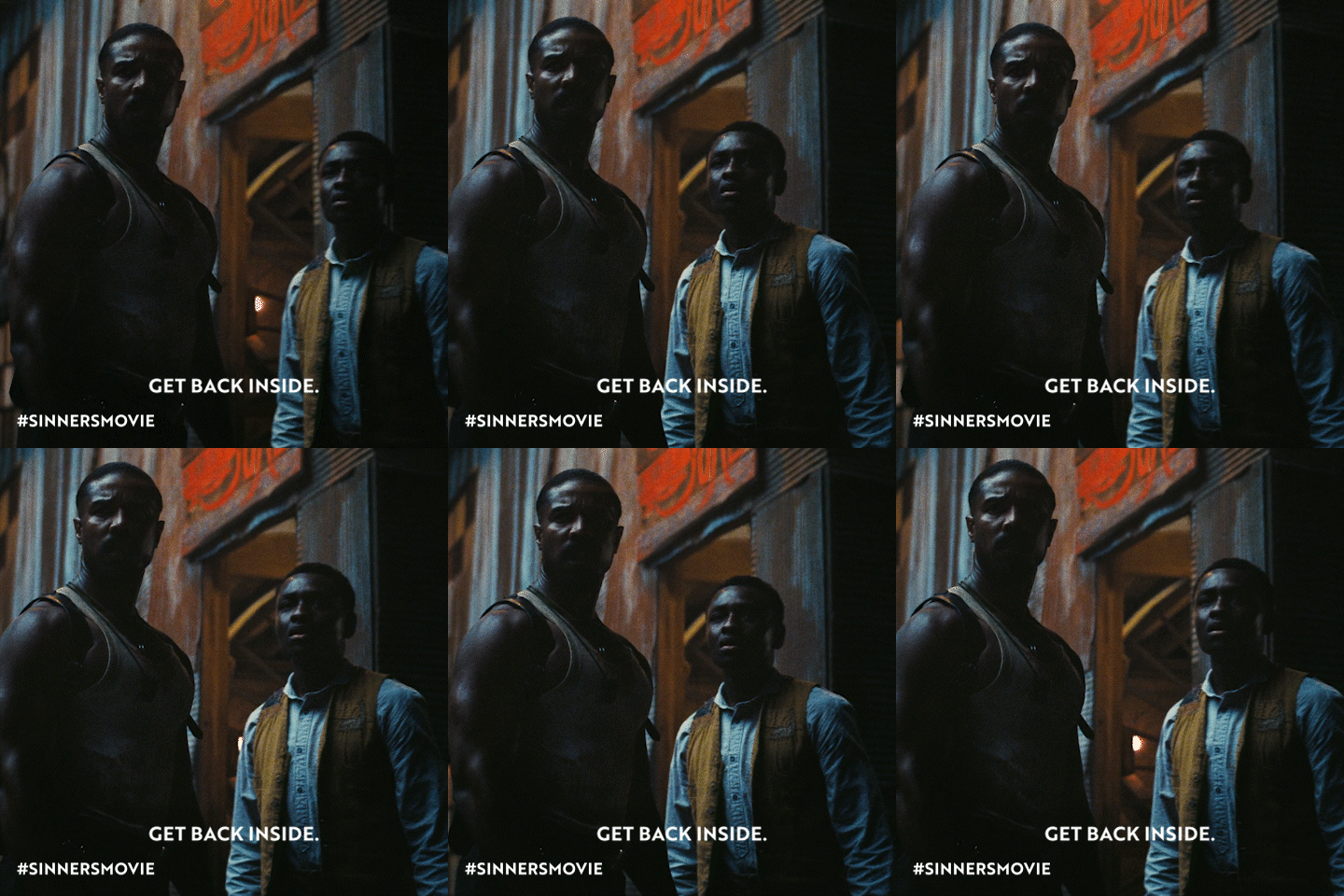
Smoke tells Sammie to “Get back inside”
Courtesy Sinners social media kit
PD: Something that I haven’t seen talked about often in articles and reviews of the film is just how much parental love (or lack thereof) guides the story. Sammie’s aforementioned father is concerned that his son will follow in the footsteps of his brother. Grace and Bo leave their daughter, Lisa, at home to protect her. Smoke and Stack live under the rumors about their murdered father. Smoke was nearly a father himself to a baby lost during pregnancy and we see him mourn. Parental love is a big factor in this movie, furthering the theme of protecting—or failing to protect—the youth.
RBG: Throughout the night, everyone who isn’t turned into vampires sets about protecting Sammie, who on top of being the youngest, has also demonstrated a powerful gift that Remmick seeks to exploit, destroy, or else assimilate into his family’s hivemind. The only obstacle to keeping Sammie safely inside becomes Grace, who ruins their last line of defense with the hysterical “Come on in ya mutherfucka!”
Now this is what makes the element of the protection of youth particularly interesting. Grace, Bo, and by extension Lisa serve to embody both the Chinese presence in the Mississippi Delta at this time and an obstacle to advancement that the Black community has faced (and continues to face) with various other marginalized communities that have a seemingly easier time navigating white spaces. By hinging their advancement through society on acceptance from the communities that believe in white supremacy, they exclusively engage with Black people for economic gain, and a social separation is to be expected.
I agree that Sinners brings this conversation to light, but it also has nuance. Grace, having lost Bo, is the only one of the survivors that has a child to protect outside of the juke joint. Lisa is threatened by Bo (while under Remmick’s influence) and then again directly by Remmick in Grace’s native language. He also uses the intimate knowledge from Bo’s memories to sexually harass Grace, hoping to inspire a reaction spurred by fear and rage. Within the group, everyone has prioritized Sammie’s safety, but Grace is the only one who believes that—should they continue to hunker down—Remmick will go after Lisa and quite possibly the entire town.
After inviting the vampires in, Grace dies while completing her one objective: protecting her daughter from a monster with the face of her father. This act shifts the conversation from protecting Sammie to marginalized communities’ need to protect their youth, and highlights the moments in which these similar goals can be so at odds with one another.
PD: The ending of Sinners also brings the protection of youth to the forefront. At the very end of the movie we find Sammie, all grown up and famous for his music. This is the youth that has survived the systemic, historical, and magical threats faced by the Black community in the Deep South. This is the fruit of the labors made by everyone in the juke joint that night to protect Sammie. He is living a good life, has made it to old age, and made a name for himself and his community.
When the vampire versions of Mary and Stack find Sammie, we learn that they promised not to hurt him and to leave him alone, waiting until the final moments of his life to reappear to him. They kept their promise to protect the youth.
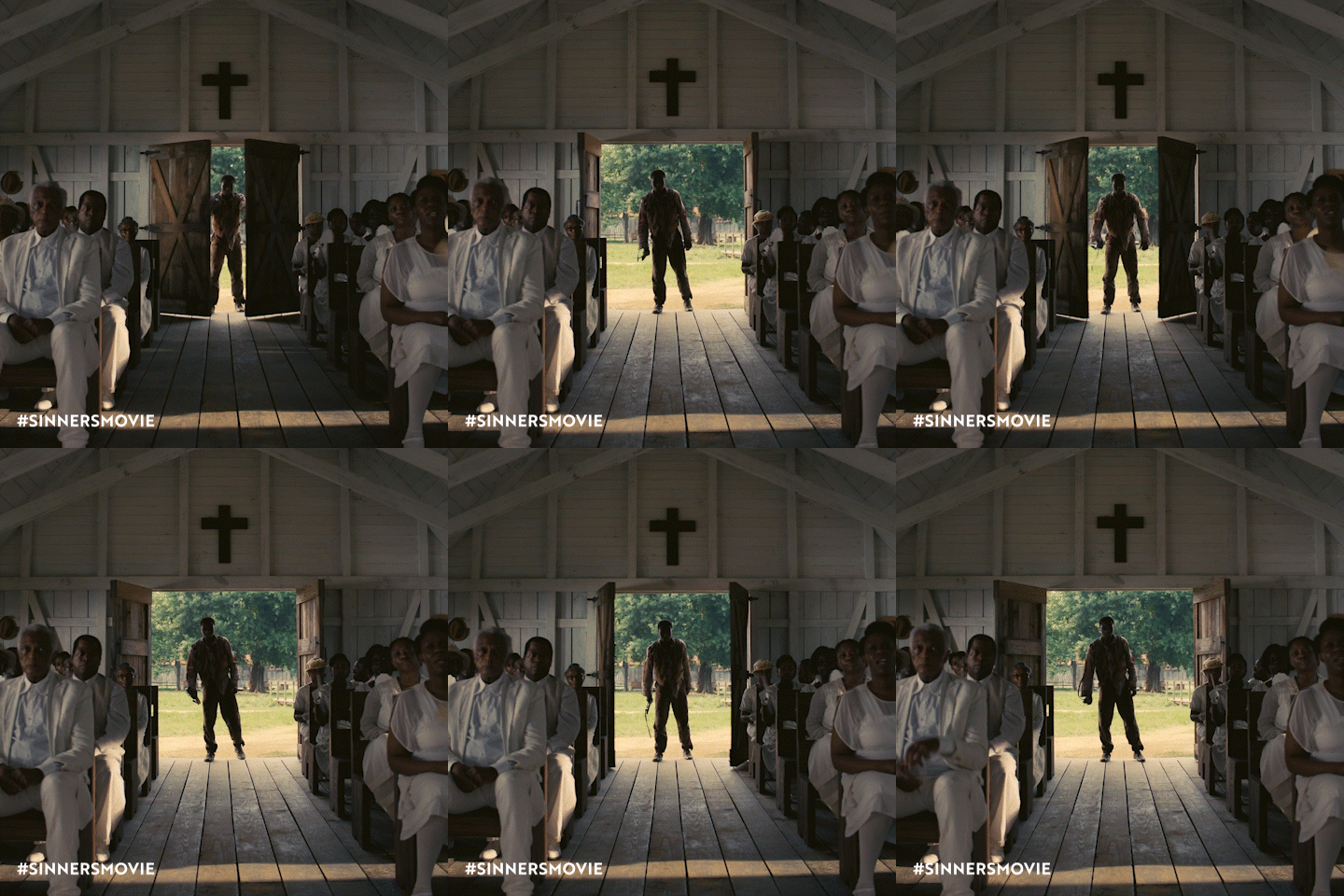
Sammie throws open the doors to his father’s church
Courtesy Sinners social media kit
The movie finishes with Sammie asking if they remember that night in the juke joint and how, for just a moment, that it was the best night of their lives. I think this highlights how young Sammie was. It was his first night of partying, likely one of his first sexual encounters, and one of the first times he so openly disobeyed his father’s commands (shout out to my QT folks also recovering from purity culture!). He was the epitome of youth—naïve, magical, and deeply cherished by his elders.
PD: We are reminded of the messages we see today from the far right—namely from the anti-LGBTQIA+ crowd. Routinely, they tell us we need to “protect the children.” Except, of course, when those children happen to be LGBTQIA+ themselves, BIPOC, or poor. It’s a common narrative conservatives use in policymaking.
This is so unlike the message of Sinners. In Sinners, parental love and hope for the youths of the community is vital, and in our own very real lives, LGBTQIA+ and BIPOC communities protect the children in much more sustainable and responsible ways than the far right would have us believe. Consider The Trevor Project, Lambert House, and BIPOC Support Foundation to name a few. These organizations work tirelessly to uplift and protect the lives of Queer, Trans, and BIPOC youth.
Protecting youth is of course a noble cause. But marginalized folks should always be cautious of how the narrative is used and by whom. Sinners shows us this.