‘Sinners’ in the LGBTQIA+ Lens, Part 1: The Grift
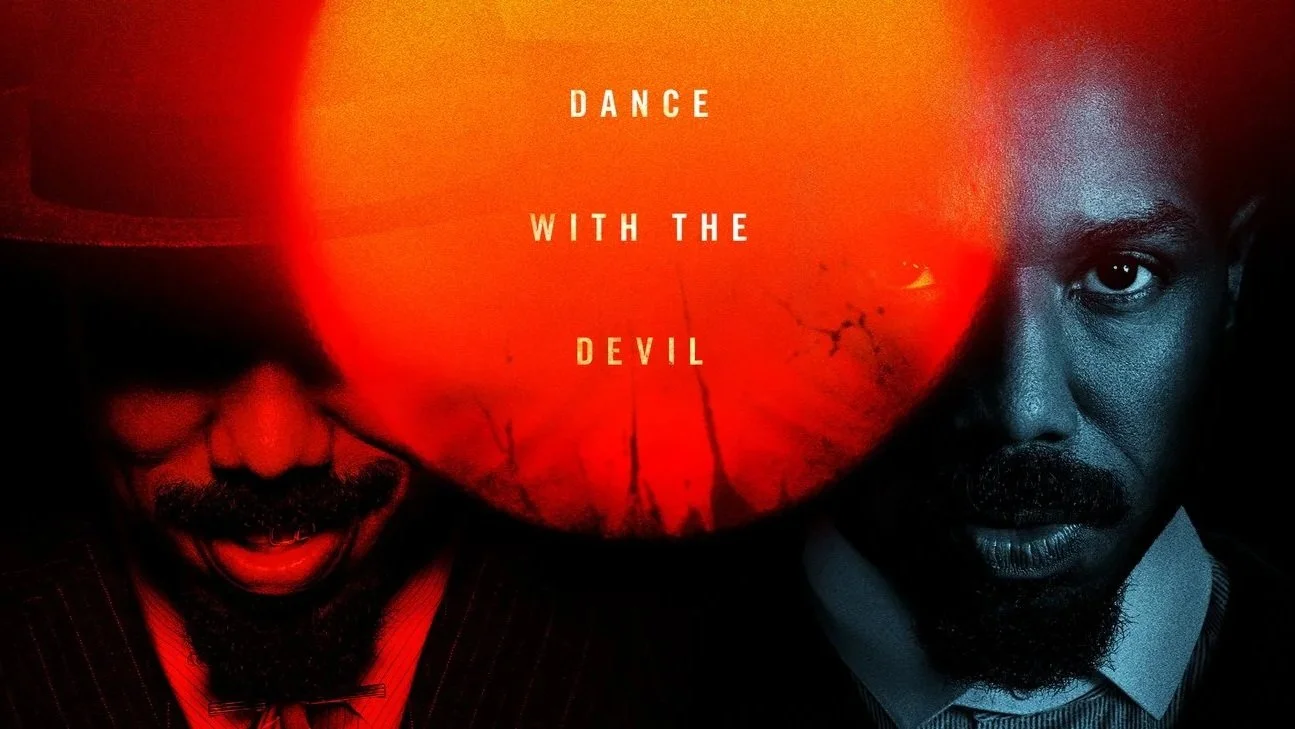
Stack (L) and Smoke (R) from Sinners, official promo image
Courtesy Sinners social media kit
Parker Dean (PD): Sinners has several areas of focus: racism and racial relations, Black history, the history of the Deep South, music, magic, and monsters. Each watch of the film resurfaces more details, and while it focuses mainly on racism and colonialism and their deep-rooted history and effects, there are many points that connect to today’s political climate—not only on the front of racism, brutality, and the ever-present slew of white supremacy in the media, but also in the way that the Queer and Trans community have come under attack by politicians, policy, and from within. There are many points of contact between the racial components of Sinners and the landscape of the LGBTQ+ community (both its past and present).
Raegan Ballard-Gennrich (RGB): A vampire has historically been a symbol for social commentary, representing greed (an insatiability so corrupt it erodes your humanity), colonial/imperialistic ideals (forced assimilation through blood and subordination), lust and sexuality, things that might be seen as deviant and done under the cover of night, and many other possible analyses.
Both a historical lesson and a present-day critique, Coogler’s Sinners speaks to the marginalized. It holds a microscope to the sweat, pain, and obstacles faced in a world that advances but never seems to change. It leans into some of the expected vampire tropes while also making space for new conversations.
These conversations include: “Grifting” and the efforts one must take to avoid becoming a grifter, as well as being vulnerable to others who are grifting; the protection of youth, especially in regards to marginalized communities where youth are highly targeted; and agency—in several different iterations. These are topics of conversation that should be had in many, if not all, spaces where community is largely created after the people have experienced rejection from the prevailing dominant society. The very nature of a found family is built around wanting to provide and receive the acceptance lacking in mainstream society. But this welcoming attitude without guardrails jeopardizes the safety of everyone within the community, especially those with additional vulnerabilities.

Remmick: “We heard tale of a party.”
Courtesy Sinners social media kit
PD: Grifting, originally used to describe someone who swindles others, is now colloquially used to describe someone whose political, spiritual, or cultural views have shifted outwardly to appease those in power, even if they do not truly believe in those views. Often, these people are left-leaning (Democratic, Liberal, or Socialist) to start, and ‘grift’ to right-wing political views (Republican/Traditionalist/Conservative) as a way to gain favor with the current right-wing politicians in power. A grifter is usually someone who has positioned themselves as a strong voice in their community, as an activist, a social media icon, or some other persuasive voice. Often they gain momentum by being outspoken about injustice and seem to be a staunch ally to marginalized groups. Yet as the political climate shifts (think of the dramatic shift between the Obama Administration and Trump Administration in 2016), they suddenly begin to swing in the opposite direction of their talking points.
At first, their shift may seem reasonable and persuasive. Perhaps they are called out, or back in, by the community, and they may even apologize or retract. But eventually, their platforms become almost a complete opposite to their original stance. The shift can be jarring for their supporters, even disturbing. Grifters often stand at odds between their own identity and their new political views, and fans who once supported their previous views may now find themselves questioning their own beliefs.
You may be wondering what grifting can look like today, especially for the Queer community. In the past, it was often people who identified as “Ex-Gays,” or people who had supposedly “seen the light” and now resented their Queer identity. Today, because we are able to see how our idols change their opinions slowly over time, the grift might be harder to spot. It typically begins with someone who amasses a large following on social media and situates themselves as someone knowledgeable in the community. This could look like an advice channel on YouTube, or someone on Instagram sharing tips about transitioning, or any number of things. Over time, they begin to lean further and further into right-wing ideology. While they might not completely denounce their identity, they do begin infighting. As an example, a gay person might start to believe and share the conservative idea that Trans people are mentally ill or confused. It’s hard to know exactly how much of the grift they truly believe or how much they are simply using the grift to feel safer amongst conservative people and under a conservative administration.
RBG: Highly evident in Sinners is the nature of and resistance to grifting. Smoke and Stack buy the juke joint property as part of a malicious grift by the KKK. The white men pocketed money from Black people—who were only hoping to build something of their own—while they planned to murder anyone still there in the morning. The entire premise of the Jim Crow era was the grift of paying wage laborers and sharecroppers in fake currency while charging them for being on the land and letting that accrue as an unpayable debt. The systemic prioritization of ever-increasing financial gain at the cost of the people doing the actual labor has and still is just a collaborative scheme.
The Smoke/Stack twins started their juke joint with the spoils of their time grifting the gangs of Chicago; the club is meant to be their new path forward away from war and grifting, an honest building of something they and their community can enjoy. Even Remmick, who has no need for money, engages in whatever cultural grift is needed to gain access to what he wants, be it shelter from the sun or Sammie’s gift.
The theme is pervasive and clearly directed towards the resistance of grifting, grifters, and the life that one is choosing by going down that path. This is the lesson that Smoke attempts to impart on Sammie when he too encourages him to leave blues music to the people who are “the likes of us”—that is to say, people who have already lost the initial choice of not following the path of getting one over on others to survive. Unfortunately, the solutions presented to Sammie as being for his protection also deny him access to the aspects of himself that make him who he is. Asking Sammie to turn away from jazz and blues, especially to focus his talents on performing for Christianity, is like asking him to tell someone else’s story, for someone else’s gain, instead of speaking his truth and finding people that want to hear it.

Mary: “We don’t need no saving.” Remmick: “Yes you do.”
Courtesy Sinners social media kit
This is a parallel that various marginalized groups, especially LGBTQIA+ folks, have felt for centuries. The idea that you should deny core aspects of yourself for societal acceptance is particularly dangerous when combined with the belief that being attacked for embracing yourself and building community is what you deserve for being visible.
It’s designed to force you back into hiding and demand you go along.
PD: The entire conflict between Remmick and the juke joint patrons feels like an analogy for what has become a pervasive and terrifying grift happening within the Queer community itself; I tend to think back on Cornbread, the quite literal barrier between the juke joint and the vampires. The second that Remmick, again literally, sinks his teeth into Cornbread, his tone immediately shifts to trying to convince the rest of the patrons to join him outside—to join the “family” that the vampires promise. The parallel between the way Cornbread begins to speak of the vampires is eerily similar to the way grifters in the Queer community begin to speak about right-wing ideology. There is an air of ‘oh don’t worry, it’s better over here, it’s safer over here, don’t listen to anyone else, it’s so nice to think this way,’ as if there’s not a mountain of evidence directly contrary to whatever so-called facts are being spouted.
Sinners does a fabulous job of containing these ideas and more, including the impact imparted onto the youth, agency, and assimilation. What makes this film special is how easily it bends to real-world intersectionality. There is no one theme in Sinners. It’s complicated; characters exist in between binaries and outside of them. There is no single throughline, no single moral to untangle…it is an encapsulation of what it is to exist in politically fraught times. Starting here, at the way Sinners explores grifting, we inadvertently must open up into other subjects and give chase down the rabbit hole.