Parker’s Pages: A Future of Her Own
The Evergreen Echo
A Future of Her Own by Samantha Quamma is a delightful book that combines historical fiction, activism, and a kick-ass heroine to make something positively brilliant.
Ramona is a young adult in 1965 working at a diner to pay for her college tuition. In the fall, she will attend her first semester, but she’ll find that school work is not the only challenge she’ll face. Instead she will find the need and means to fight for her rights as a woman student on campus, not just to further her own goal of becoming the first in her family to graduate college, but to protect her fellow students as they battle against the school faculty, a rigid Women’s Handbook, and the student president body.
This novel is empowering, craft-forward, and important for readers today. Quamma does a fantastic job of balancing the main character’s personal stakes with those of the world at large. Because the novel takes place at the height of the US’ involvement in the Vietnam War and the subsequent anti-war movement, Ramona’s entrance into activism is highly influenced by the times in which she exists. But, though anti-war activism—and specifically the right to protest—does become a large part of the story, Ramona’s own needs are not overshadowed by the world's interests. Ramona is fighting for her rights and needs as a woman and as a student on campus so she can thrive, learn, and grow.
This push and pull between worldly and personal stakes is powerfully and delicately crafted, and I ended up thinking about it a lot as I read. It felt like Quamma was holding a mirror to my own life and to the lives of many in our current political climate. In a time where it is becoming increasingly difficult to fight against the system while also tending to our needs, A Future of Her Own reminds us that these two concepts need not be at odds with each other, and in fact, that one often feeds the other. Quamma does an excellent balancing act between these two fights—never undermining one or the other, and never making her main character out to be selfish for showing up for her own needs and comforts.
The Evergreen Echo
***Spoilers ahead for a few of the major plot points.***
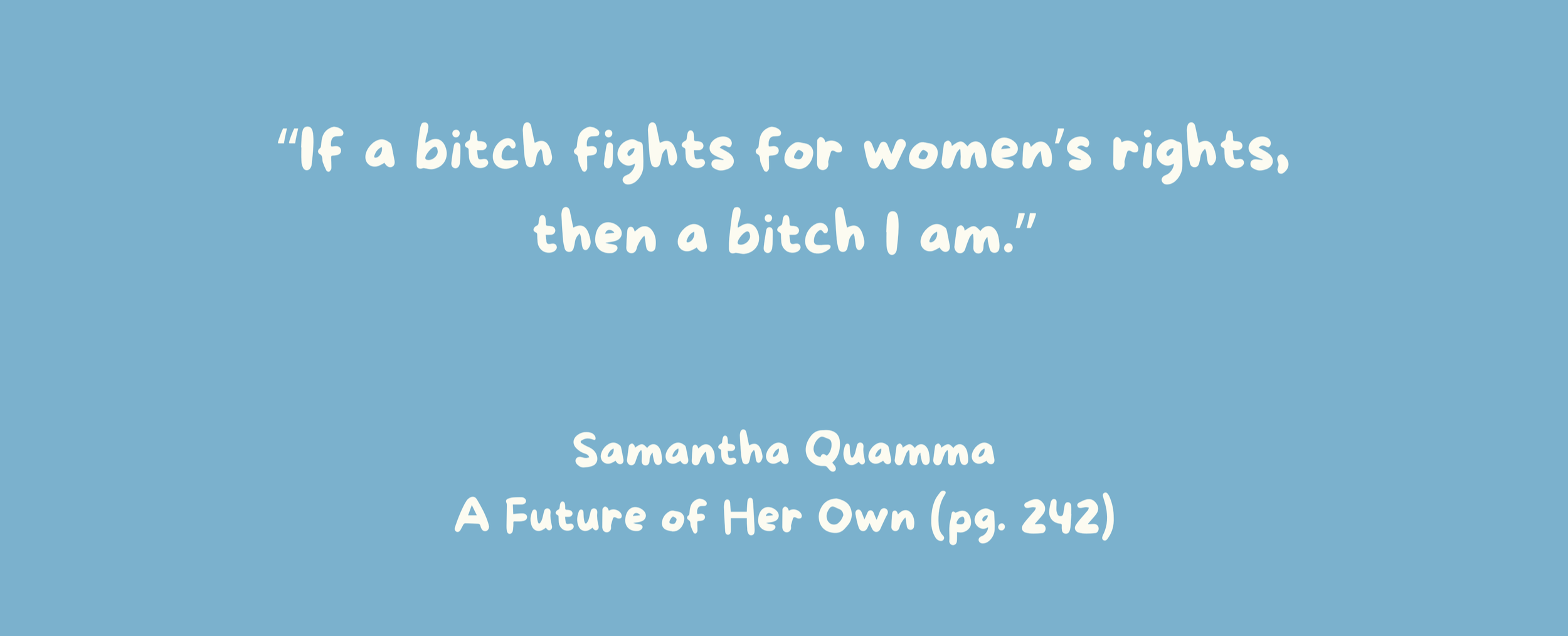
Ramona recognizes that the fight for free speech and the right to protest are important globally, but these concepts do not completely cloud her fight for her own personal rights. She confronts them head on in her conversations with the other members of her protest group; the men in her group, and especially her romantic interest, Theo, are so strongly fighting for their right to protest on campus that it makes it impossible for them to understand why the women in their group want to focus on women’s rights.
Ramona and her friends realize, however, that the two battles are not against one another, and in fact go hand in hand. The right for students to protest cannot be done without the support of everyone and Ramona cannot fight for her rights as a woman without the right to protest. In this way, their individual conflicts work together, not against each other. Quamma crafts these conversations wonderfully, making them feel real and highlighting the individual thought processes for each of her characters. No one is entirely in the right or entirely in the wrong, and the nuance is powerful because it is real. I found these conversational scenes some of the most impactful.
Empathy is another amazing lesson to be learned from A Future of Her Own. One of the first characters we meet after Ramona is her new college roommate, Patsy, who stands as the complete antithesis of Ramona’s idea of what womanhood should be. Patsy fights against Ramona’s push for women’s rights. She believes that her purpose is to be a good wife, a good mother, and the head of a household. She is flummoxed and angry when Ramona tries to argue that they deserve more freedoms and respect—and above all the right to choose what their futures look like.
Throughout the novel, Ramona and the reader are frustrated by Patsy, culminating in a surprisingly tender scene where Patsy breaks down, sharing that all of her frustrations with Ramona stemmed from her own fears about her future and lack of decision. In this tender moment of empathy, we finally see a new side of Patsy, who is no longer a thorn in the side of Ramona and the story, but someone else hurt by the systems in which they exist. By empathizing with her, Ramona is able to extend friendship and empowerment. This scene is so incredibly moving because of this display of powerful understanding, and it solidified itself immediately as one of my favorite scenes in the whole book. It’s a good lesson to remember that even people with different ideals than us are still victims of the same troubling systems and powers in place.
[End of spoilers.]
The Evergreen Echo
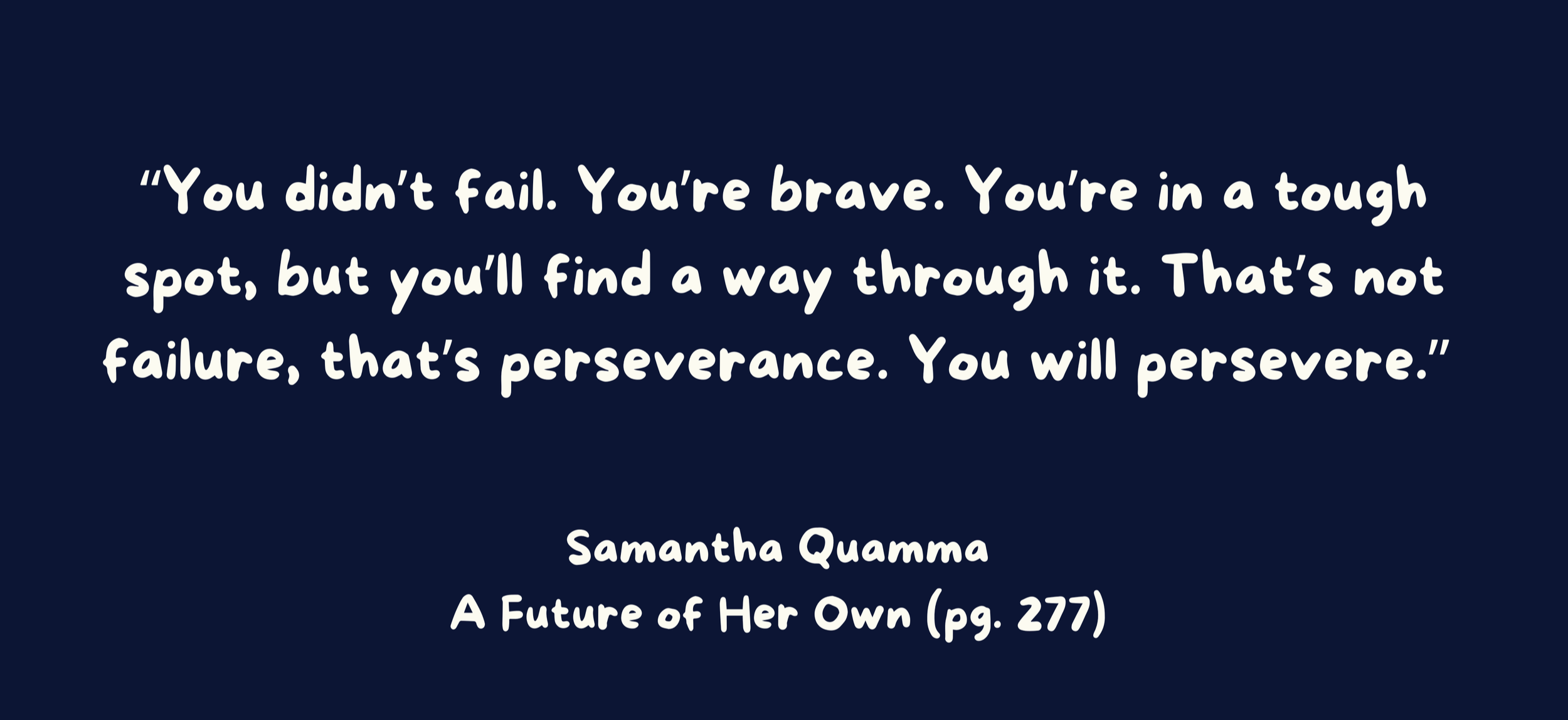
A Future of Her Own is a book about empowerment and protest, but it is also a beautiful story about friendship, personal liberation, and the importance of standing up for what is right for others and for yourself. For me, this novel stands out in its ability to carefully dissect and examine situations with nuance. I believe this is an important read for people today who struggle to fight for others and for themselves with the same amount of voracity and love.