Ben Mauro Dives into Future’s Past with ‘Huxley: The Oracle’
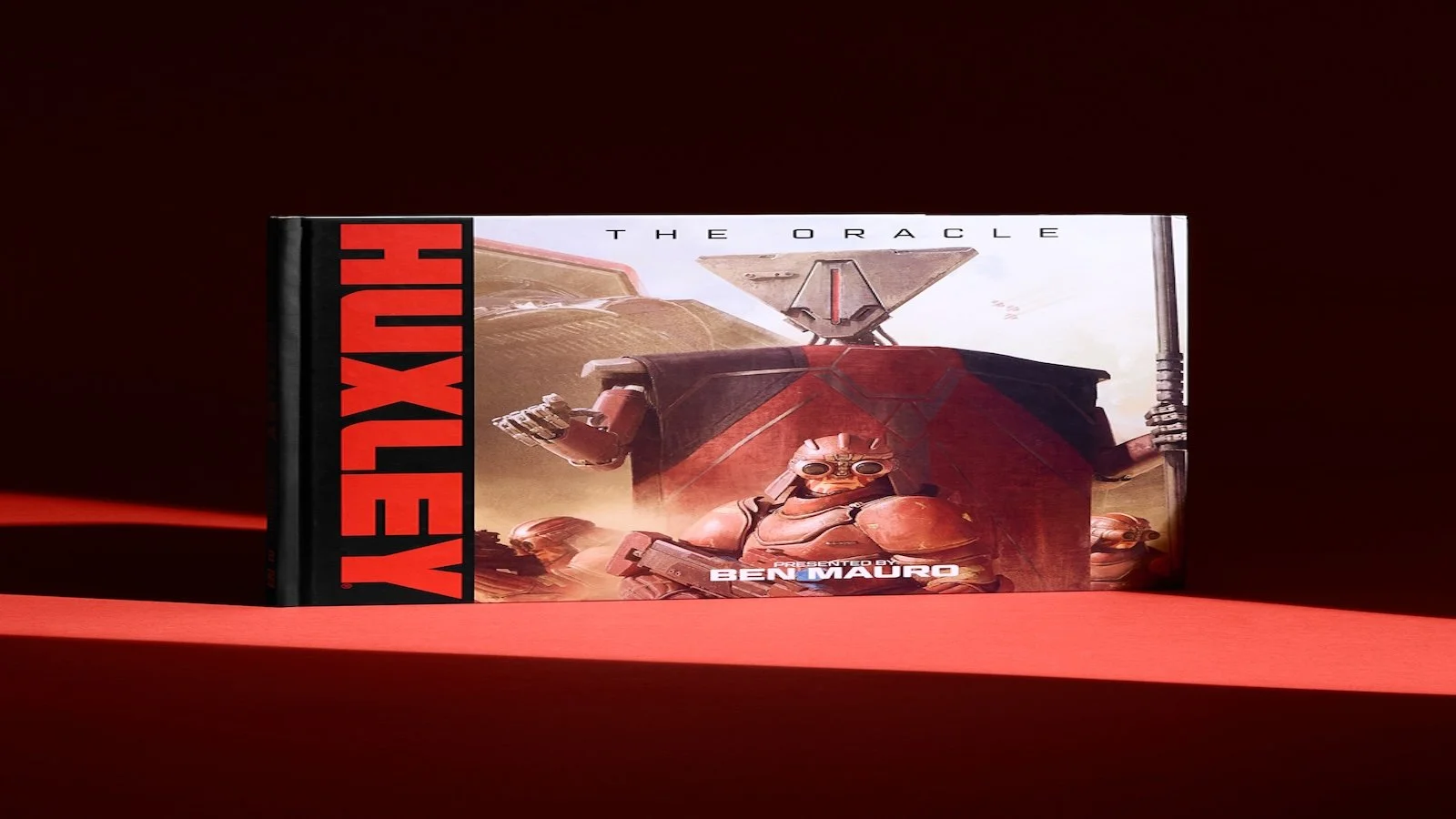
Huxley: The Oracle presented by Ben Mauro, horizontal copy
Courtesy of 42 West
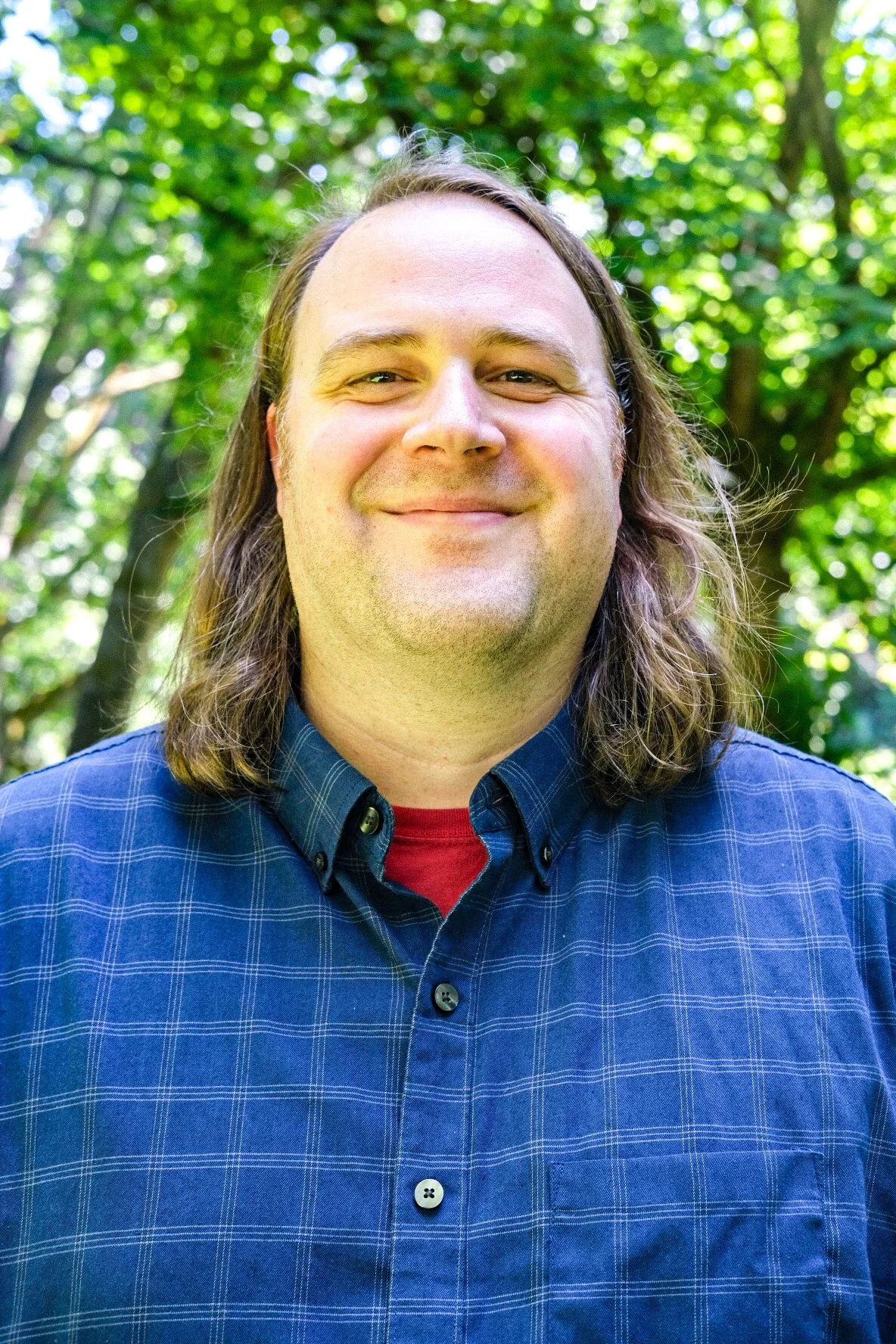
I had the pleasure of chatting with writer and artist Ben Mauro who has his own booth on Level 2 of the Summit Building at Emerald City Comic Con. We spoke about Ben's career as a video game and film artist as well as his graphic novel Huxley. The story centers on two clones, Max and Kai, who occupy a desolate, nuclear-ravaged world ruled by machines. Their lives are changed as they come across a mysterious robot named Huxley. Mauro is at the convention with the prequel chapter in the saga—Huxley: The Oracle.
Zach Youngs (ZY): What was a piece of art or culture that made you want to pursue art as a career?
Ben Mauro (BM): The one that made me go like, "I want to do this for a job," was Halo [the video game]. I was obsessed with the Forerunner architecture and it made me want to make architecture and levels for games. I was also always reading comics, Akira and Ghost in the Shell, and watching anime, so all that was influencing me as well, but I think for whatever reason Halo and [the idea of] building something for games put me on the path. That was definitely the spark. Eventually, I did get to work on Halo and the Forerunner architecture many years later.
ZY: How did you break into the world of video games?
BM: I briefly went to a school called Digipen, but then I found I really like design more which means I needed to go to an industrial design school, so then I went to ArtCenter College of Design in California for industrial design. From there I started at Insomniac Games and then Sony Pictures Animation as an intern. The bigger break was moving to New Zealand and working for Weta [Workshop] on the Hobbit movies, Elysium, Chappie, Mortal Engines, yeah, a bunch of stuff. After that I started freelancing. I worked on Call of Duty: Advanced Warfare and Black Ops. I eventually settled back in Seattle and all the while I was starting to work on Huxley.
ZY: Where did the idea for Huxley come from?
BM: I think it started when I drew the original Huxley robot. There's just something so unique and different about it. When you work on stuff you really like, it just clicks. For whatever reason, the drawing of Huxley is just one of those drawings like, "Wow it's so different." Who's this character? What world does he live in? What other characters would be there? He just started growing from that.
ZY: Did you have to put that on the back burner to work on paid gigs?
BM: Originally, yes. Once the idea was in a certain state it was like, "I know what I want to do with this. Let me finish this job. I'll take three months off and just work on it." Then a new cool job would come along. "Well, after that job I'll take the time off." I just came to the realization that I'm never gonna have the time to take a break and I just have to do both at the same time. I found a way to have chunks of time during the day. "There's an hour here. I don't have to watch that Netflix movie. I won't just eat lunch, I'll be working." I found a way to get the pages down and before I knew it page one's done and then after that it just kind of kept getting done.
ZY: What was easier for you to focus on, world building or did the art come first?
BM: Those go hand in hand. [Huxley's] a very art-first character. It naturally grows up and out of that. I saw other things there. Like, I have two red characters and that's an orange desert. Who are these characters and what does it look like in the background?
ZY: When did you know that there was more to the Huxley story?
BM: I don't think I ever had any intent about other things originally. It's just like there's a book and then once it came out it was like it could go in many different directions so I personally wanted to go backwards a bit more to smaller human stories. I found that a little more interesting so the prequel [Huxley: The Oracle] is kind of going back and forth between the story and the background of the world. I thought I'd like to go backwards in time and explain how humans live in this world. [Explain] how these clone soldiers get initiated with the army. What does this power structure of artificial intelligence and machines look like on this planet? I almost expressed it as the Roman Empire Era of this machine-dominated world. I thought that'd be a really interesting backdrop to this world—what it is to be a human in this world. How do you find meaning? How do you survive? How do you have a purpose?
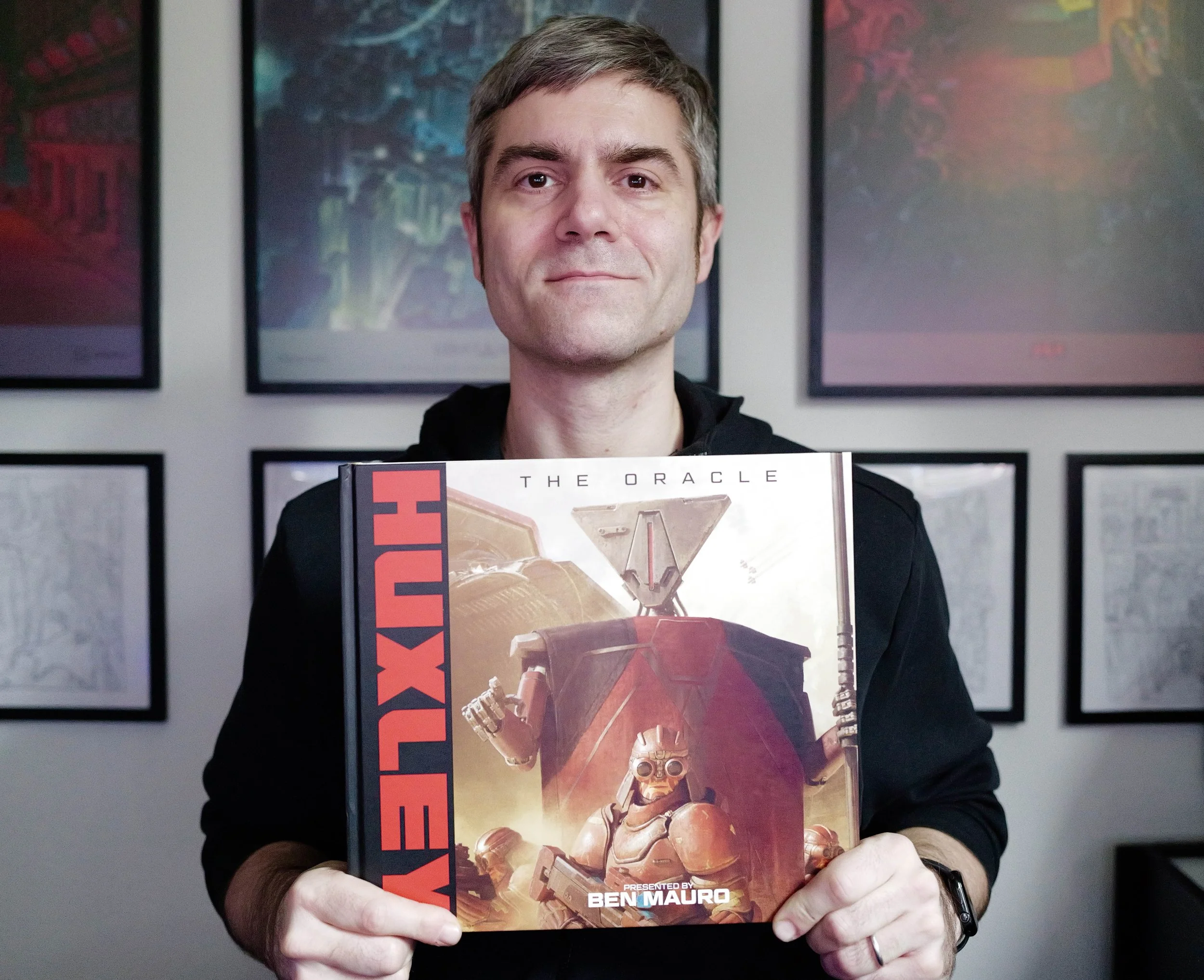
Ben Mauro with a copy of Huxley: The Oracle (hardcover)
Courtesy of 42 West
ZY: Do you envision more stories for Huxley?
BM: Right now the next book is all done and should be out or announced later in the season. It's part two of The Oracle. It was almost like this first book is Dune: Part One and then the next book is Dune: Part Two, the rest of the story. Then after that the story is going further back in time to almost when [humans Max and Kai] were teenagers. What is that process? What trials do you have to go through before [you're] deemed worthy enough to go into the army? It's almost like the life cycle of a community in this future world.
ZY: Do you like that the story is going backwards or do you wish that you could go back and do it all from the beginning forward?
BM: I don't know. It made sense to me. I guess the only difficult part is explaining that you start with the fourth book. It's the earliest in the timeline, but I think it's interesting each book is finding its audience and growing. It's been interesting to see [people] claim these books and stories and make it a unique experience.
ZY: I watched a couple of the shorts on the website. Do you ever envision Huxley as a feature film?
BM: We've definitely been exploring all those options; trying to figure out what the best way to adapt things. I think a lot of it comes down to the right teams and partners and making sure it's done really well. If you look at Fallout, [they] could have made a movie or show like 20 years ago but it's the right time for it now. I'm not sure I want to wait 20 years so we'll see.
ZY: How does creating the 3D environment for a film from this world differ from creating a 2D graphic novel?
BM: Ideas for a [TV] pilot or adapting [a feature film] could be very expensive. What kind of story can you tell that could keep things in the more realistic budget range starts getting [into the territory of], okay, this is amazing, but I need to keep things more realistic. How do you tell a story that's true to the book, but stays on budget.
ZY: Do you find that it's easier to think in terms of animation over live action?
BM: I guess if I was making it [it would be] animation. It's easier for me to create because it's a bit more process driven. I know I can help and finalize a shot in animation. But for live action there's so many people involved and that's probably too hard for me to do. I want experts to do that. Animation, to me, is more achievable.
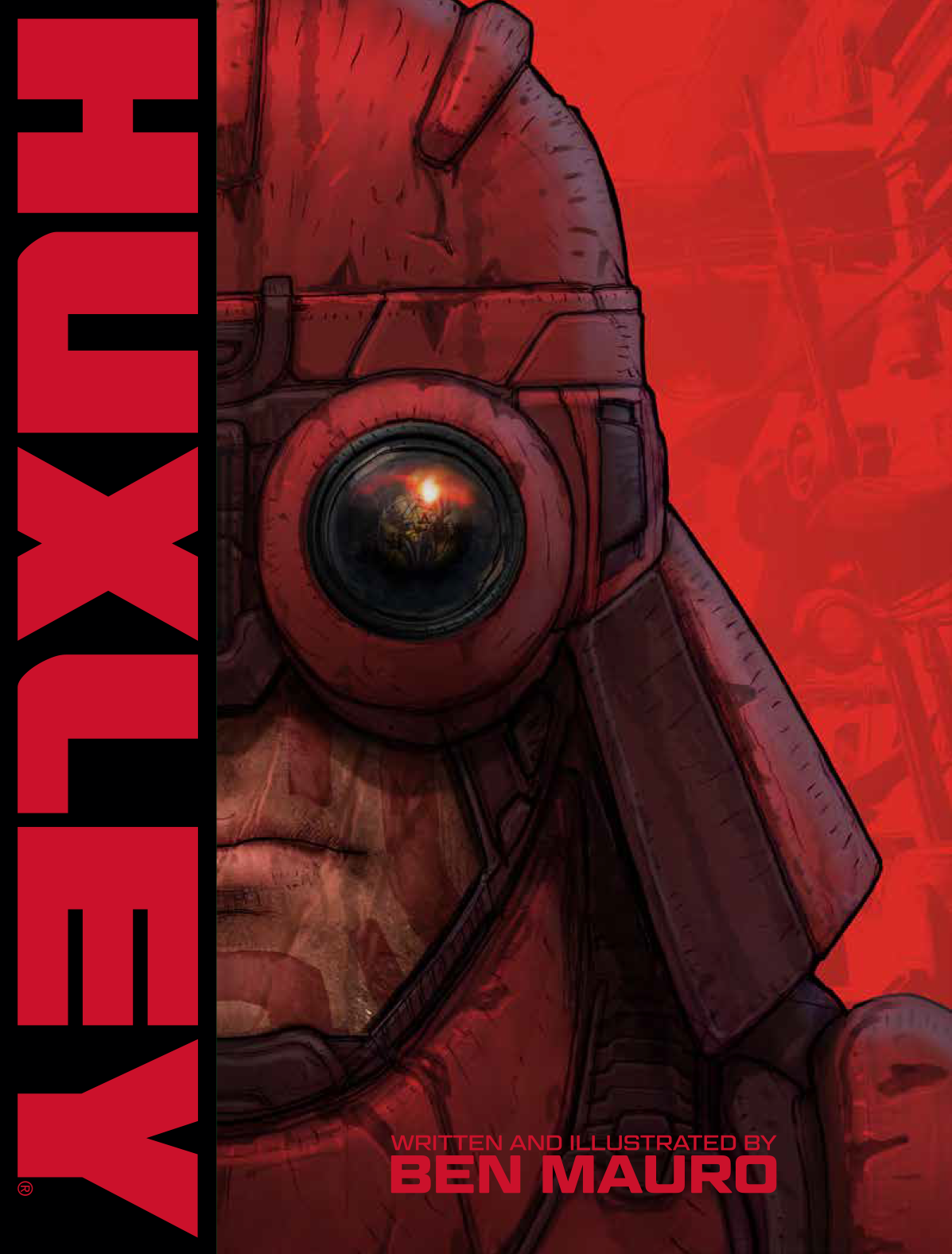
Cover of Huxley by Ben Mauro
Courtesy of 42 West
ZY: Do you envision yourself doing Huxley for the rest of your life, or do you have other irons in the fire?
BM: For me Huxley has already been 11-12 years now and I'm happy to keep expanding it and see where it goes. Even now most of my time is helping manage things and pushing into new areas where I need to go. Making sure that people know about it, events and things, doing whatever I can about it.
ZY: Do you find that you want to do more conventions so you can get in front of people who could become readers?
BM: I think so. It's really important. It's a lot of people. Some people don't know about it. Some people definitely know about it. It's like how did you [encounter] this? So that also helps.
ZY: What do you do to relax? What do you just kind of stop thinking about everything?
BM: I'm still probably thinking about it, honestly. But luckily [my wife and I] have a really cute dog now. She helps when she's got to go for a walk. Having a dog helps a lot. You can't say no to a cute dog.
Ben will be at ECCC throughout the weekend. Check the ECCC app for where he’ll be next.