Jerod Impichchaachaaha’ Tate Weaves Musical Stories at Seattle Symphony
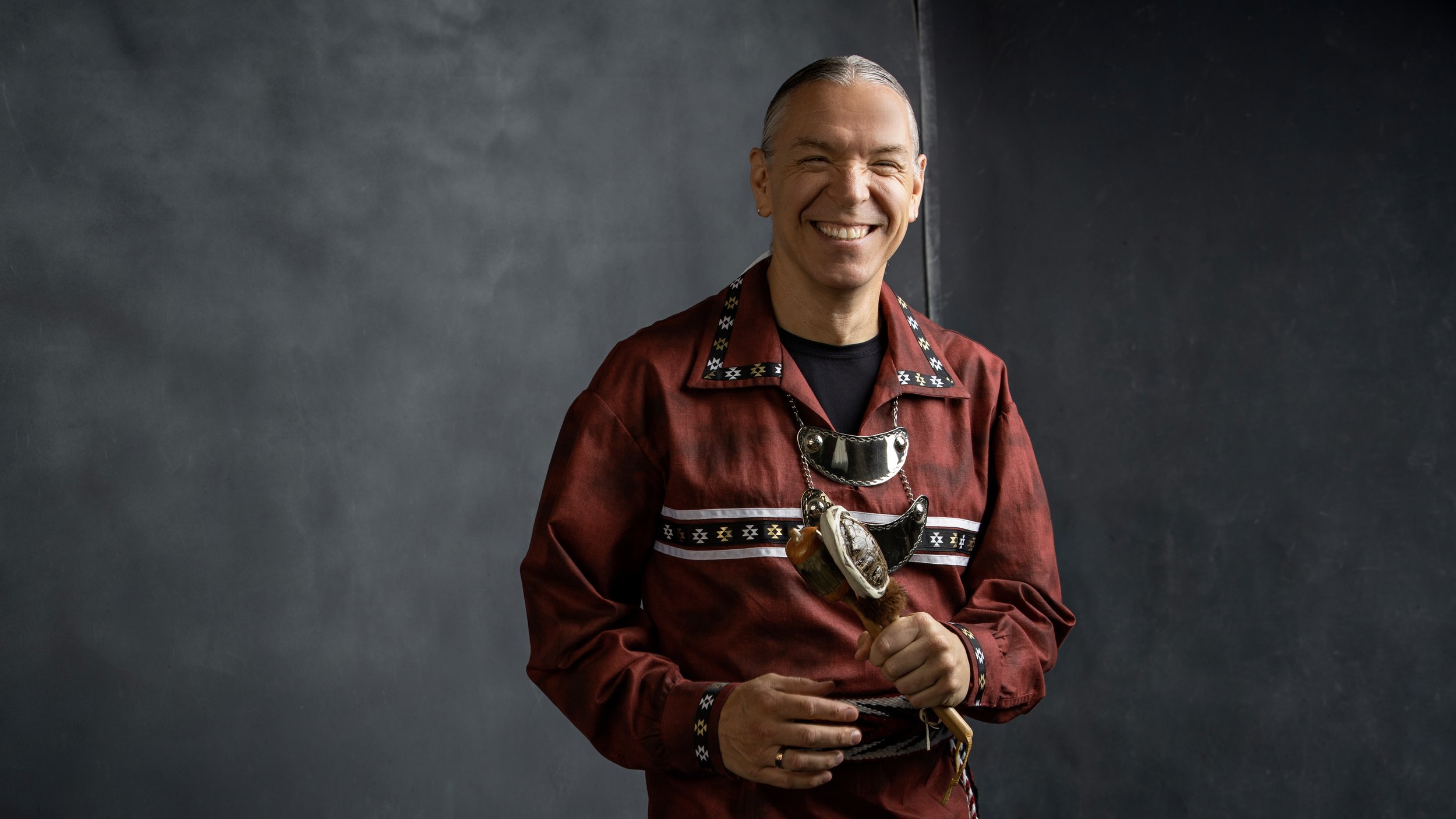
Jerod Impichchaachaaha’ Tate
Shevaun Williams
On June 12, Octave 9 hosted an evening of music at Benaroya Hall from Chickasaw composer Jerod Impichchaachaaha’ Tate. The chamber pieces were performed by a string quartet composed of Emerson Millar and Jacqueline Audas on violin, Ursula Steele on viola, and Katherine Audas on cello. One of the pieces, entitled “MoonStrike,” also featured live narration from Washington local musician, actor, and storytelling legend Swil Kanim.
The first piece, “Pisachi (Reveal),” was commissioned as an homage to Indigenous Peoples of the Southwestern United States. For this writing process, Tate drew directly from his personal experiences teaching Hopi and Navajo youth musicians at the Grand Canyon Music Festival, and the melodies are referential to Hopi and Pueblo traditional music. “Pisachi” opens with a calm, gentle theme before descending into what feels like soft shadows. Tate said that the beginning is inspired by a southwestern sunrise, adding, “Even in the summer it’s clear and crisp and chilly in the mornings, and of course during the day it gets very, very hot, because it’s the desert.” Bursts of sound lilt in on top of the peaceful theme, bringing the sense of nature waking up. Then the piece pivots into a frenetic sequence that sounds like a chase, and eventually back down again to softness. To me, it felt like the way a landscape is revealed to you the longer you stay in it. From a distance, a scene may seem quiet, but if you zoom in on anything, you will find it thrumming with life and activity.
The next chamber piece was “MoonStrike,” which was commissioned for the 50th anniversary of the Apollo 11 moon landing. Swil Kanim narrated three different Indigenous American stories about the moon, while the quartet’s accompaniment drew from traditional songs in each story’s corresponding tribal traditions. In the first, Kanim told a Kalispel legend about the origins of the moon as a ball that was used in games played by animal ancestors, and Coyote’s short-lived stint as the moon, which he failed at due to his trickster ways. Full of dark turns and twisting drama, the strings accompaniment in this piece really amplified the friction of the legend. The second story, a moving tale of a man who married the moon and brought her back to life, comes from the Isleta Pueblo people. And finally, the performance ended with a Haida story of Raven stealing the moon, backed by melodies that come from Haida play and war songs.
I loved the theatrical blend of storytelling and music in “MoonStrike.” Tate notes that theater and storytelling are critical and a “cornerstone” of his composing. He says this influence goes back to his childhood, which he describes as simultaneously “rich in American Indian history and culture and classical American theater and fine arts.” His mother was a professional dancer and choreographer of Manx descent, and his father, of Chickasaw heritage, was a tribal judge and attorney, as well as a classically trained pianist and baritone. His first composing experiences happened when his mother commissioned him to score a ballet she was writing at the University of Wyoming based on Indigenous stories from the Northern Plains of the Rockies. While on tour with the company, Tate describes a conversation with actor Rodney Grant of Dances With Wolves fame, who was doing narration for the ballet. Grant “came in like a thunderstorm, and he was like, ‘Bro, you’ve got to become an American Indian symphonic composer. You’ve got to do this.’” This moment was tremendously impactful for Tate, pushing him to ask himself what that would mean and look like considering his own tapestry of experiences and influences.
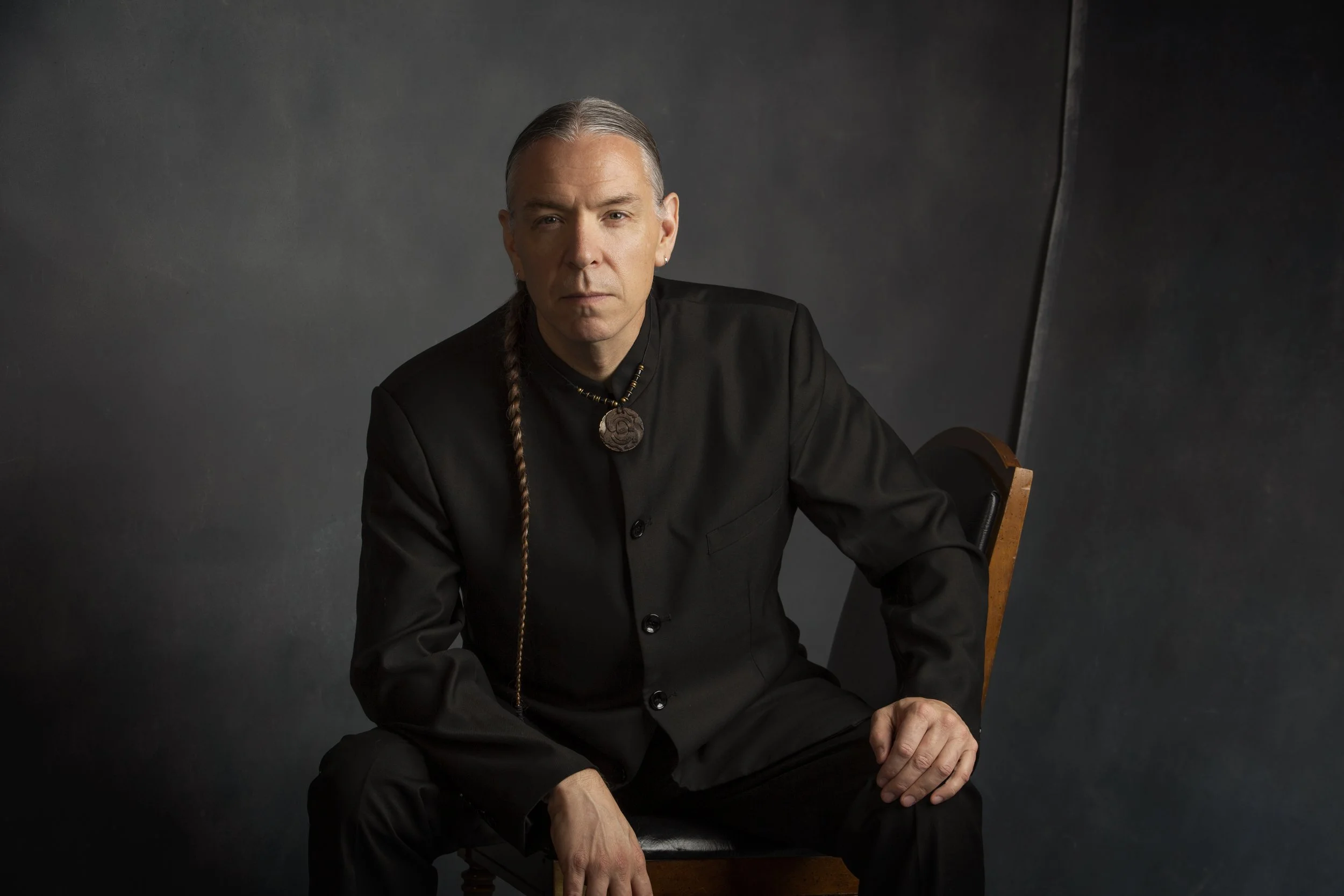
Jerod Impichchaachaaha’ Tate
Shevaun Williams
With this new creative direction unlocked, Tate describes jumping in and beginning to compose for his friends at school at the Cleveland Institute of Music, and “taking a very Bartok approach of incorporating all of my Chickasaw folk music into my works and creating new harmonic approaches and rhythmic and melodic phrases…I just did a deep dive and completely lassoed my entire culture into my classical composing styles, and that’s what I’ve been doing ever since. I could do this for 50 lifetimes.”
Tate is currently composing a violin concerto piece based on Chickasaw thunder beings. His son’s name is also Hiloha, meaning “thunder,” and he has composed earlier pieces about thunder, including a tympani piece called “Talowa’ Hiloha (Thunder Song).” “I believe my son was speaking to me very early on,” Tate reflects. “I think about the thunderstorms back in the homeland of the deep woods of the Mississippi. The thunderstorms here in Oklahoma are very significant as well. Thunder is an elemental thing that gives me a lot of energy and drive. It’s kind of like Thor’s hammer, with all the lightning that comes from the hammer, and the hammer directs the power of the lightning into something creative. Sometimes I feel that way when I’m writing.”
Tate also speaks about the vital importance of legacy and of continuing to tell the stories of his culture:
“My ancestors did all this work. They literally walked 800 miles in mud across the United States to relocate so that I could compose operas about them… We do work for our next generations, very specifically with great joy, and it’s not easy for anybody to do that… I feel that I honor them through my success.”
Seattle is hosting a variety of upcoming Indigenous arts and cultural events. The 37th annual Indian Days Powwow will be held July 17-19 at Daybreak Star Indian Cultural Center. The three-day event will include music, dance, vendors, and food, and uses a pay-what-you-can model. ‘Tseen Culture hosts local Tsimshian Stories and Weaving events around the city, with the next events coming up on June 28 at Pratt Park and July 26 at Ballard Commons Park. Also not to be missed are the music, workshops, drag performances, and art market at the Indigiqueer Festival at Pier 62 on June 27, from 2-8 p.m!