Don’t Sleep on Dacha’s ‘Dream, Carl, Dream’
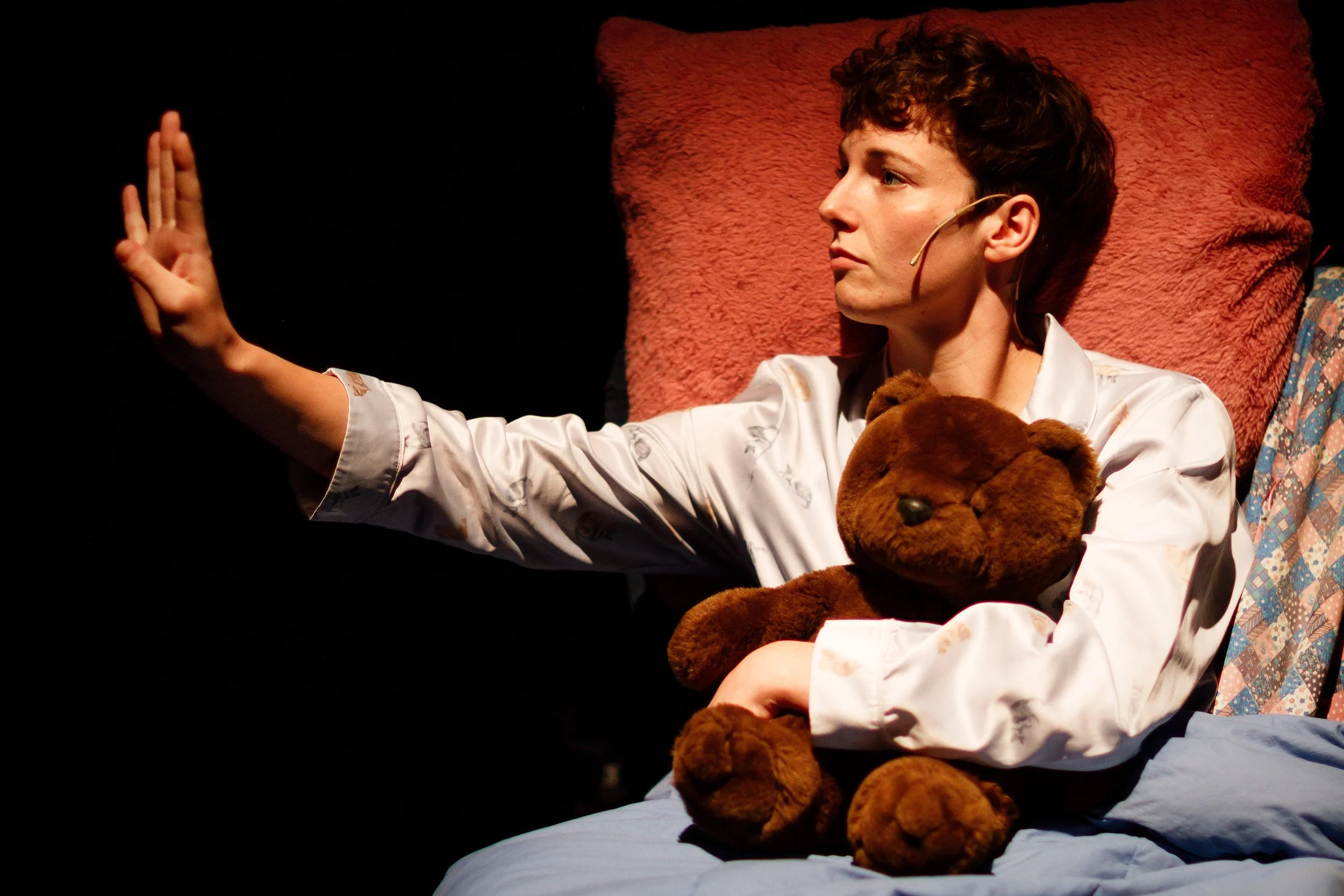
Carl in bed
Brett Love via Dacha
Dacha Theatre, Seattle’s beloved immersive theater company, has created one of its most audience-reliant shows yet. Dream, Carl, Dream, which opened its doors at 12th Avenue Arts on June 5, dropped audiences into the working life of Carl’s Neurons at the office for REM Cycle Slot 1. There, they set to creating dreams for Carl’s brain to turn over in the night, helping him process things he had seen throughout the day alongside additional filtrations of what he had experienced throughout his life. Through these, guests were urged to, “Clock in. Make Dreams. Save Carl.”
Part improvisation, part structured pathways, and part chaotic fun, the show challenged audience members to think outside the box and get creative, lest Carl’s subconscious overwhelm him.
Immediately upon check-in, guests were faced with a bulletin board of Neuron faces from which they would choose their Neuron team. Photographs of actors garbed in fluffy, blue body-suit-like hoods and office finery beckoned guests into the comical absurdism of the show’s world and invited them right off the bat to make a choice which would later help determine the outcome of the show.
The doors opened, and guests were ushered through a pink LED tunnel into Carl’s brain. The theater space was divided into two sections which adjusted per the needs of the show. The first space resembled a lecture-style meeting room with a whiteboard at the front and a Neuron who welcomed people in and showcased the “brain fluid” (drink and snack) options. When the crowd was wholly gathered, the presentation began.
They outlined the mission of the dream-making office and introduced guests to their role as “Homunculi,” imaginary beings hired to help raise falling dream statistics up to standard. Once debriefed, the newly appointed Homunculi were led to their first day of work in the office.
Thoroughly crafted scenic elements immersed the audience into the workspace—cubicles filled with office supplies, walls the stale blue of a corporate environ, and motivational, Carl-related posters to boost worker morale. Against one wall sat shelves of props to be unlocked throughout the evening and a secretarial desk where sensory input arrived for each dream.
The Neurons scrabbled through the space, desperately brainstorming ideas for the night’s dream sequence. They startled at the arrival of the Homunculi and swiftly welcomed them into the efforts. Guests were divided into their teams and set to work with their assigned Neurons.
Each Neuron group had specific parameters, decided by narrative elements of Carl’s backstory and random sensory inputs Carl had collected throughout the day. For example, one set of parameters contained the words, pasta, illegal, and respectful. Always a random element paired with two words which stood in opposition to each other, pushing the creative efforts of all involved. With these parameters, the Neurons and Homunculi bounced ideas to formulate the script for the dream Carl would receive in the night.
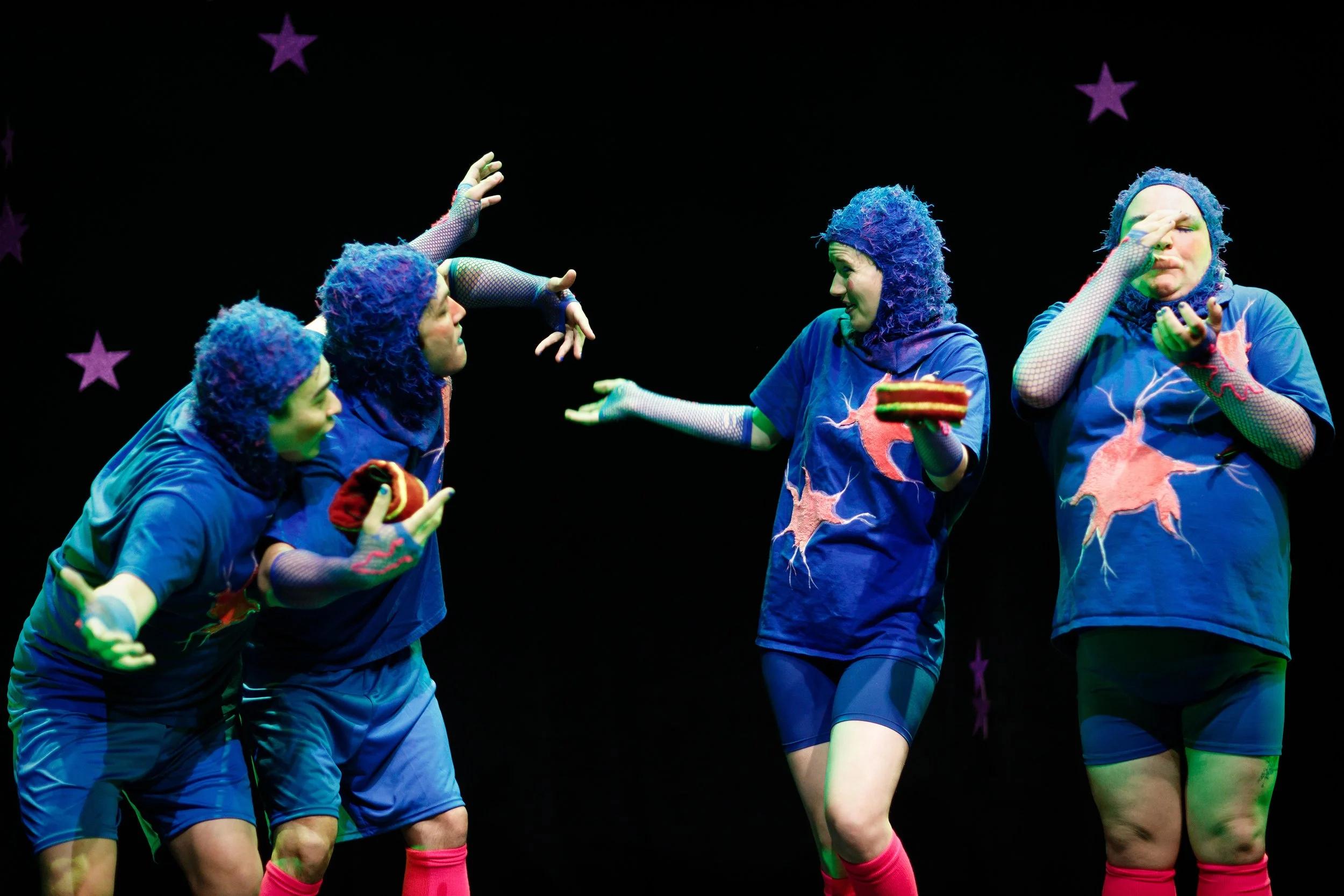
Neurons in Dream, Carl, Dream
Brett Love via Dacha
As the dreams were devised, time passed in Carl’s waking world, marked by periodic announcements over the god mic such as, “Carl is now brushing his teeth.” To which the Neurons all paused, looked to the voice from above, and called, “Thank you teeth!” in proper theatrical fashion. When the final cue was given, and the last drafts of the dreams were rehearsed, the shift ended and the Homunculi were sent to the adjacent space where the dreams were to be performed.
What once was a presentation room had, in the time it took for dream creation, transformed into a full fledged theatrical space with a raised stage, a lighting rig, and seating for the observing Homunculi.
The music kicked on, the Neurons performed the opening number, and the Emcee took the stage as the imaginary manifestation of the magician for whom Carl’s ex left him. After introductions, the Neurons began the dreams, performing improvisational skits around the scene elements the Homunculi had come up with, and all the while, Carl watched comfortably from his bed, dressed in his night clothes, where he acted as a harsh judge toward the quality of the dreams.
This process repeated a few times throughout the show, each cycle adding new challenges and harder parameters. In this, it teetered toward exhaustion. The back and forth between spaces for the same structure of events threatened to carry on too long. Only through a subtly growing conflict did the play maintain engagement. With each dream, the elusive Subconscious infiltrated a little more, forcing Carl to confront the aspects of his life he was too scared to face in his waking hours and wreaking havoc in the land of Neurons.
The greatest perk, perhaps, of the vague plotline of the show is the creative freedom it gives to each audience. While the base structure will remain throughout the run, each performance will differ greatly based on the content of the dreams the audiences devise. Additionally, each week will bring a new Carl to the floor with their own backstories and internal conflicts to be resolved, making Dream, Carl, Dream a spectacle you’ll want to see more than once.
Opening weekend featured Kevin Tanner as Carl. Weekend two, Angel Gao. Weekend three (June 16 to June 21) will be Cody Smith, and wrapping up the production with a grand finish will be Chelsey Sheppard (June 22 through June 27).
It is a production sure to be enjoyed in all its outrageous glory, and proves yet again the strength and diverse potentials of immersive theater under the skilled honing of craft staple to Dacha Theatre’s shows.