
Age Verification HB-2112: Who Will it Truly Protect?
Washington State Capitol building
HB-2112, or the “Keep Our Children Safe Act,” is currently in committee in the Washington State House of Representatives. Its stated mission is “establishing an age minimum to access certain adult content online.” This argument certainly makes a lot of sense in the abstract. After all, we have age restrictions for adult stores and entertainment venues. Still, it is less the intent and more the execution of these laws that makes them so dangerous.
During a public hearing on January 16 of this year, the bill’s primary sponsor, Rep. Mari Leavitt (28th District), presented HB-2112 as a much-needed safety measure to protect children from inappropriate content. And this concern is understandable: the internet is an unregulated forum awash in scams, corporate advertising, and deep-fakes. There are innumerable threats to our online safety, and most adults don’t have the media or tech literacy to safely scroll the internet, let alone children. But these were not the primary concerns of the bill’s sponsors, it would seem. The safety concerns were not centered around the selling of sensitive and private data, nor the overexposure of targeted advertising.
The thing we need to keep our children safe from? Sexually explicit content. During her opening statement, Rep. Leavitt said: “...Many teens are saying they have seen pornography by the age of 13, some as early as 11, and that is concerning.”
I grew up in a fundamentalist Christian community, and I can’t help but recognize the same purity language used to describe (with pearl-clutching disdain) anything remotely sexual, including the sexual development of their own children. The bill’s own language is vague, which is much more concerning than young teenagers trying to access pornography (something all teens have done since the dawn of media, not just since the development of the World Wide Web).
The bill states: “Commercial entities that knowingly and intentionally publish or distribute material on the internet and more than one-third is sexual material harmful to minors must use reasonable age verification methods to verify that an individual attempting to access the material is 18 years of age or older.” While the bill does have the foresight to clarify that the commercial entity can’t retain any of the identifying information it collects, the text does not extend the same safety measure to any third parties that may be handling the age verification for a website—and most commercial sites already rely on third parties to perform age verification. This bill can’t guarantee the safety of anyone’s information in this extremely likely situation.
Furthermore, HB-2112 doesn’t bother to define what kind of sexual material would be deemed harmful to children. Actual pornography, artful nudes, or a school’s anatomy lesson? Drag styling tips, sexual techniques, or identity navigation? When a law fails to create these much-needed parameters, it will inevitably be abused by the bigoted to target others. We have all seen firsthand what this kind of open-ended legal wording leads to—the sexualization and demonization of Queer and Trans people and the endless persecution of sex workers.
One strange and unique feature of HB-2112 is the establishment of mandatory notices. “Commercial entities must display notices in 14 point font or larger on the landing page of their website and on all advertisements.” To clarify, this means that any commercial site that has “sexual material harmful to minors” (one-third or more as stated in the bill) will have a Surgeon General’s-style warning as the first thing you see. Will this only apply to porn sites? What about lingerie sellers, binder makers, or tampon manufacturers? Where will the line be drawn, and why is it necessary to provide enormous warnings for sexual content as if looking at these images might irreversibly damage one’s health the way smoking tobacco could?
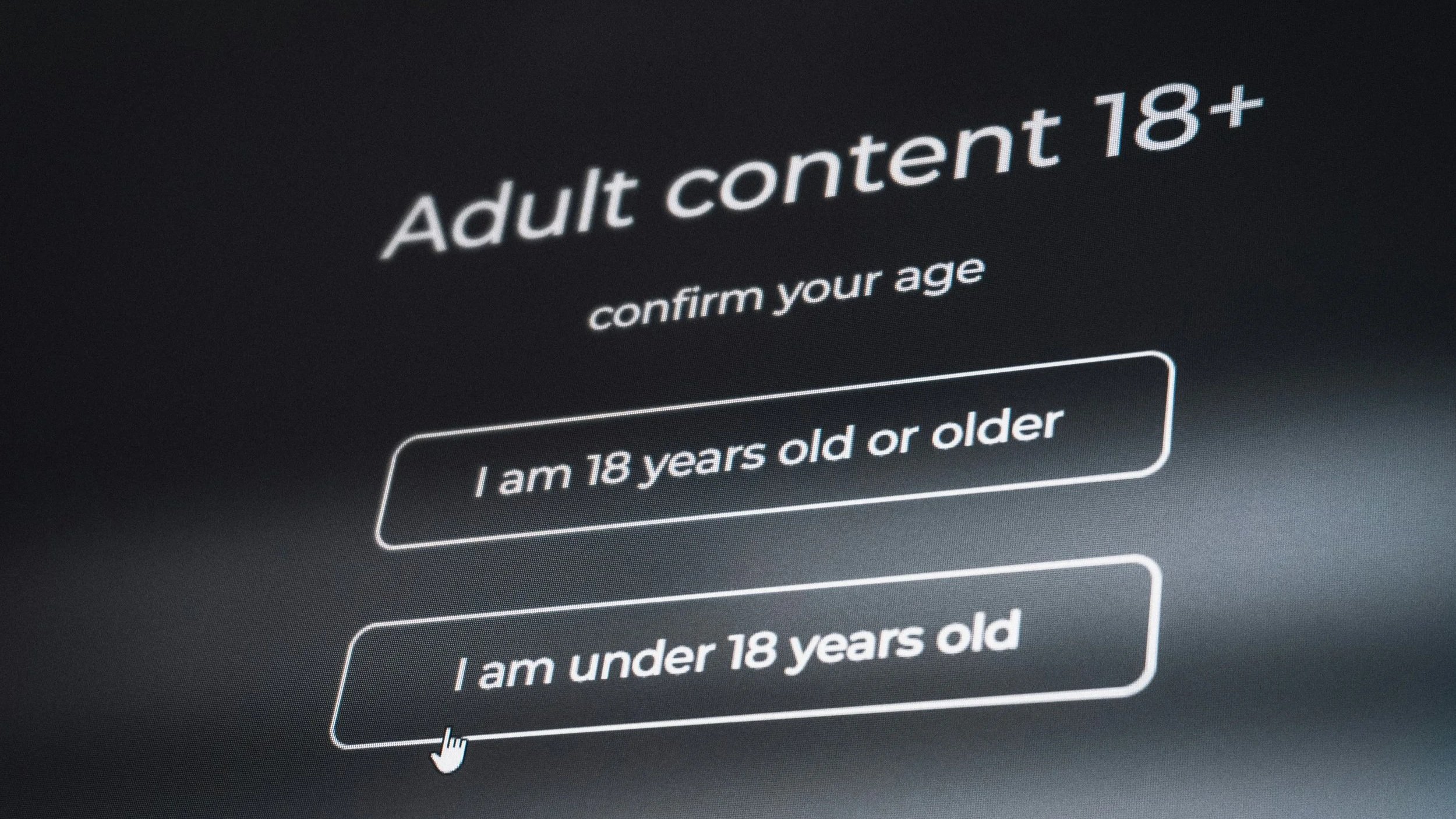
Typical internet prompt asking if the user is 18 years old.
Photo by Zulfugar Karimov on Unsplash
Despite their prevalence, age verification laws actually pose their own privacy risks.
In a WIRED article, SaaS-expert Jacob Roach explains it well: “The problem is how the verification happens. You aren’t verifying your age with the government. You’re routing it through an independent third party, and most of the laws on the books are designed specifically in this way.”
Moreover, the vague wording of these laws allows them to be abused. For example, now that Reddit requires age verification via the services of Persona, many forums are blocked behind an age wall, including health and sexuality subreddits like r/STD, r/safesexPH, and r/stopsmoking, according to Open Rights Group. Certain news subreddits also require age verification (r/Aljazeera and r/israelexposed). Does that ring like protecting children from mature content, or is it more like censorship? “Mature content” here has been interpreted as anything critical of the status quo or that may be offensive to the worst people you’ve ever met.
Third parties like Persona are not federally regulated. We can never be sure if they are secure from hacking and bad actors. They could be selling your children’s data right out from under you and you’d never know. Persona’s privacy policy as used by Reddit allows it to collect, store, and share biometric information like fingerprints and photos, as well as personal information and government-issued IDs. This doesn’t sound like protecting kids online—it sounds like leading them to the abattoir.
These concerns aren’t limited to individuals. While 25 states have proposed age verification bills, only five states have passed laws: New York, Tennessee, Georgia, Virginia, and Louisiana. Rights organizations like the ACLU, the Electronic Frontier Foundation, and NetChoice have successfully sued* most of these laws into legal oblivion, arguing that they violate citizens’ First and Fourteenth Amendment rights.
Again, protecting children online is a noble goal. But it should never be at the expense of their own civil liberties, the consequences of which could follow them for the rest of their lives. We need more than state laws targeting businesses; we need federal regulations that protect all of our individual data from shady third-party verifiers who will turn around and sell it to the highest bidder. Additionally, it is high time we stop selling out sex workers and LGBTQ+ groups in the name of “protecting children.” We aren’t protecting children in this way, but are instead hurting other adults; let’s not forget the Queer and Trans kids who will inevitably be sexualized, fetishized, and demonized by the bill if it’s allowed to pass in its current draft. Or do LGBTQ+ children not factor into the equation when we ask how we can protect our kids?
HB-2112 has not passed the House chamber yet. If you have concerns about this bill, leave a comment. If you’d like to learn more about age verification and internet literacy in the modern age, EFF has curated a hub of resources.
*States currently contending with internet age verification laws (not states with proposals up for consideration):
