The Divided Line: Selah [Part 1]
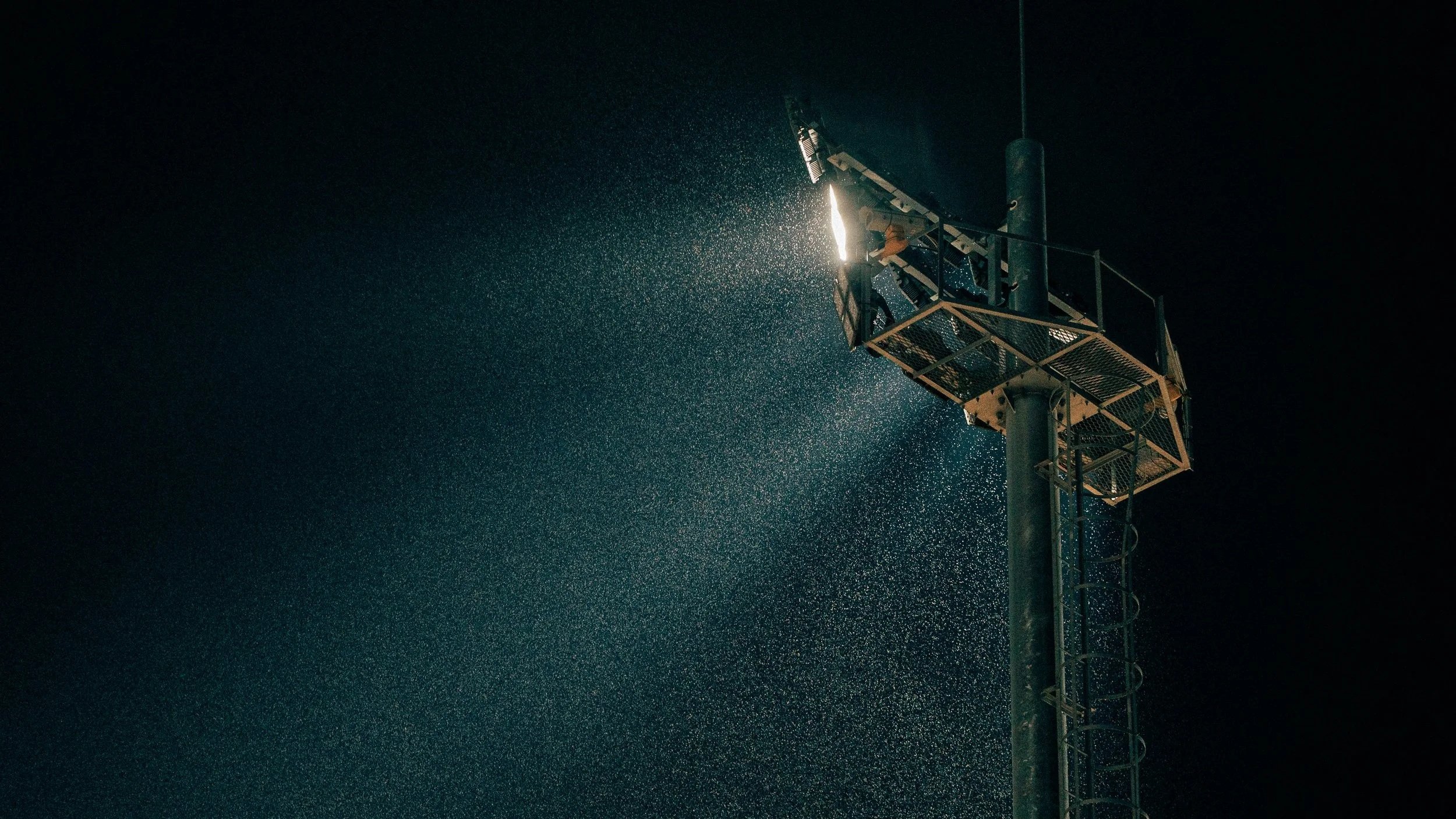
A stationary crow’s nest shining a light on workers below.
Daniel Bernard via Unsplash
Floodlights bore through the rain, beams of white light casting shadows of machinery upon the ground. Selah’s own shadow twisted and multiplied as he walked the path to the mess tent.
Mud clung to his boots, the ground slick and treacherous beneath his weary feet. He took off his gloves, stuffed them into his back pocket, and raised his hands to catch the droplets and scrub away the filth that had gathered like a second skin.
Above, on the metal ramparts of the construction site, a Vizya militia man paced back and forth, his shadow large and looming. He wore the blue company insignia on his shoulder and brandished it on the side of his rifle. The man stared out at the waking city, a bastion of defense against the enemies of progress.
Those enemies, Selah and his colleagues had learned of late, included them too. They’d hauled fifty workers off the grounds a week or so ago, shoved them in the back of black armored vans, and shipped them off to that prison across the sound. It’d been such a grand spectacle. A warning, really, to any others who thought to question the corpocratic reign.
Selah lowered his head. Mind your own, don’t stand out, follow the flock. That was how it used to be. That was how one survived. He took off his hard hat and stepped into the seclusion of the mess tent.
The room was silent but for the clink of silverware and the slop of stew into fresh bowls. They weren’t allowed to talk, not unless it was the quick command and response the work required. Nonetheless, they found solidarity in the silence. A nod from Cadmus, who Selah met with in the run-down bars on the outskirts of the city, heads bent to discuss banned subjects like history and philosophy. A weary lift of the bowl from Joel, as if to say, “Beef stew again. Meat stiff as jerky.”
Selah grabbed a bowl at the start of the line and watched the vile meal slosh into it. Still, his stomach growled. He snatched a piece of stale bread, steeped it into the broth, and seated himself between the two men.
Before he had a chance to taste any of it, though, he heard a shout somewhere outside, a murmur rising after it like a wave. He looked up, brow cocked, but kept his seat. Mind your own, he reminded himself. But then there came the whirring of drones, and Cadmus and Joel were already heading for the door.
Selah sighed and set his bowl aside to join them. The bread could do with a bit more soaking anyway.
Outside, the rain beat down harder, thrumming against the pipes and metal grates. The sound morphed with the insectile buzz of the drone blades overhead. Their glowing forms and the large cloth bundles that dangled from their bellies blotted out the floodlights.
Gunfire tore through the air, and Cadmus dove for the ground, covering his head. He’d been a military man, once. Self preservation told Selah he should follow the man’s lead, but the guns were aimed skyward, and curiosity betrayed instinct.
One of the drones pitched and careened from the sky, landing with a thwump in the muddy field. Its package sprawled open, pages of something fluttering out in the wind. The two other drones unleashed their bundles before the next volley came. Paper billowed out, scattering with the wind.
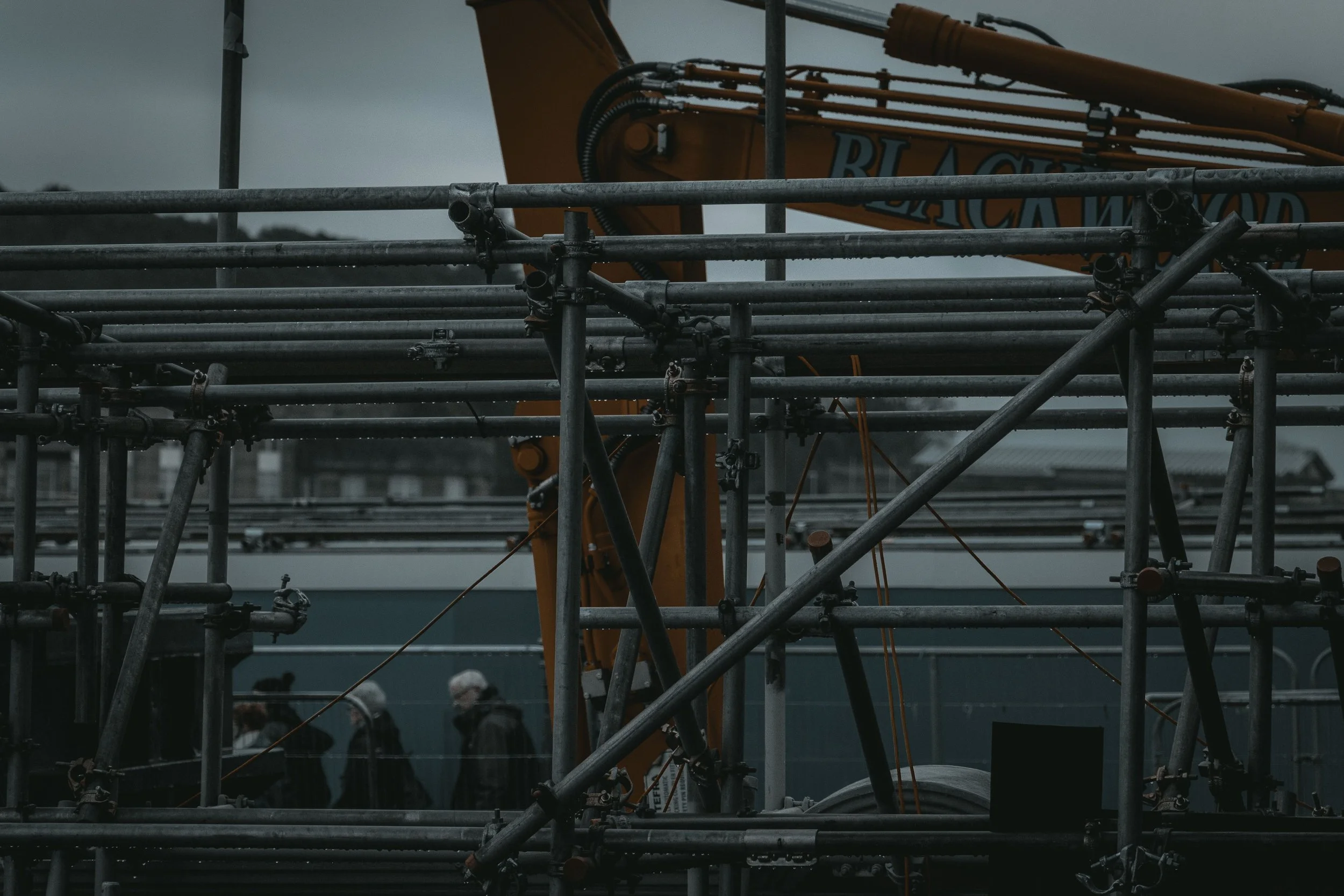
Metal pipes at a construction site
Zekai Zhu via Pexels
The pages were flimsy, some disintegrating in the rain before they even reached the ground, but others survived. Selah watched them land at his feet, plastering against the metal grate, edges curling, images blotching.
Photographs of people smiling, dancing, draped in color. In the background, the piled furniture of the protesters’ barricade. Black bars slashed across the eyes of those in the photographs, red letters scrawled jaggedly overtop: Missing, they said.
Selah crouched down and plucked a page from the ground. This one had a poem on it, signed by a golden ibis.
The words told a story of plague victims buried under the skyscrapers of the new age. A people abandoned to rot beneath the greed of the rich, and the ones who dug through the tunnels to excavate the bones and lay their ghosts to rest.
Selah knew enough about what’d happened at the protest to gather the poem’s meaning. Take up arms, it asked. Bring your pickaxe and your shovel. Save us.
Hair pricked at the back of his neck, and Selah looked up from the treason on the page. The Vizya militia men looked down on them through the scopes of their rifles.
The speakers along the perimeter whined to life, and a tinny voice shouted commands. “Return to work immediately,” it said. “All agitators will be detained.”
Silence fell—a moment of hesitation, brief and almighty—and the balance of power shifted, slight but certain. The workers looked to one another, one question brimming in their eyes.
But it wasn’t time yet. Selah knew that. Not with the guns already turned on them.
Swiftly, before he could think any better of it, Selah stomped a series of rhythms against the metal grating beneath his feet. It hardly sounded over the rain, but it was loud enough. Two men near him repeated the rhythm, and from them, it spread through the gathered crowd.
It was an old language of laborers and miners. Passed from generation to generation for those inevitable times when the worker must rise up against the whip brought down upon them.
The rhythm steadily settled into silence, and the men dropped what papers they held and dispersed without another word. Selah clapped three times.
Three hours. When the shift change brought reinforcements, when just enough time had passed for the militia to let their guard down. That’s when they would strike.
As one, the others echoed his command.
The Divided Line is an original serial.