The Divided Line: Juno [Part 2]
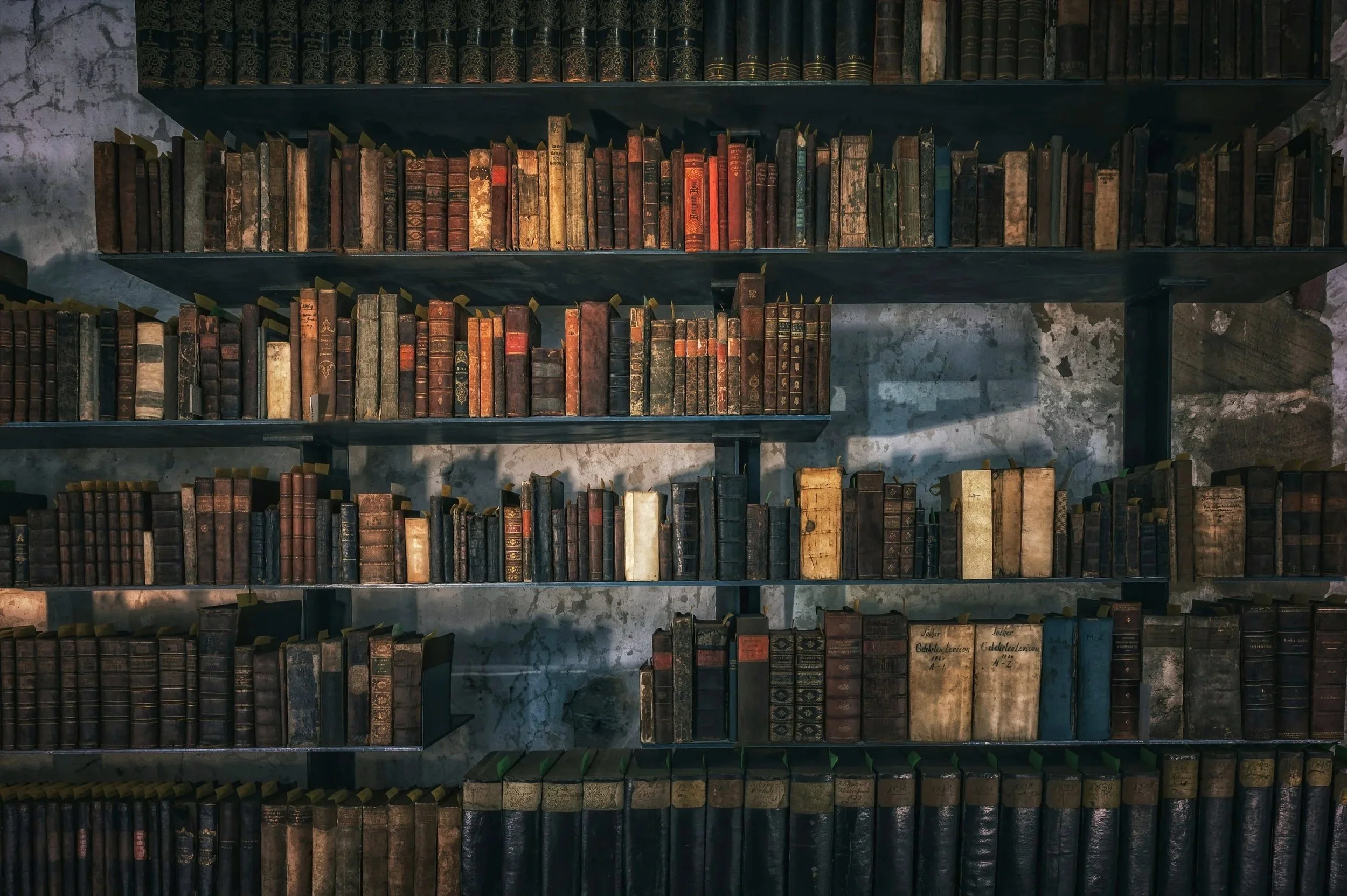
Peter Herrmann via Unsplash
Juno’s window groaned against the frame as she pushed it open. She sent her bag through the crevice, heard it thunk against the floor of the rusted scaffolding just beyond, then climbed out after it.
Plastic drapery caught the wind and slapped against the surrounding metal posts, masking the sound of her ascent. She climbed up to the roof where the peaks of the lower city’s towers groped at the cliff-edge of the upper echelons, and she slunk through a reeking, moss-covered stairwell that’d been long abandoned by those who lived above it.
Juno emerged in an alley tucked between two identical residential buildings. Windows lit up one by one, tenants rising for the early work day. A few already ambled down the street to one office or another, those with permits to work before the night’s curfew lifted. Juno rubbed the sleepless anxiety from her eyes, straightened her coat, and smoothed her hair, stepping into the street to join the others.
She walked close to them and tried to blend in. Soldiers marched alongside them, the vanguard of an armored caravan, too occupied with some mission to stop anyone and demand their paperwork. For that, Juno knew she owed her life. Nonetheless, she refused to be grateful, refused to feel anything but disgust for the boys who wielded the oppressor’s arms.
They marched in their all-black uniforms, looking outwardly hard and threatening, but Juno saw the way their fingers twitched nervously over the triggers of their rifles.
No one else seemed to pay them any heed. Not even a furtive glance like Juno had given. Doing so was a risk, but she hadn’t been able to help it. She envied these people who could carry on uncaring, whose daily lives remained unscathed by all the recent happenings, except for the ever growing shadow of the overseeing militia. She envied the wholeness of them, the lack of scar tissue on their hearts, the lack of terror in their eyes.
She took a long breath, steadied herself, and veered off the main road as soon as the soldiers passed by her. After, it was a short yet steep walk to the hillside entry of the leisure district, a mockery of artistic curiosity. Bio-engineered trees stood in perfect symmetry on either side of the walkway. To the left, the movie theater and the music hall. To the right, the art museum. Each government-sanctioned and carefully curated. Institutions which ripped the souls out of existent creations for mass consumption, leaving them desolate shells of their original forms: pure and perfect in the eyes of God—removed of sin.
And there, just ahead, that hallowed ground: the library, its shelves lined with all the right things. Books of sanctity, encyclopedic tablets filled with digitized documents of the world’s knowledge (censored, of course, from the hedonistic sciences of archaic civilizations) and above all else, the commandments of the law.
Doremus, the wizened, ancient-looking security guard, paced outside the door, glancing briefly at his pocket watch—that anachronistic timepiece which his peers found taboo, but which Juno and the rest of the order fawned over. His lips pressed into a thin line, then he looked up, ears catching Juno’s approach.

Bilakis via Pexels
The tension in his shoulders eased. “I was told more of you were coming. There’s a situation inside, miss.” He fished through his pocket and withdrew a ring of keys. He pushed one into the lock and twisted. The door eased open with a sigh, and stale white lights blinked through the sterile room.
Doremus led Juno to the back of the library where a minuscule detail differentiated the top shelf from the others. A small ibis carved into the wood. Doremus lifted the lip of that shelf and pressed his thumb against the sensor hidden beneath. A latch clicked, and the bookshelf swung open, revealing a downward-sloping hall. At the end, lamplight flickered in the sitting room of the archive.
“Right then,” said Doremus. He turned and went back to his work.
Juno walked in and inhaled the nostalgic scent of aged paper. Books—proper books—lined the shelves at the edges of the room, stacked on tables and chairs where they’d run out of space. Posters and art filled the vacant places on the walls with small, printed labels pasted beside each. On the desk, a phonograph played a crackling song.
Ezra sat in a worn leather chair, a withering book in one hand and a glass of whiskey in the other—a frieze from a lost era. He lifted his gaze and raised his glass. “Sweet is the truth,” he said, gently closing the text in his hand and setting it aside. “Did you get a drop?”
“Photos,” said Juno, pulling her computer from her bag. “From within the protest. Proof of innocence for all but one. Can you boot up the printers?”
“Aye,” said Ezra, pushing against his knees to leverage himself up, “if you talk to Anansi.” He nodded toward the back room. “He won’t talk to me anymore. Doesn’t want to listen to reason.”
“What happened?”
Ezra didn’t reply. Rather, he lifted a blanket that’d been strewn across the table. Beneath lay a blood-flecked rifle.
“Shit,” said Juno.
Ezra took Juno’s computer and left her to it.
Juno took a long breath. She wasn’t any good at this sort of thing. She never knew what to say—Atticus had always known what to say.
Go to him, she imagined them telling her. That is enough for now.
So Juno went.
Anansi sat on the floor, back against the wall, dust covered, hands trembling. Juno sat beside him. She stayed silent, let his grief spill over her and merge with her own.
“I snuck behind their lines,” he said eventually. “There are survivors, Juno. Trapped underground.”
Juno’s gaze snapped to his, and tears brimmed suddenly in her eyes, a sharp-edged hope rising painfully in her heart.
“I couldn’t—” he said. “We need to get to them.”