Beacon Food Forest Calls for Aid to Remain a Vital Community Resource
The Evergreen Echo
In early September, Beacon Food Forest announced that they have been experiencing federal funding cuts, writing in the announcement that recent funding cycles have shown fewer grants available, tighter restrictions, and more funding directed towards projects and supplies than staffing. As a result, under their current budget, BFF will need to let their three staff members go by December 1, 2026. To combat this funding crisis in the organization, BFF is running a Roots that Reach campaign in an effort to build up a large monthly donor base. The goal is to reach around 300 monthly supporters which would serve as a more reliable and sustainable funding model than chasing grants.
Beacon Food Forest sits just off I-5 on a nearly 4-acre plot of hillside at the corner of Jefferson Park. Brimming with edible and medicinal plants and regular volunteers, the space is an open harvest site for anyone in the community. On an average day walking around the forest, you might come across Himalayan honeysuckle berries, which taste like dark chocolate; cardoon, an artichoke-like plant whose stalks can be used to make soup; Concord grapes, thornless blackberries, autumn olives, golden raspberries, quince, chestnut trees, fennel, tomatillos, and calendula.
Beacon Food Forest began in 2009 with three students taking a permaculture design course. The students looked to a 7-acre field of grass owned by Seattle Public Utilities. What had been conceived as an academic project gained ground with neighbor support and through a collaboration with the P-Patch Program, and by 2012, the first trees were planted in the space. The grassroots effort planted what would become a food forest on the initial 1.75 acres, and in 2019, BFF acquired a second 1.5-acre plot. BFF recently received a grant to expand the upper areas of the forest into a more accessible space, taking into consideration Beacon Hill’s sizable elderly population. This would include more P-Patches and seating areas.
BFF’s partnership with the P-Patch Program, which is run through the Department of Neighborhoods, has been a crucial liaison to working with the city. BFF hosts numerous P-Patches on the site, which are separate from the food forest and not open harvest. Many of the folks who have P-Patches are low-income and their gardens are a crucial source of their own food. BFF also hosts an outdoor preschool, Sunflower Seedlings, and brings several preschool groups through to spend time exploring and learning about plants.
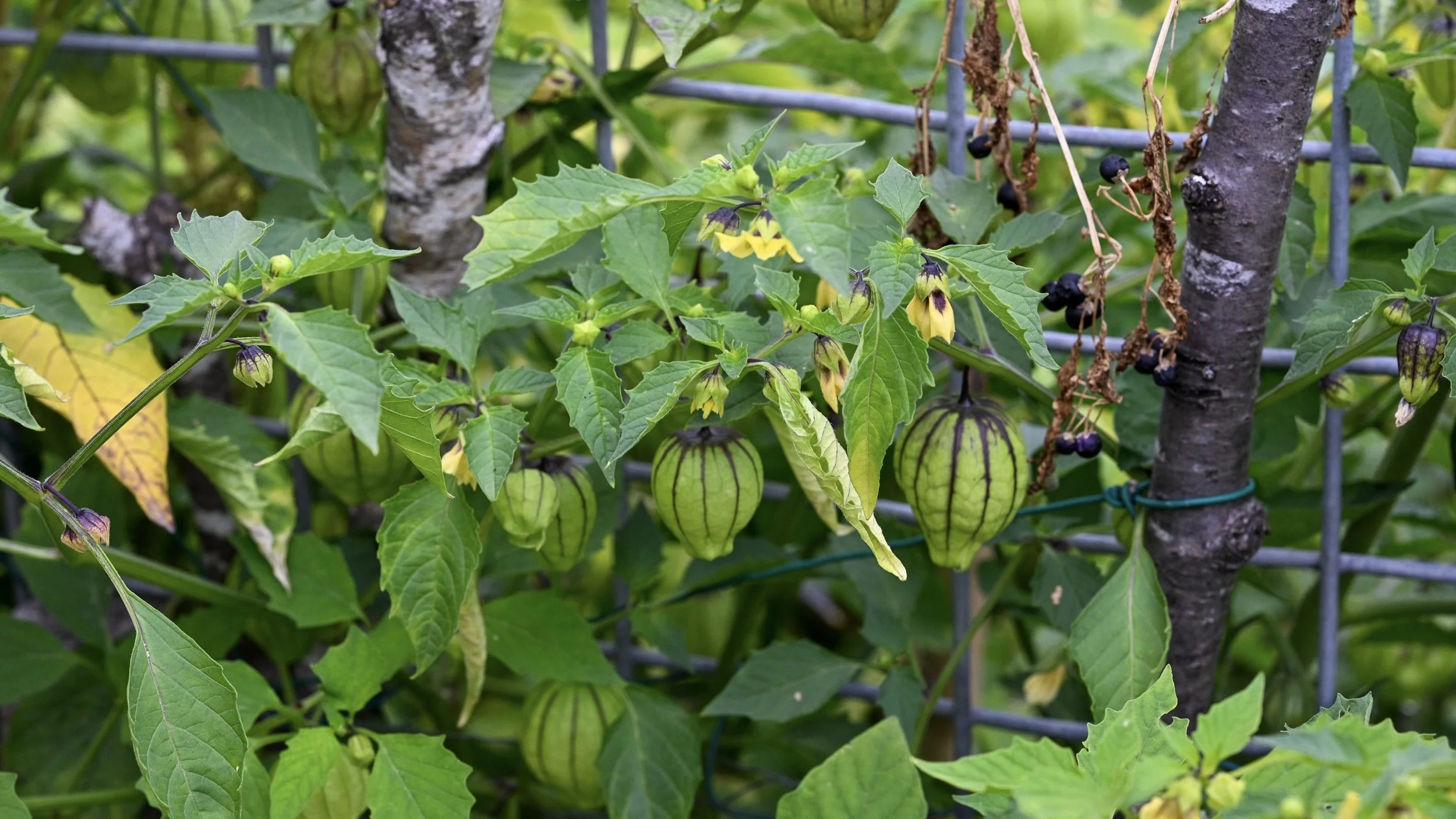
Tomatillos not yet ripe
The Evergreen Echo
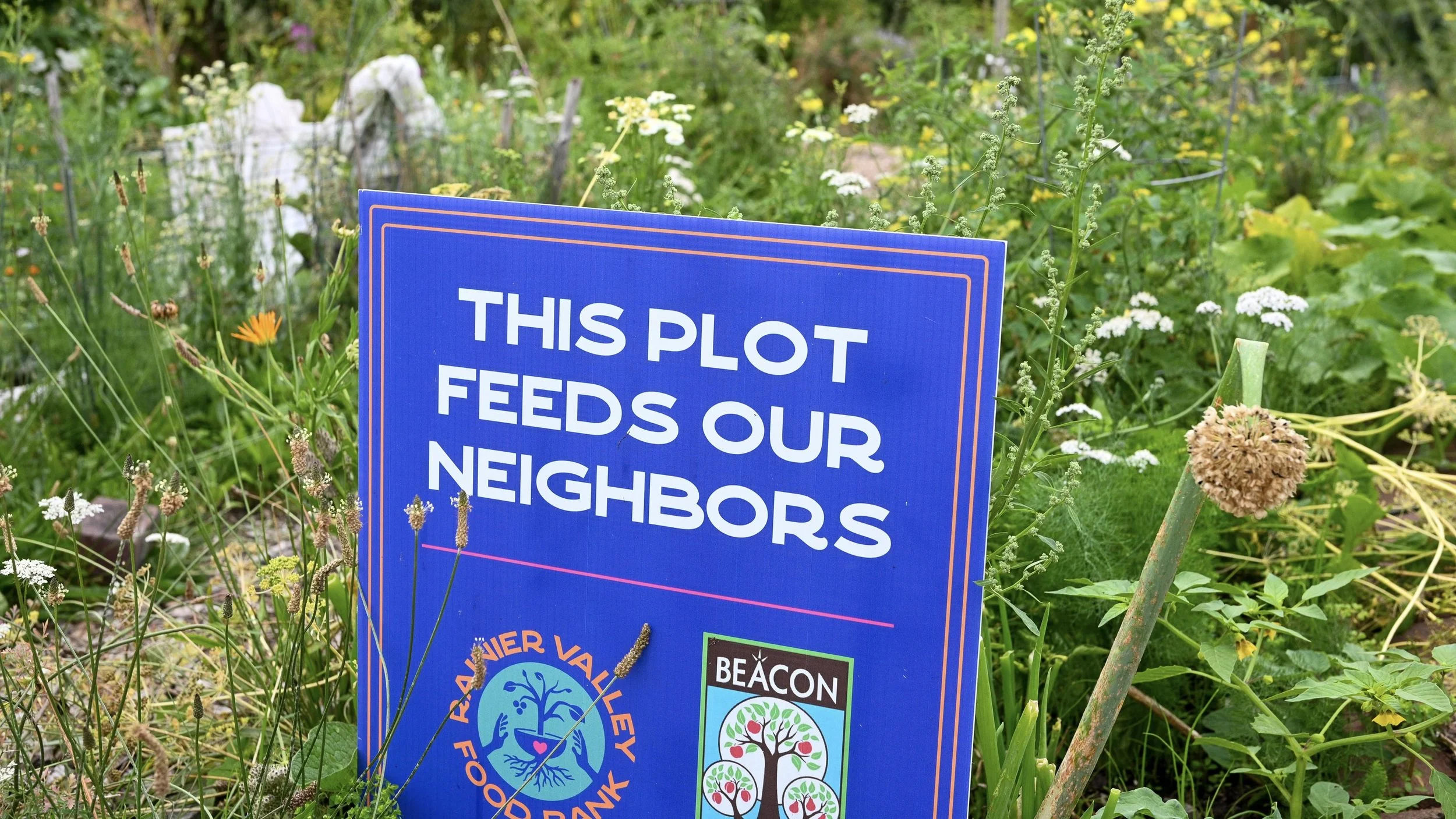
One of the projects BFF has built on the site is the BIPOC garden, which focuses on growing culturally relevant foods for BIPOC community members. There is also the Native Plant Guild, a section of the forest dedicated to growing plants native to and historically important to Indigenous Peoples of the region, such as the wetland-grown wapato and the camas prairie plant. Community Relations Director Priya Marita Diaz noted that BFF has had such success with growing camas that they have been able to share seeds with local tribes and increase habitat for the plant. BFF also uses a plot to grow food specifically for the Rainier Valley Food Bank, donating hundreds of pounds of food to them each year.
Overpicking is part of the game of hosting a food forest, but it also helps volunteers and staff understand what the community needs more of. Volunteer roles range from watering and maintaining gardens in the summer, to participating in one of the volunteer-run committees, to working the art table at events or bringing food to potlucks. The third Saturday of every month, BFF hosts a work party from 10 a.m. to 2 p.m. BFF volunteers and staff also coordinate events and workshops that blend plant cultivation with art. For instance, they organized a workshop on making traditional clay pot watering devices called ollas. The ollas are bisque fired, then buried in the soil and filled with water. The water then slowly permeates into the ground as a form of irrigation.
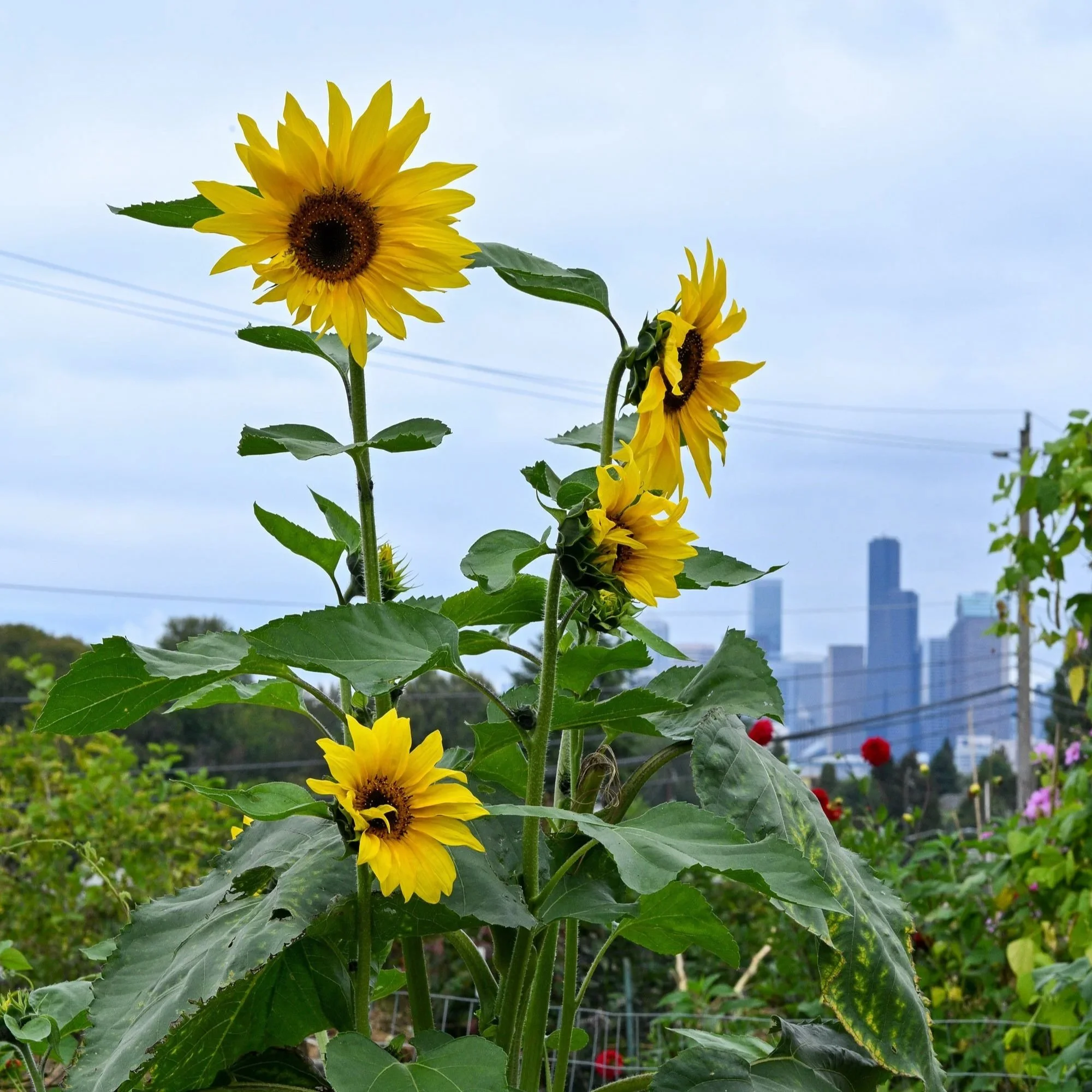
Sunflowers with Seattle skyline behind them
The Evergreen Echo
Staff members spoke about the importance of the work BFF does for their neighbors, particularly in these times of inflation, a corrupt healthcare industry, climate crisis, and much more. Diaz remarked on how, “through it all people need food, medicine, and community. BFF is a space that holds us.” Site and Programs Director Rebeca Bonilla-Myers added that localizing supply chains and building resilient ecosystems is a way in which people “can take back a little bit of their own power—to stop paying these exorbitant prices to huge corporations and instead invest time and money back into our own communities. Nature can provide us with so many of our needs for free or minimal cost, and the only thing we need to give in return is care.”
BFF’s impact can be felt in a myriad of ways. Bonilla-Myers shared a recent note from an herbalist who harvested a bunch of yarrow from the food forest, thanking the group for enabling them to share the yarrow with a Chinese and Vietnamese community who had had limited access to the plant and its traditional medicine. Diaz stated, “It’s a third space that holds the needs of folks in many ways. It’s a space where folks gather for celebration, for learning, for solace, for creating, for harvesting, for making friends, for reflection and meditation and mourning.”
As the first of its kind in the U.S., Beacon Food Forest is doing something revolutionary in Seattle in terms of food accessibility and sharing of resources, but they are not alone in their efforts. The Heron’s Nest is a local Land Back project with the Duwamish Tribe to restore the habitat in a former industrial waste site along the Duwamish River. Several nearby gardens and urban farms work to provide food to their local communities, such as Danny Woo Community Garden in Chinatown, Shark Garden in Burien, Yes Farm, and the Rainier Beach Urban Farm and Wetlands. To locate your nearest urban garden, take a look at this Community Agriculture Map released by KCD.