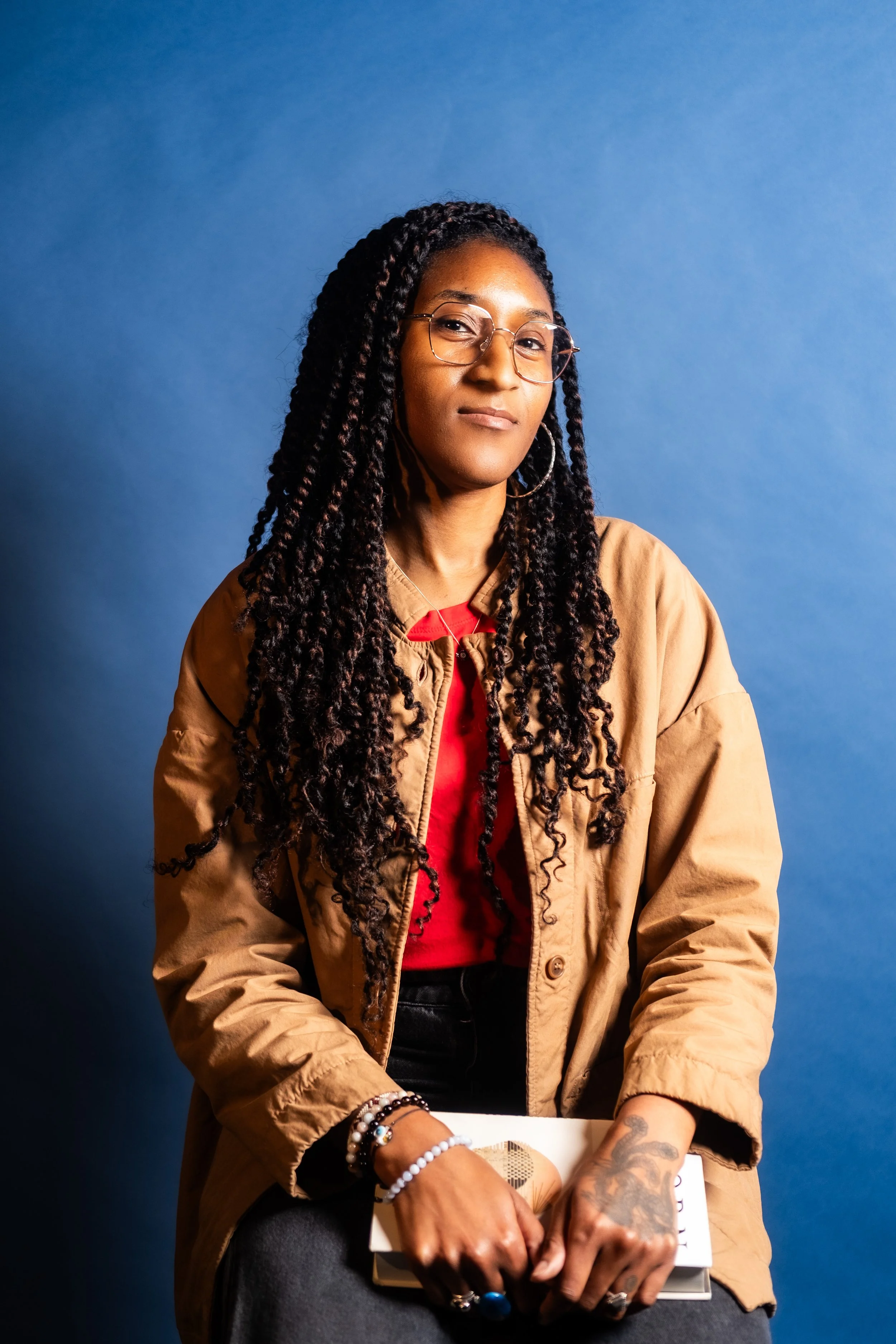
Evergreen Style: Sew Generously
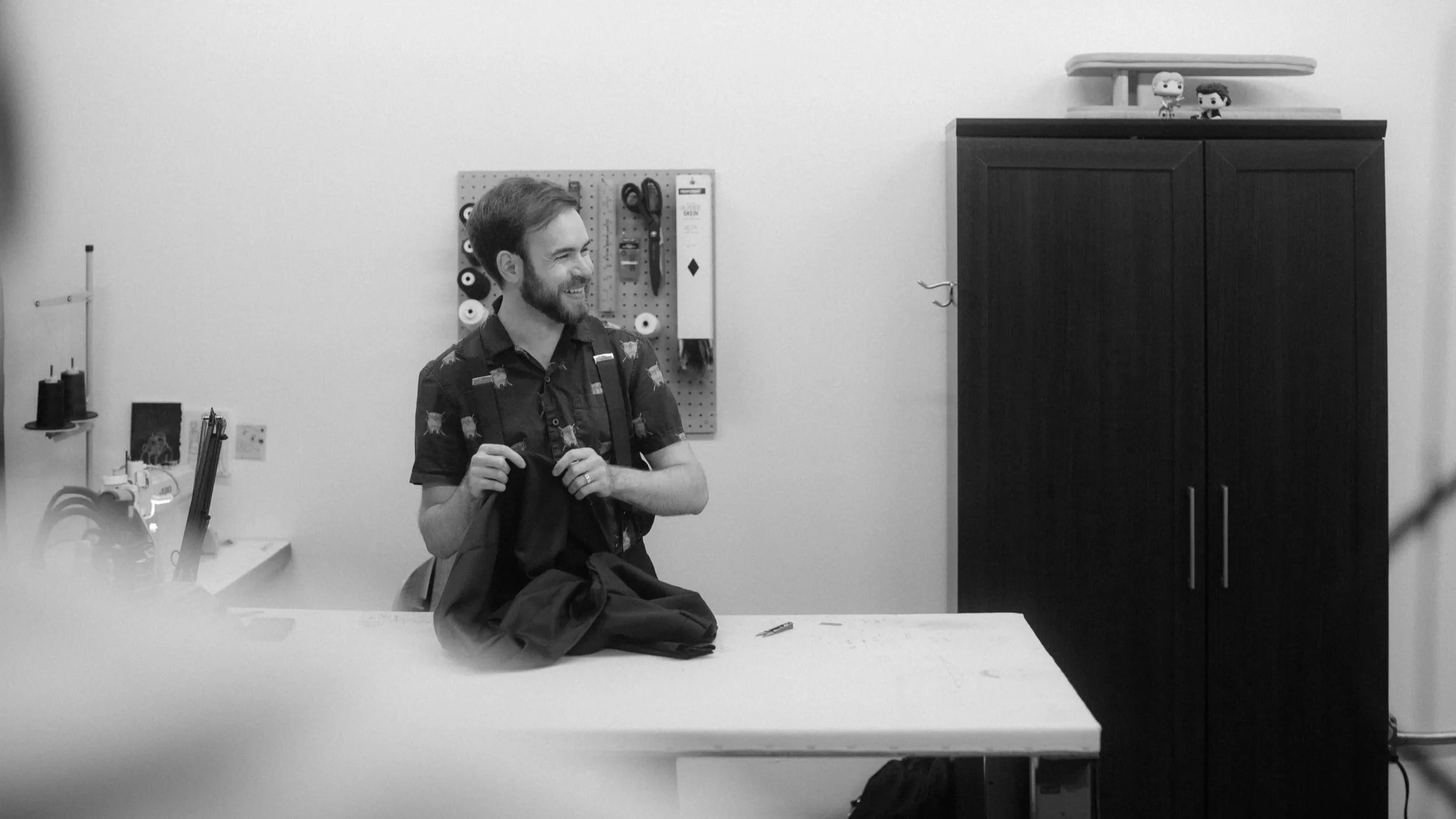
Tailor at work
Courtesy of Sew Generously
At the corner of 2nd Avenue and James Street, you will find one of the few bespoke tailoring shops in Seattle: Sew Generously. Step inside, and you might think you have wandered onto London’s Savile Row. The space is decorated with stacks of fabric books, meticulously crafted suits, and the quiet precision of tailors at work.
Its story began in 2010 through the patience and persistence of David Pew. He became a Master Tailor three years prior, upon learning the “centuries old craft” as an alterations apprentice at the locally headquartered retailer, Nordstrom.
As the fashion industry faces a shrinking pool of skilled tailors, preserving the craft depends on passing its knowledge on to the next generation. With Nordstrom recently launching a tailoring program in partnership with Seattle Central College, I caught up with David to hear how he has carried the craft forward through Sew Generously and what he believes is needed to sustain it.
Note: This interview is edited for brevity.
JeLisa: Since the fashion school [to] tailor pipeline is getting smaller and smaller, I am curious if you have any thoughts on that from your experiences here. Have there been a lot of students from the Seattle area?
David: Since I’ve opened up downtown, I’ve seen a pretty steady, if slim, pool of people who are interested in tailoring. They don’t necessarily all tend to be fashion students. Fashion students, I would say, a lot of the time lean more towards design, or they want to go into working for a company making their design decisions. I started out working at Nordstrom in their alteration shop as an apprentice. I later found out I was the first person they ever hired for that position that didn’t get my job through a welfare office, so it was not a popular position. They cut the program off in 2008 because of the economic crash, and so my apprenticeship ended early. A few years later, they brought the program back. I was very pleased to find out that now there were plenty of young people who are interested in the program, learning how to alter clothing, and not just me anymore. So, that was an interesting shift. We get a number of people who are interested in working here as a tailor. I would say four or maybe five people a year. So, like I said, a steady but narrow stream. There’s been a little more interest, which makes me excited.
JeLisa: Do you feel like that is just unique to the city?
David: I don’t know. I have had interest from people from elsewhere as well. Two of our tailors moved here from San Antonio, Texas. So, there is interest in other parts of the country. There’s also a bespoke tailoring school in Texas, which is not where I would have expected it to be, but very cool that that’s there. I think in Seattle, one of the things that draws people to me is that there are not a lot of custom tailor shops around, so I get a disproportionate amount of interest compared to, say, New York.
JeLisa: When you think about the industry at large, and this trend, what do you think we’re losing as far as fashion? Maybe, the thought of running out of or not having enough tailors [in proportion] to the need?
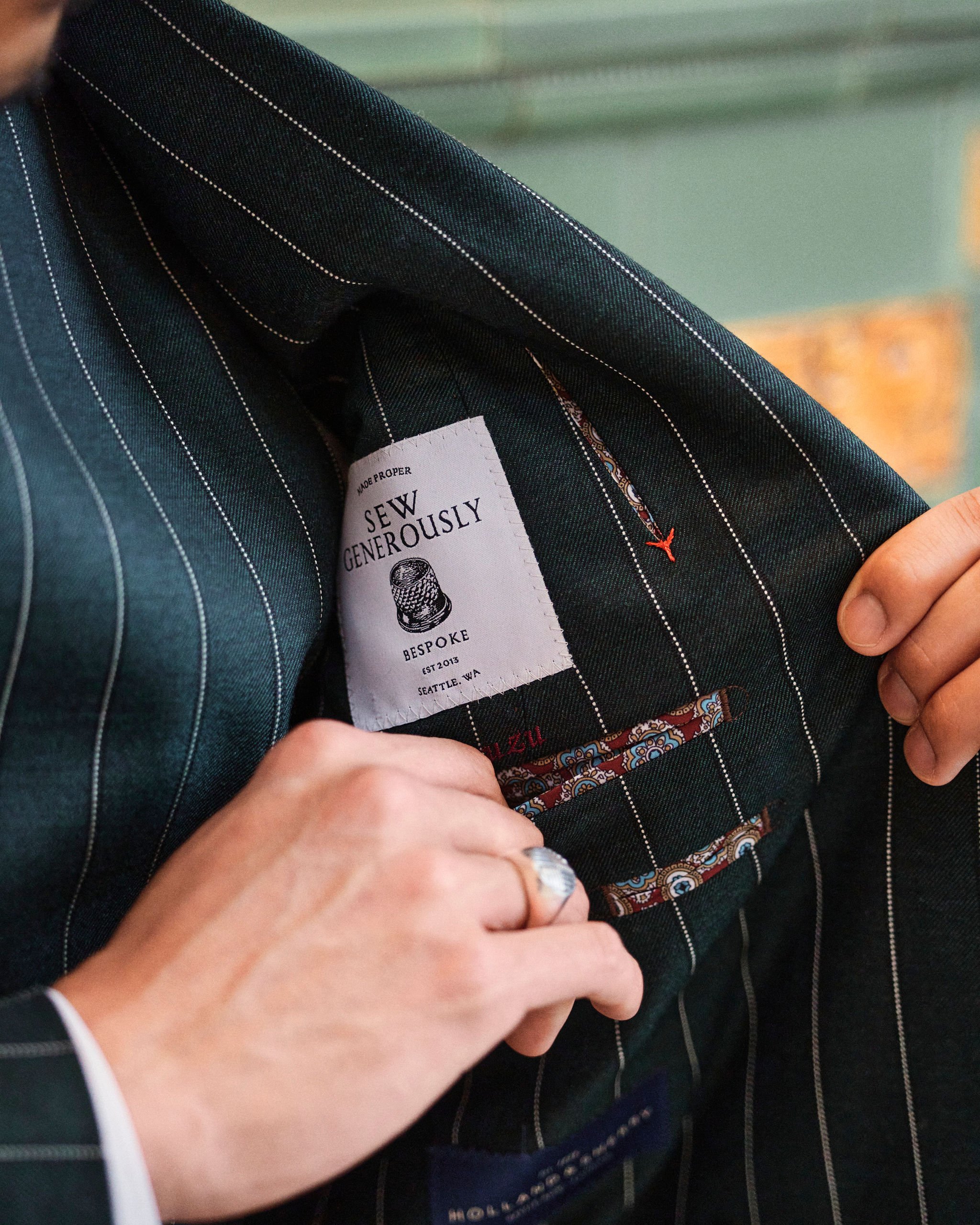
Courtesy of Sew Generously
David: This is a big idea kind of answer, but one thing that I see a lot of these days is that tailoring, in particular, especially high-end tailoring, requires a stupid amount of patience – an amount of patience that many careers do not. And especially in these days, patience is not a quality that is highly cultivated by our culture. We live in an era where when an email takes two minutes to send, we’re flipping the desk, and we’re like, “Can’t you go into outer space and back faster?” And meanwhile, I’m asking someone to take an hour and a half to sew their first buttonhole by hand, and [telling them] when you’re really good, you can get this down to 40 minutes. You know, that’s a big ask in today’s culture. I think that has a big impact on how many people want to become tailors versus how many people actually become tailors. The idea of becoming a tailor is very sexy. You have the thought that you’re going to be working by candlelight with the mice scampering about, stealing the scraps of cloth for their nest while you sew clothes for the king. When, in reality, you’re going to be ripping that damn seam out of those pants for the fifth time because you can’t get it right in a well lit room with other frustrated tailors. It’s not always that glamorous, and it does require a ton of patience that a lot of us don’t have anymore.
JeLisa: Okay, I have two questions for the points that you’re bringing up. First, when you’re looking for tailors to add to your team, what skills, in addition to patience, are you looking for, and which ones are the hardest to come by – that you’re not seeing? Second, because I come from the industry too, and I understand that there is a need for [us to have] patience, but there’s also the need for customers to have patience. And, with trends that are coming in so fast, it disrupts the ability for us to all hold patience. So, then, how do you balance that tension?
David: In terms of the skill set that I look for in new tailors, the number one thing that I’m looking for, as you said, is patience. The number two thing I’m looking for is I need them to be a good fit for our work culture here because we have a very carefully curated work culture in our shop of kind people, and that's super important to maintain.
The third thing that I look for is… someone with very little skill. I want to train them how I want them trained, and in the tailoring world, there are oftentimes 15 ways to do one task. If you think about something as simple as hemming a pair of pants with a blind hem, I’ve probably seen like eight different ways. All with the same machine and the same technique, but different. You start from here. You stretch it out while you sew. Or, no, you don’t. You bunch it up, or you notch it here.… A lot of them are designed to maximize speed rather than efficiency. So, you get a lot of shortcuts, is what I’m saying. When someone comes in and I teach them how to do something, and they say, “Actually, I can do it much faster.” I have to pump the brakes and say, “We’re not doing it that way.” Some people take offense. I occasionally get fashion students coming in who say, “I can make a bespoke suit in 11 hours.” I kind of go, “Well, it takes me 150 [hours] so there’s a disconnect here in what we’re looking for from our bespoke suit. I don’t think this is going to work.”
We stress efficiency, but quality is our number one goal. If it’s going to take a little longer to get it done, if your productivity is going to be lower to get it done right, that's important to me. So I do look for people with kind of a blank slate, if you will, and the last thing that I really look for is teachability. Someone who's going to be teachable and who's going to be willing to do things in a way that might not make sense to them at first, or that might be confusing to them at first, to make sure it gets done right.
To your other question, the way we deal with that here is by limiting options. We’ve distilled [our style books] down into the main options that are what people are looking for in a suit, and then we use those to show the customer. They tend to be very timeless for our shop. We’re looking for permanent fashion. We’re looking for things that are not going in or out of style a lot of the time.
JeLisa: How long does it take to develop the type of skill set that you think a tailor should have?
David: The answer among tailors is two lifetimes, that’s the joke that I’ve heard before. The more hours you put in every day, the faster you’ll learn it. It takes a lot of repetition. I think someone can become a really strong tailor, at least in one area, in a couple years. You can get really good at doing basic alterations on pants and coats, for example, or something like that.
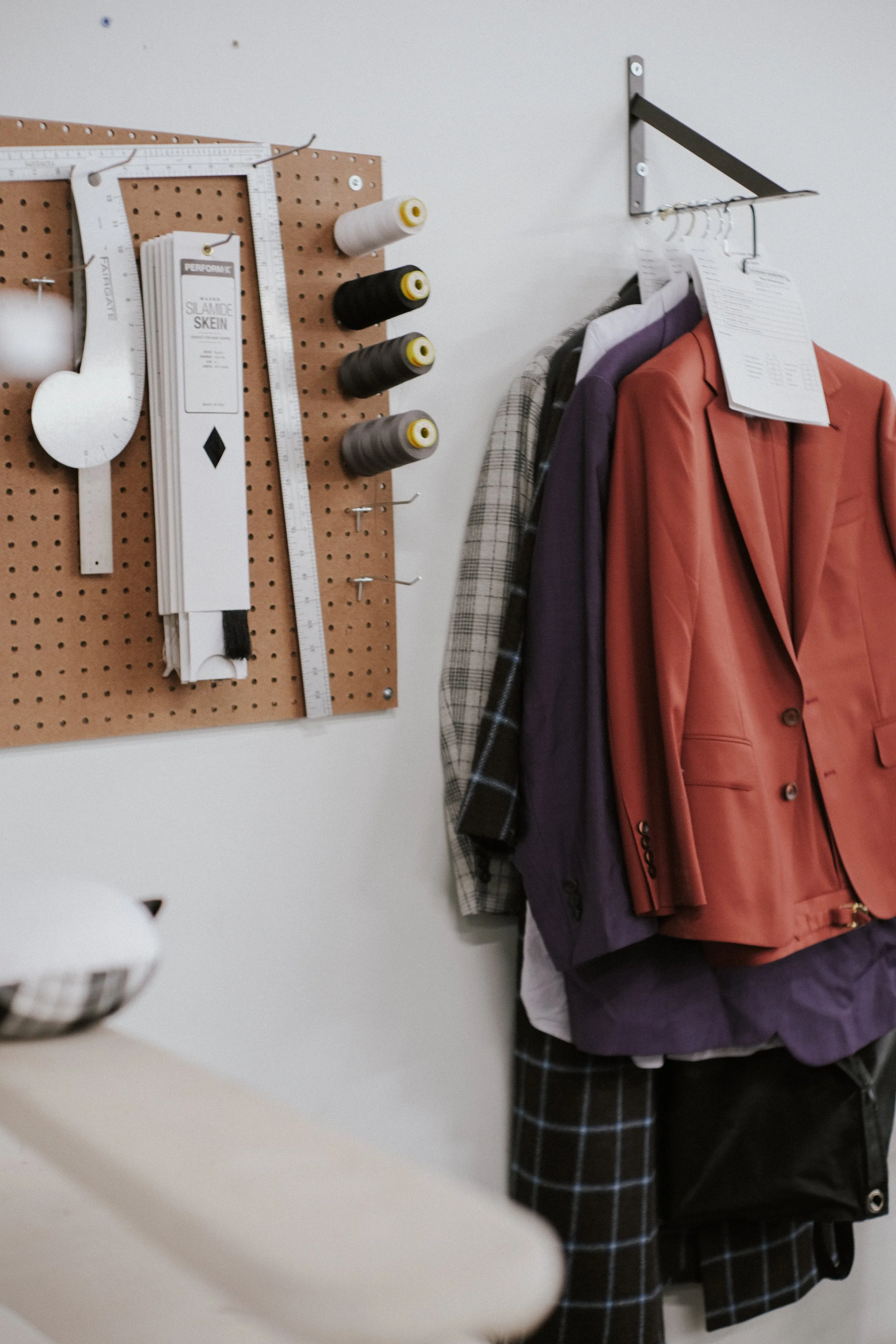
Courtesy of Sew Generously
JeLisa: Building on that, would you say that we need more tailoring programs to help with the deficit of younger tailors, or are there other things that we’re maybe not talking about or considering that need to be addressed?
David: I would say if the supply and demand works out, I think we should definitely be making every opportunity for people to learn to sew. Otherwise, we have a dying craft on our hands. So yeah, I’m all for it.
JeLisa: How would you feel if that were to happen, or where do you see things going in the next 5 to 10 years, both in Seattle and beyond?
David: I’d say it kind of comes down to how determined people are. When I got into sewing, especially bespoke tailoring, there was no program. They had the fashion design program at Seattle Central [College], but that’s not what I was interested in. There was no program for it. I went out and I walked into a stranger’s tailor shop and said, “I want a job.” I got lucky. He hired me because his current tailor had a broken hand. It took something like that. If you’re willing to do stuff like that, you will probably find what you're looking for somewhere out there. It might not be where you expect. But I think the more we can make [sewing] accessible, the better the outcome is. I don’t see sewing going away in Seattle for sure, not while I’m here. I’m gonna make sure of it. I [also] think if big companies are concerned about losing [or] not having enough tailors, they need to be investing in [these] programs. They need to make sure they’re paying their tailors enough as well, because it’s one thing to love a career, and it’s another thing entirely to be able to afford to have that career—especially in a place like Seattle. It’s one of the most expensive cities in the world.
The enthusiasm that David carries is palpable. It is reflected in the experience he curates for everyone who walks through the shop doors. What began as one tailor’s pursuit to preserve tailoring has grown into a team of 11, creating a sense of connection between tailor and client, craft and community, and generations past and future.
“Sewing is fun. I think more people should sew,” David shares parting words. After spending time speaking with him at Sew Generously, it’s easy to understand how that enthusiasm has become part of what makes tailoring worth keeping alive.