Trans* Talk: Academic Freedom
The Evergreen Echo
Over the holidays, I was alerted to an unfolding story about a Transgender Oklahoman instructor at the University of Oklahoma who was fired after giving a failing grade to a student. At first glance, this story seemed cut-and-dry—a teaching assistant ousted unfairly due to a bigoted student. But the more I learned, the more that the alarm bells rang. This situation sets a scary precedent for Trans* educators and academics, not only in red states, but all over the US, where education faces financial cuts under the GOP and the President regularly attacks DEI in academic settings.
We set our scene: A psychology course, Lifespan Development, at a big university, where students were given a fairly typical assignment. The assignment asked students to respond to an article that detailed the effect of gender norms and their role in the mental health of middle schoolers. Samantha Fulnecky, a student of this class, submitted her response (and trust me, it is a wild ride) to her instructor. The instructor, Mel Curth, a graduate student who just so happens to be Trans*, gave Fulnecky’s response a 0 out of 25, citing that the essay was contradictory, did not include sources, and did not follow the assignment directions. In retaliation, Fulnecky argued that her grade was an act of discrimination towards her religious beliefs, the instructor was placed on leave from their position on November 30, and remains on leave as of my writing this column.
For anyone brave enough to read the essay (I don’t blame anyone for not wanting to), it’s plain that this response is not a passable college-level essay. Completely putting aside the assertions Fulnecky makes, as harmful as they may be, there are, as the instructor said, many contradictory statements. One such contradiction is Fulnecky stating that she thinks that kids should be teased for not following gender stereotypes, then stating that she does not support kids being bullied. She also does not cite her source—namely The Bible—correctly, and speaks poorly of her classmates, who she calls “cowardly and insincere” for agreeing with the article’s assertion that gender roles are societal, not natural, and impact youth. The problems with this essay are blatant, even to someone who is not in the academic sphere; and in my opinion, any teacher would be within their right not to give the essay a passing grade. In fact, after Fulnecky made her complaint, the essay was re-graded by a cisgender colleague of Curth, Megan Waldron, who also agreed with the grade that Curth originally gave, citing the same reasons.
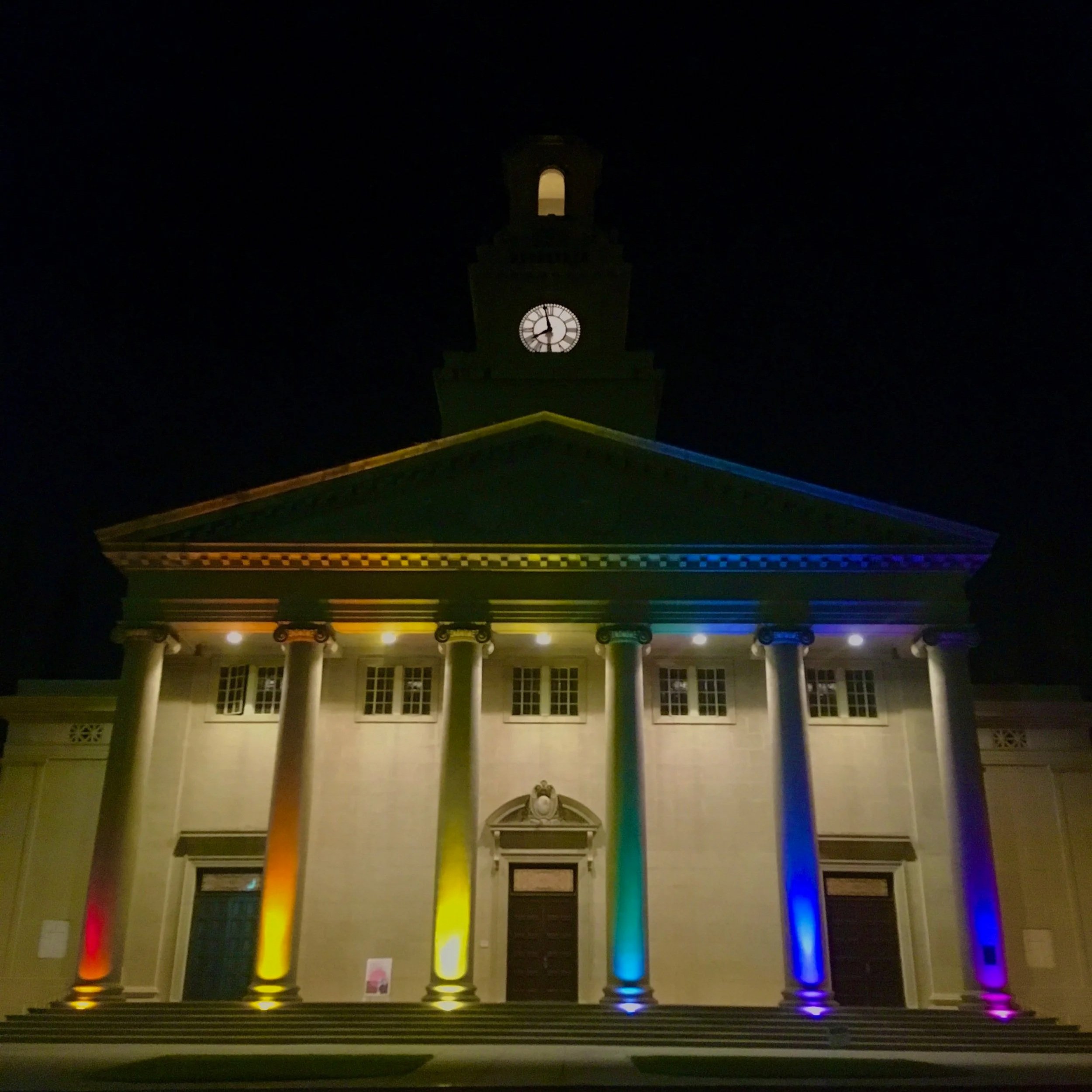
"Colors of Love" University of Redlands Campus, 2020
The Evergreen Echo
There are many concerning wrinkles in this story. First, it sets a precedent that students may argue against poor grades by claiming it an act of discrimination even when there is no discrimination present. The fact of the matter is that Fulnecky’s essay did not meet the assignment’s rubric and the person who reviewed the essay after Curth agreed with the original assessment of the work. Curth’s decision should have been upheld on that alone, but instead, Fulnecky’s baseless claim resulted in the instructor being placed on leave. The University’s response states that “The University of Oklahoma takes seriously concerns involving First Amendment rights, certainly including religious freedoms…the college acted immediately to address academic issues raised by the student.” What this statement and the actions of the University makes clear is that while they do have the best interest of their Christian students in mind, they do not extend that same interest to their Trans* faculty or graduate students.
Another wrinkle I find particularly damning is that part of Fulnecky’s response to her grade was to contact the Governor of Oklahoma, Kevin Stitt. Stitt’s views on the Transgender community are widely known. In his time as Governor, Stitt has banned Transgender health care for minors, supported bans on Transgender athletes, and in response to Fulnecky’s situation, said in a post to X, “I’m calling on the OU regents to review the results of the investigation & ensure other students aren’t unfairly penalized for their beliefs.” To me, Fulnecky reaching out to Stitt affirms that her claim of discrimination was motivated partially by politics and that she intended to turn her claim into something viral. In a time so rife with threats to academic freedom and DEI, this blatant attempt of gaining political favor and social clout is particularly scary. Did Fulnecky call her failing grade discrimination simply because she knew she could oust a Trans* person doing their job? This remains unclear, but in my opinion, is a strong possibility.
As of December 30, Curth has appealed the University’s decision to place her on leave, though no decision has been reached as of yet, and how far this case may go is pending. I, for one, will be following this closely, and hope to share a good outcome in the coming weeks or months. If what the University stated is true, that they are "committed to teaching students how to think, not what to think,” I hope they will begin by upholding the decisions made by two of their educators who critiqued a student on how they shared their opinion and not, as the student asserted, what their opinion was.
Do you have a Trans* story or question for Parker? parker@evergreenecho.org