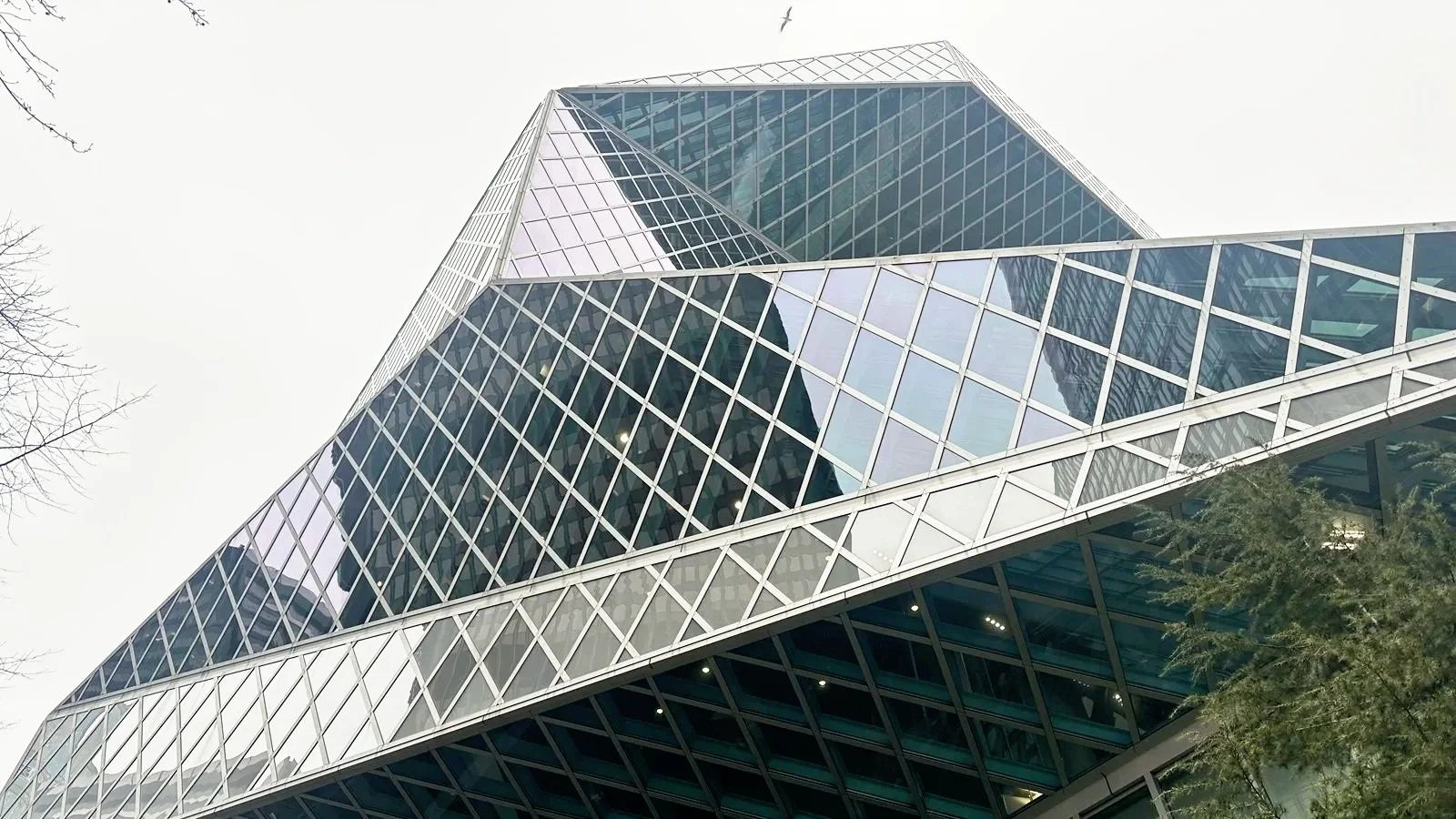
Heading up to Central Library’s 9th floor
The Evergreen Echo
Everyone has a home away from home. They always have a place to retreat to when reality invades. Where is mine? The poetry section of any library. When I first moved to Seattle with my fiancé, I didn’t have a job. After I unpacked, organized, and decorated our apartment in a brisk two weeks, what did that leave me to do? Scope out my nearest library.
The Seattle Central Library was the first haven I found. My friend helped me get my library card and showed me all its inner secrets and quirks. I immediately found sanctuary in the poetry section on the ninth floor. This is where I would read, write, and immerse myself into the world of poetry. My manuscripts felt right at home. One does not go to the library just for books—they go for the experience.
Here are the Top 10 types of poets I found scattered throughout Seattle public libraries:
The Founding Fathers: These poets are the Mount Rushmore of poetry. The backbone. The foundation. These poets walked and wrote so the modern poets of today could flourish and fly. They’re the big names forever ingrained from middle and high school poetry units. Whether they leave people with a sour taste in their mouth or not, these names are not forgotten. Every art form must start from somewhere and it’s imperative to pay homage to those trivial voices. Some examples include William Shakespeare, Emily Dickinson, William Blake, and John Keats.
The Trophy Wives: These are the voices of women who had a lot working against them. They started out overshadowed by their husbands’ successes until they found their own resolute voices, wrote poems, and made claims in the poetic world of their own. Some of these poets not only surpassed the work of their husbands but remain some of the most famous and regularly referenced. These poets challenge social and gender norms through their writing. Examples include Anne Bradstreet and Elizabeth Barrett Browning.
The Seattle Stans: These are the mouthpieces of Seattle whether they wanted to be or not. Any Seattle poet or artist always has some of the best inspiration. It’s only fair they celebrate and vocalize what it is they love and see through every art form in front of them. These poets help prolong Seattle’s rich history while continuing to document its evolution. I continue reading more from the Seattle voices all around me. Examples include David Guterson, Carol Levin, Judith Skillman, and Seth Jani to name a few.
The Quirky Girls: Nobody wakes up wanting to blend into the crowd. Neither do poets. These miscellaneous poets don’t always fit into one group. As poetic chameleons, they may explore different genres or dabble in experimental forms while they continue to hone their craft. Once they find something worth claiming as their poetic identity, they run with it. As they sift through each piece, they build themselves up with armor until ready to enter the battlefield. Think “rule”- breakers like e. e. cummings or T. S. Eliot.
The Queeries: LGBTQIA+ artists have some of the most powerful poetic voices. They tap into a pool of unique experiences that others simply do not go through. What do they do with them? They turn them into poetry and art. They’re also the most relatable and authentic voices to me. Even if you cannot relate to the queer experience, the poets bridge the gap between understanding and acceptance just a little bit more, poem by poem. Examples include Mary Oliver, Audre Lorde, and Halsey.
The Cub Scouts: Also known as the Transcendentalists, these poets found beauty and chaos in the blemishes and banquets of nature and everyday life. They encouraged individuality through our surroundings. Seattle is no stranger to these hidden gems with inspiring natural locales. While sitting in these very spots, away from the city, I have learned much about myself as a person, writer, and artist. Nature is Mother. Equally ruthless and nurturing. Some prime names include Ralph Waldo Emerson, David Thoreau, and Walt Whitman.
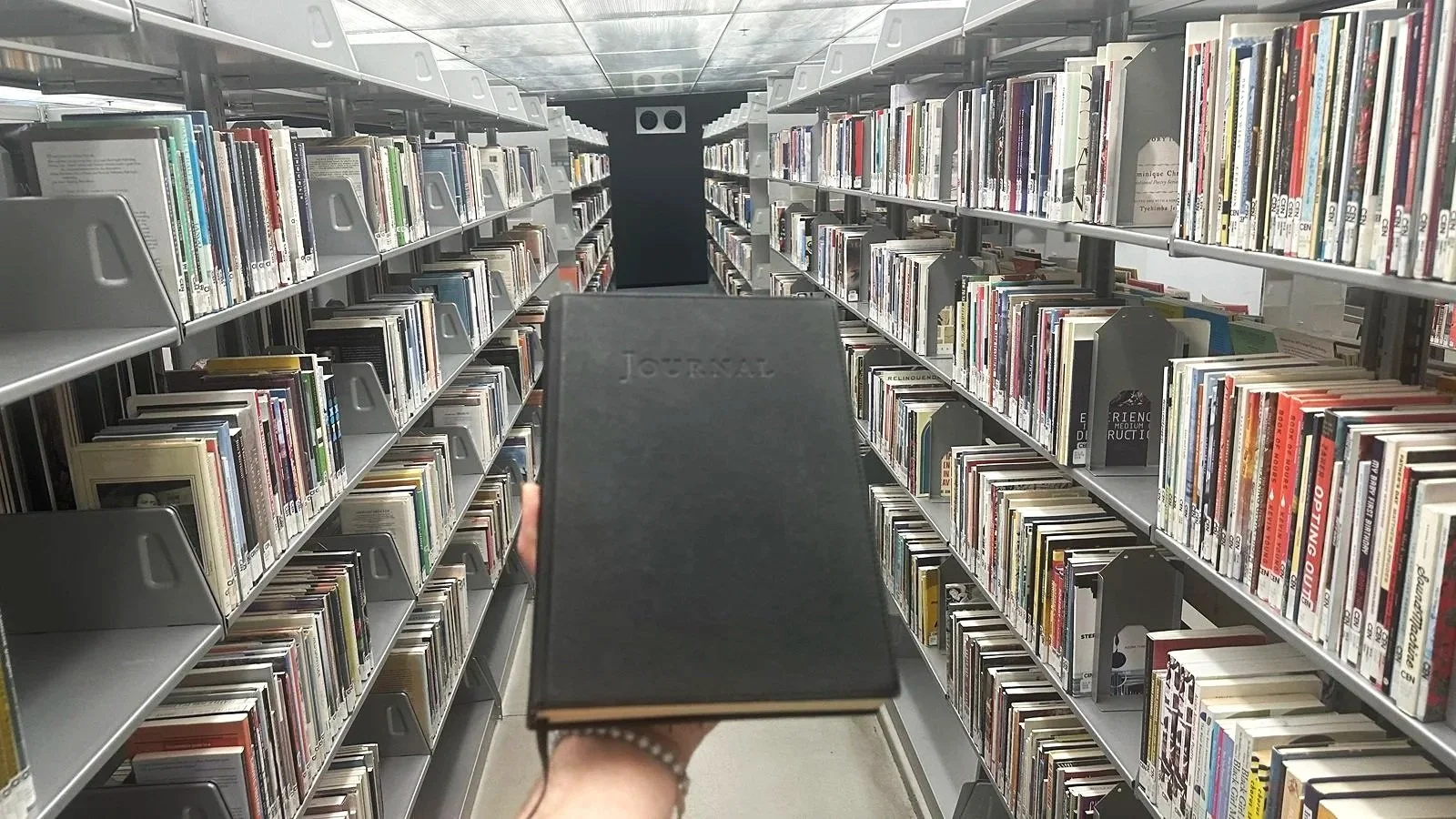
Shelves filled with books ready for perusal at Central Library
The Evergreen Echo
The Myth Spinners: These are the poets who reimagine fairytales or legends in a new way. As someone who loved fairytales and Greek mythology growing up, I appreciate the fresh take on not only these stories, but crafting a poetic spin on them. It is in these stories and poems that give me inspiration to do the same. It takes a lot to dissect and build back up someone else’s impeccable design. These poets do this with respect and class—like Amanda Lovelace, Trista Matteer, and Cody R. Simpson.
The Sads: When I first started writing, these poets were my bread and butter. They were all I could and would get my hands on. Trauma bonding is real and is here to stay. Not only do these collections walk the reader through the poet’s own trauma, but they allow the poet to guide the reader through their own in a safe and healthy way. They don’t just place a band aid over the wound, but they open it up, disinfect it, and heal it all in one emotional sitting of reparation. Trigger warnings always accepted, encouraged, and appreciated. Wrap yourself in a warm blanket while reading Sylvia Plath, Edgar Allen Poe, Maya Angelou, and Rupi Kaur.
The Lords and Ladies of Love: Love is a universal language. As someone who didn’t write about love for a long time, I didn’t understand why someone would choose to write about love when there are so many other subjects in the world. Love poems were foreign to me. Even when I tried, it made me cringe beneath my skin. Yet, these poets are not just sappy puppy dogs or heartsick heralds, but portray love in a variety of avenues. They explore different forms of love as there is no one kind of love, relationship, or way to experience it. Examples include Reyna Biddy and Atticus.
The Flower Children: One can’t just dive into the end of a pool when they don’t know how deep it goes. They could. But why would they? These poets’ target audience is children, because poetry deserves as much respect as any artistic medium. Just like how children take art and music classes, poetry can appeal to children in the same way. These poets bring the fun, whimsy, and excitement back into stanzas. Poetry is not always about hidden meanings and unclear symbols. Sometimes, the most innocent voices have the most to say. Examples include Shel Silverstein and Charlie Mackesy.
Although most of the examples I mentioned meet the requirements of several categories, it was fun to assign them according to what I thought was their strongest suit. I felt like I was creating different table groups in a cafeteria. Like beauty, poetry is in the eye of the beholder.
Whatever your relationship is with the arts, poetry is always here to lift you up no matter how high or low you are in life. Whether you read or write poetry, there is always something new to explore within your wheelhouse or beyond it. Explore your nearest library and wander the labyrinth of information until you find a genre, a shelf, and a book worth a stop.