Beyond Protests, Humanize MENA Lives with Intentional Arts + Culture
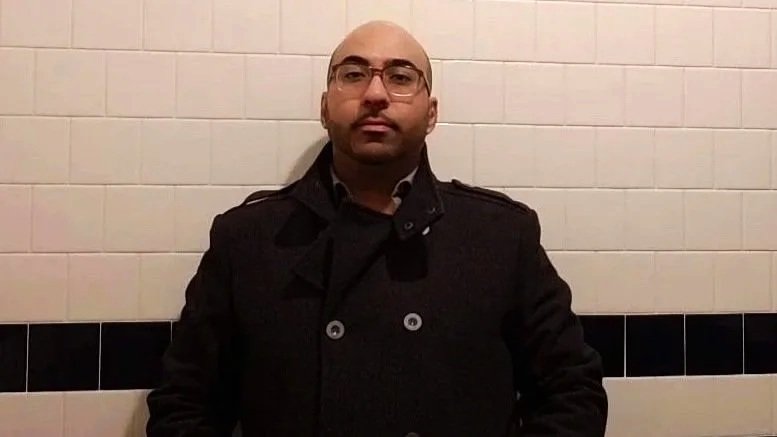
Yashar Shayan
Courtesy of Yashar Shayan
Across the street from the (in)famous Rickshaw Restaurant & Lounge lies the unassuming 1 Million Cafe. I’ve lived in the area for over a decade and never knew it was Yemeni nor that their chai is homebrewed with love; my iced version with oat milk presented a homey, unadulterated flavor unlike any chai I’ve had in Seattle.
How many of us walk by Middle Eastern establishments and never try them? Is it fear? Racism? Flavors unknown?
It was here I sat with Yashar Shayan, MENA community organizer and multifaceted Seattle local. I’d stumbled upon the MENA Heritage Month profile with no idea that I was in for a sorely needed education.
**This interview has been edited for brevity.
Mary (M): Tell me about yourself. Where does your culture hail from, and when did you land in Seattle?
Yashar (Y): My name’s Yashar, I'm an Iranian immigrant. I came to Washington State at a younger age, then eventually came to Seattle to study at the University of Washington. I studied sociology at UW; UW campus was also the first place I heard anything about ending the occupation of Palestine. It was not something that was ever discussed in school. I remember seeing people holding up signs on the hub lawn.
I think a lot of Iranians and Middle Eastern folks have shied away from any kind of actual organizing because [it feels] so dangerous. People lose their jobs, get ostracized from various communities, get demonized…in 2026, where we talk about inclusion, equity, it still seems like the most taboo thing that no one wants to talk about, especially those that talk about DEI. I’ve been in meetings and circles where we’re talking about race…and if I say anything about the prejudice and marginalization that ME people experience, it feels like I get blank faces, dead ears, or even faces like ‘how dare you bring this up.’
At some point I reached a breaking point of realizing that… even if I don't speak up, I continue to experience racism, whether it’s [the] kinda subtle passive aggressive brand that Seattle is so well known for, or something more overt. I’ve had experiences of walking down the street and people yelling racist slurs, people who have no clue what my actual race is but can tell I'm generally Middle Eastern-looking.
A good place for us to start in the MENA community is looking for greater inclusion in arts and culture. Here in Seattle… the foundations and institutions are putting a lot of money behind arts and culture, and we’re seeing lots of programs. Like the waterfront just had their grand opening last year with a full day of arts and culture programming, a lot of immigrant diasporas were there representing their song and dance from their own traditions… When I see how diverse they are, that they really are including a lot of different communities, and yet somehow ours is not included, I think we have to start there. Hopefully from there we can normalize the fact that we exist, that we’re human...and get more progress on the issues that are really hurting our community. But I think this is a good place to start, so that’s where I've started.
M: For the uninitiated, what does MENA stand for, and which nations and cultures does it comprise?
Y: Like most things, there’s no perfect answer or perfect definition. In general, MENA stands for Middle Eastern and North African, so it encompasses the regions of Southwest Asia, so Iran, Afghanistan…depending on who you ask, some of the former Soviet block countries that are mixed Persianite and Slavic in heritage. Maybe not everyone agrees, but we have a lot of cross-cultural components with those folks. It includes Turkey and continues farther west towards the Arab world, Palestine, Saudi Arabia, Jordan, and North Africa with Lebanon and Egypt, Syria, etc.
The biggest groups by ethnicity in the US are Iranian immigrants and Arab immigrants; of course, that itself is tricky (again no perfect definition) because Iranian immigrants are generally an ethnic group as well as a nationality, whereas Arab immigrants can come from many nations and are of Arab ethnicity. So those are the two largest categories but there are plenty of others. And something we see is a really big rise in Afghan refugees and immigrants because of the US’s war there and the subsequent US’s pulling out without a plan, which destabilizes [the region] even more…so we see more Afghans and MENA people in general having to leave their homelands because directly or indirectly US actions and policies have been destabilizing their homes. It’s a quickly growing diaspora, which of course is causing more tension.
M: What’s the one thing you’d like white Seattle folks to know about MENA cultures?
Y: Much of the cultural components you might consume, chances are either from MENA cultures or derived from MENA cultures and have been appropriated by various others. People think that maybe the West invented something, or they don't know that whatever it is they’re consuming is Iranian or Arab. Many Americans have gotten into Ancient Persian mystic poets like Rumi and Hafez, and they don’t appreciate the culture that those folks come from. I do appreciate that they appreciate the poetry itself…I appreciate that they’re engaging with the culture that way, but then [they’re] picking and choosing and still seeing these cultures as invalid in a way and not engaging with Persian and other MENA folks within their own community in a more deep way.
The MENA community has had thousands of years of contributing to the world’s greatest poetry, music, dance, art, and architecture. Much of what we see in architecture is derived from the Middle East. It’s largely understood by historians that the Romans conquered much of Europe and spread their culture, but [they stole] from the Greeks, and the Greeks of course spread their culture throughout Europe—but one of the earlier things the Greeks did was steal their culture from the Persians. When you think of Greek Iambic pillars and Greek temples, those were largely modeled after what Alexander the Great and cohorts saw in Persia. Which is why when you look at ruins of Ancient Persian temples they look a lot like the ones you see in Greece. Or more accurately, the ones you see in Greece look a lot like the ones in Iran.
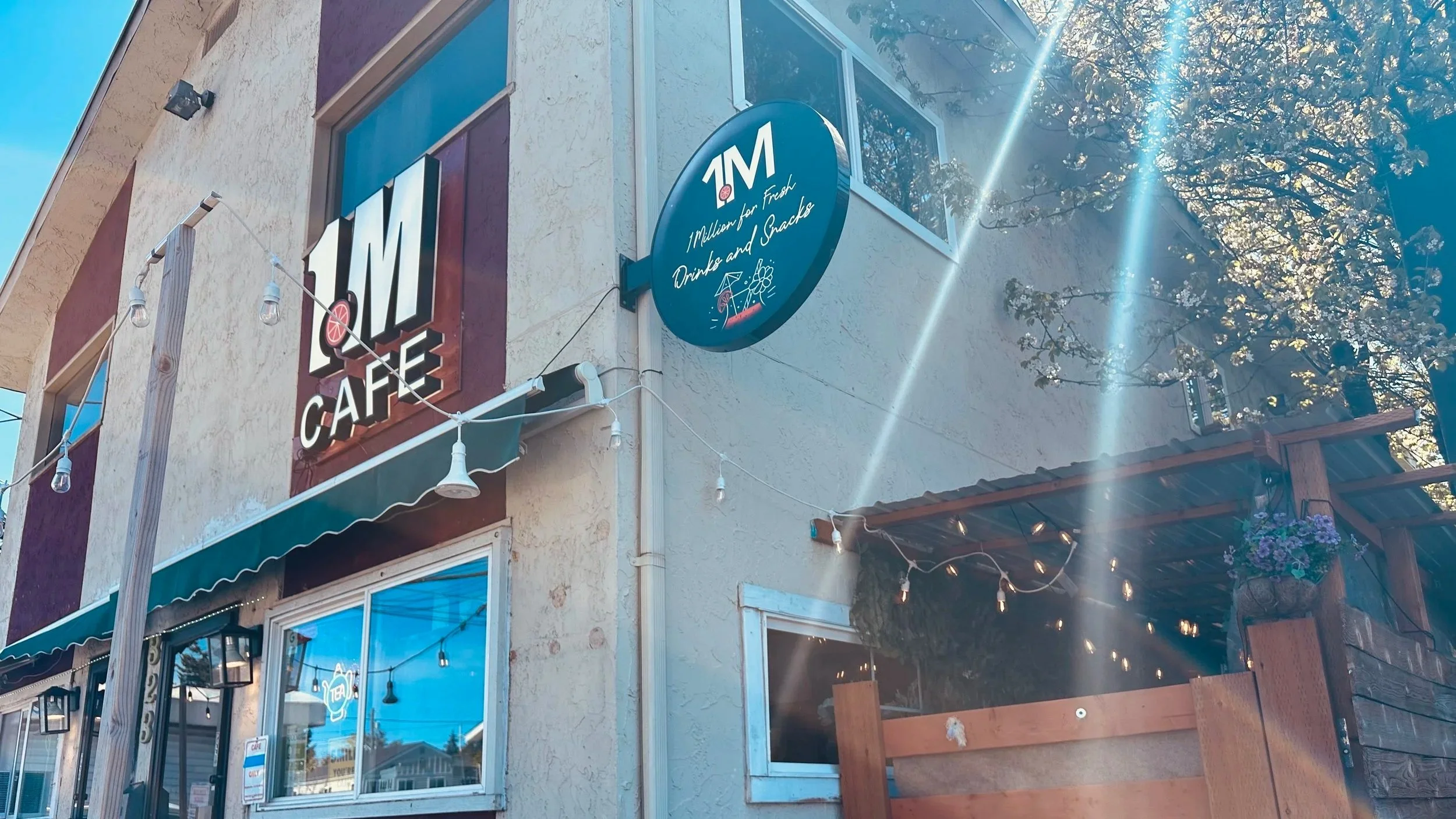
1 Million Cafe at 105th and Greenwood Ave N.
The Evergreen Echo
M: What are you usually most excited to show off about your own culture?
Y: The music is absolutely beautiful. The traditional music is great and I’m a fan of cultural fusion, like music that has roots in Arab and Persian styles but then has a more contemporary way to it. I think there's great modern music being made…that continues to be sung, played, and recorded. A lot of folks are getting into…psychedelic rock, some are discovering psyche rock from Turkey and Iran. There’s an Iranian artist from the ‘60s called Kourosh Yaghmaei who has many beautiful… songs from that era, [specifically] one called “Frozen Flower” that I want to say Nas sampled in the ‘90s. …I remember the Jay Z song and maybe the… lyrics don’t hold up in 2026, but “Big Pimpin’” if I remember, that beat was taken from an Egyptian artist?
We see again the culture being sampled…when people are exposed to it they do enjoy it, but they’re just not exposed to it very often and it has to be repackaged and kind of Americanized. If it says it’s Middle Eastern, all of a sudden they’re turned off to it. And the same is true of the food, something else I wish Americans would try more of, definitely the Persian kabob, ground beef and chicken kabobs that are delicious. Circa 2006, Anthony Bourdain went to Iran and there’s this clip where he says, “No one has ever eaten as well as we have today.” He talked about how much he loved the food that he had. Here’s someone… who traveled the world eating food…and up until that point probably had very little exposure to this type of cuisine despite being arguably one of the most well-eaten food people in the world at the time. …When chefs discover these flavors and cuisines they do fall in love with it.
I remember Maria Hines… a well-regarded restaurateur in Seattle… opened Golden Beetle in Ballard and took a lot of inspiration from ME flavors. Someone that worked for her at the time told me...that she really loved these flavors and that’s what she had become really passionate about.
M: You mentioned there are a lot of secretly MENA-owned restaurants around the Sound. Which are your favorites, and maybe a favorite dish of yours from each?
Y: Sure. Unfortunately there’s only one Iranian restaurant in Seattle proper…so the one I go to the most is Persepolis Grill in the U District, on the north end of the Ave.
[He explains that traditionally the Grill had been labelled “Mediterranean” and had to hide the cuisine’s Iranian roots. The Grill calls itself Persian now.]
Where we are now, 1 Million Cafe, it kinda trended for a while on Instagram for being (I believe) the first Yemeni coffee in Seattle. I just recently visited Koshari in Ballard, that’s Egyptian, and Koshari I’d never had until recently...it’s like a bowl with everything in there; the fun, unique part about it is it has macaroni in it, and the rest of the dish is more traditional, it has rice and lentils, I believe a tomato sauce…and I think that restaurant is vegetarian?* They have great pastries as well.
*It’s vegetarian and vegan-friendly.
M: Concerning MENA, much of Seattle these days is focused on the Palestine genocide vs. Israel solidarity red flags, with a smattering of the US government’s actions toward Iran. Can you provide a short history of how we got here, and maybe some actions we can take to support MENA folks beyond Palestine?
M: This country has a tendency toward apathy when people who seem a world away—usually Black or brown—face war, genocide, and strife. How do you get affluent and apathetic folks to give a shit?
Y: What I've been working on is trying to get more mainstream recognition and observance of MENA arts and culture throughout Seattle. I think that is one of the best ways to build a foundation. I had a conversation with someone who works for a policy think tank that talks a lot about US policy in the Middle East, and I said to them, “Hey I wanna do this thing,” and their response was, “Yeah I agree arts and culture is great but people are dying now, we need policy change.” I said, “Who’s gonna vote for that policy change when they don’t care about us, they don’t see us as humans?”
That was two years ago. This person continues to do good work, but at the end of the day, have they brought about policy change? Or has it gotten worse? I would say it’s gotten worse. The policy change is going the other way. Because no matter how much you sit in your office and come up with brilliant policies, no one cares. Congress, largely led by affluent, privileged white folks—even if they’re liberals or left of center—they don’t care about the Middle East, they don’t see those people as people, so why would they vote for the policies that you’re cooking up in your think tank?
So I think one of the most powerful ways to change that—and this is a 5- or 10-year effort, if not longer—is to have ME books featured at the library. Like we’ve been working with Seattle Public Library and King County Library System, asking them to observe MENA Heritage Month. I saw them observe Latin American Heritage Month and Asian American Heritage Month and many other months or days that honor many other communities, and they were just excluding us. I think it’s great that they’re bringing in that diversity and celebrating those communities, but the question was then, why not us?
…Much of the strategy that I try to build is looking at what's successful in other communities with other issues and bringing that strategy to ourselves. One thing we talked about over the last 5-10 years is that gender does not need to be a binary, and part of that was starting a conversation by saying your gender pronouns. Just by acknowledging that it exists. I remember when it started happening, it was a fairly foreign concept to me, then more and more people started doing it, and now it feels normal… It feels like it’s normalized; obviously it’s not perfect, but just to normalize the existence of an idea or a people is very powerful.
[Yashar further explains that culinary writers should stop sleeping on the MENA food scene here; some of the flavors are unlike anything else most folks have experienced. He also highlights that SPL’s Instagram feed showed clear interest in a MENA display despite the post not utilizing best practices.]
M: If folks want to point to The Thing They’re Gonna Read, if it’s about India it might be Midnight’s Children or The Kite Runner [my brain farts and Yashar corrects that the latter is Afghan]. Are there a couple of titles that you’d point to, like ‘yes, read that’?
Y: The Kite Runner is Afghan and A Thousand Splendid Suns …One Day Everyone Will Have Always Been Against This by Omar El Akkad, I wanna say was Elliott Bay’s 2025 most anticipated release and in the SPL’s top checkouts for MENA titles. …From Iran, The Lion Women of Tehran was popular throughout much of last year. There are plenty of others, there are local authors as well. A local woman named Laila, her organization is ArabishWay; she does Arab culture and Arab language books for kids. I think that's really powerful to have kids who are immigrants or of Arab descent having a way to connect with their culture. There are lots of others.
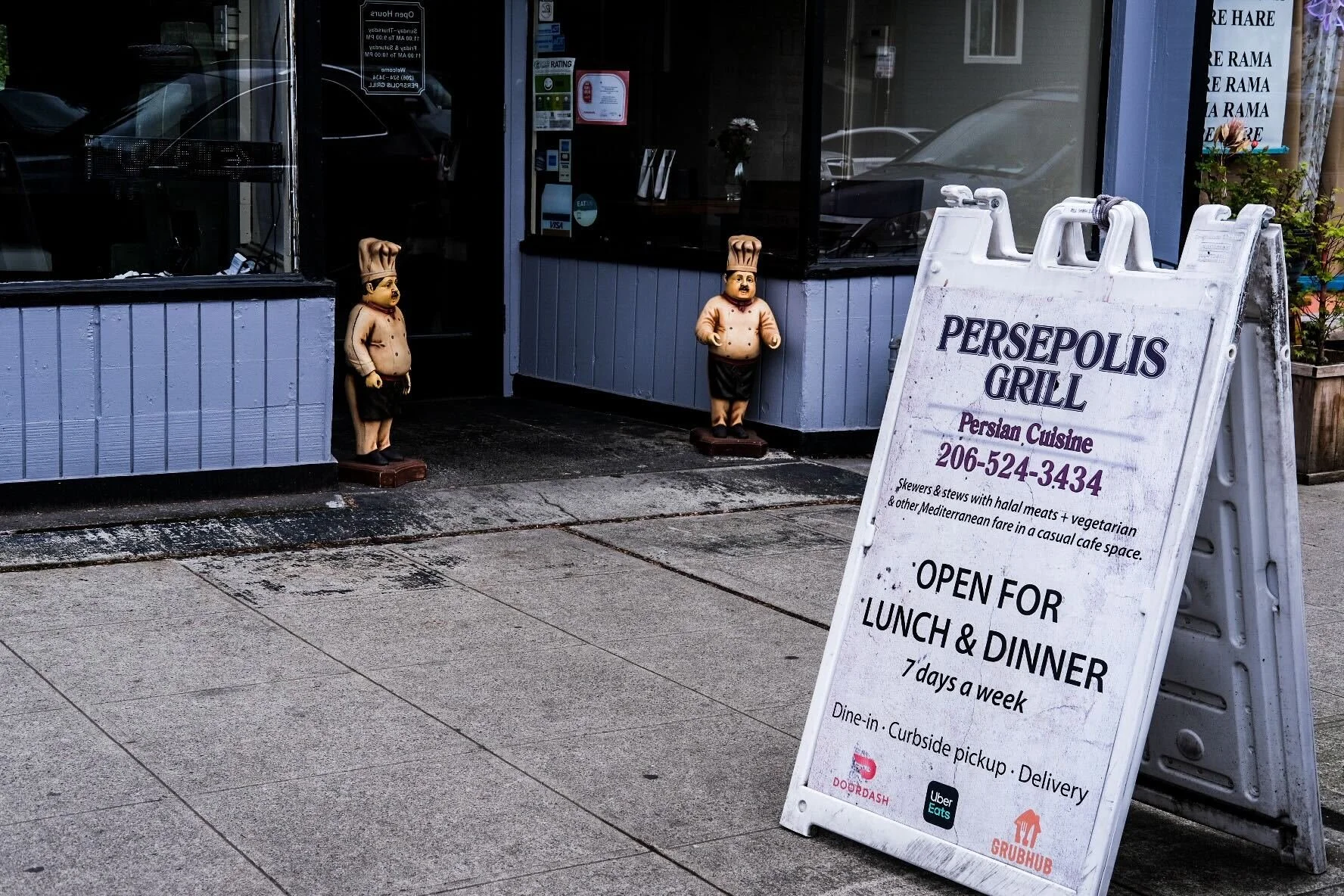
Persepolis Grill, U District
The Evergreen Echo
M: Thank you! Those are good leads. You mentioned you’ve spoken with Mayor Wilson about MENA Heritage Month? Was there a victory this year and is there more work to be done?
Y: It is a real struggle. I reached out to a lot of organizations and institutions, some government, some non-profits, and bring this up to them a lot. [Some] immediately say ‘yes’ and come to understand that they’ve been ignoring…the MENA community, that it is in line with their mission statement that they plastered everywhere, that they should be getting in on this the way that they’ve been recognizing other communities and other marginalized people.
[He explains that he’s had plenty of experiences with people giving him the runaround so typical of bureaucratic office culture, and how frustrating it can be to get progress.]
But better to focus on what we have been able to achieve! Gov. Bob Ferguson recognized MENA Heritage Month—April—so we have an official certificate signed by the governor which is great. This year, for the first year ever, the City of Seattle, Mayor Katie Wilson, recognized MHM, and we had a group of community leaders and supporters who got to meet with her and bring up some of these issues. And the City of Bothell, their city council and mayor recognized MHM as well; again we went to the city council meeting, gave testimony, and heard them read the proclamation on the floor which was great. That is progress. We did get [KCLS and SPL] recognizing MHM.
Last year we did a MENA poetry event at Elliott Bay Books with six MENA poets, and there are a number of local MENA poets at various levels of establishment. Some are published or professional …and some who just do it for fun at home. Some post on IG and get lots of people enjoying their posts, and some are published in journals. So MENA poets at different levels, many of them having their own notoriety, but no one had ever done just a straight-up focused MENA event; many of them had read at general poetry events …but as far as I know it was the first MENA-focused poetry event in Seattle.
We’ve done some film screenings with SIFF and are working towards more. Some local theaters do MENA films as well, like SIFF during and outside their festival, often brings good MENA titles. As does Northwest Film Forum. We’ve done some author events at Third Place Books. The Seattle Waterfront Grand Opening last summer had a full day of arts and culture, dance and song mostly. And… we were the only MENA representation. There was lots of representation from other cultures, but if I hadn’t reached out to them and [asked] ‘can we have representation too,’ we would’ve had no representation. But I'm very pleased that we were able to get in there. I do appreciate it but we need more. It can’t just be me constantly calling people and saying, ‘Hey don’t forget we exist. Please include us as well.’
If they [generic ‘they’] truly believe in antiracism, diversity, and inclusion, they also need to do the leg work. If you have a dance event coming up and you’re talking about diversity and having various cultures represented, get on Google or IG and find some MENA artists and reach out to them. They need to put that effort in. I'm willing to do some of the leg work, but those who have the power and space and means and are espousing DEI principles need to put the work in. DEI doesn't come to them. They need to pull it in. Especially if they have funding. Especially if it’s funding that came from the community. …Again, what we see when we run the numbers is that the community, their customers, their patrons, their donors, their supporters, are interested in Middle Eastern culture when they have opportunity. So it behooves them to serve their audience.
For information on MENA events coming up, check the MENA Heritage Month site.
**May 20, 2026 Update: Since the publishing of this piece, social media creators whose cultures hail from this part of the world have called for renaming “Middle East,” as it is a colonizer and political term and neither geographically nor culturally correct. “SWANA” has been suggested instead to reflect Southwest Asia and North Africa.