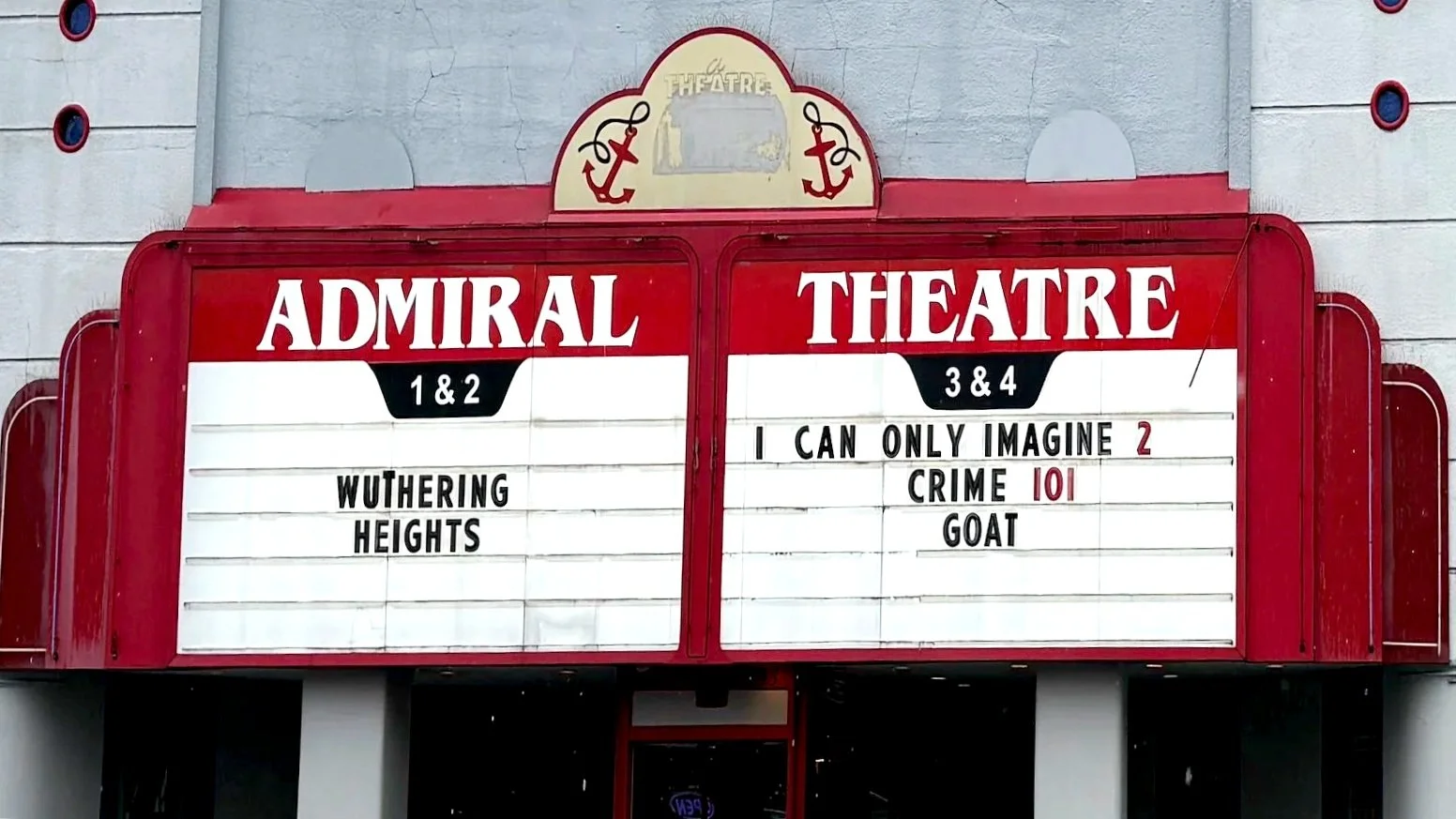
Marquee at the Admiral
The Evergreen Echo
Originally named the Portola Theater, the Historic Admiral Theater began its life as a silent movie theater in 1919. The theater underwent many changes of management in its first decades. By the early 1940s, it was sorely needing an update; it was then purchased, remodeled, expanded, and renamed as the Admiral. The theater was immersed into the seafaring theme of the original Portola with its redesign. The now 1000 seat auditorium had nautical themed murals on the walls and ceiling as well as a few added touches in the decor.
Like many of the grand movie palaces covered here, the Admiral had a difficult time competing with the multiplexes that sprang up in the decades since its reopening. In 1973, the theater was given another remodel, but much of the charm of the old space was covered up. The original marquee was replaced by a flat surface and a second theater split the auditorium in two. This new iteration of the Admiral shuttered in 1989 and a Canadian firm sought to buy the land, knock down the theater, and put up a multiplex in its place. The neighborhood and Seattle historians rallied and protested until the Admiral was given the historic landmark status it deserved. It reopened again in 1992 and has been showing films ever since.
The modern Admiral Theater is run by local chain Far and Away Entertainment. It has been upgraded yet again from a twin theater to a 4-screen quadplex, which shows a mix of new releases and special screenings. As of publication of this column, it is the only remaining movie theater on the West Seattle peninsula.
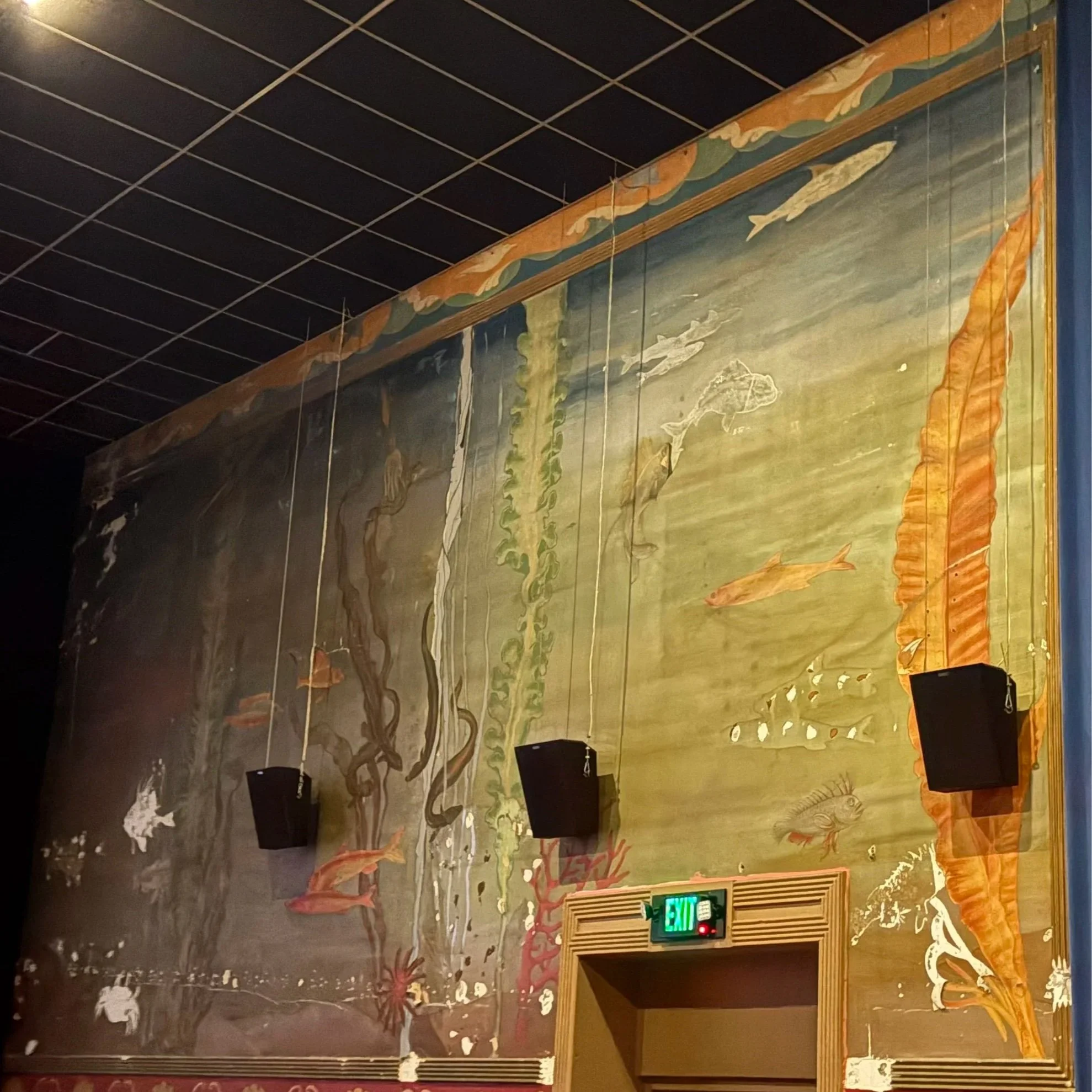
Original oceanic mural inside Pier 4 at the Admiral
The Evergreen Echo
Going into the lobby of the Admiral is a bit astonishing. The lobby itself feels vast because of the high ceilings and the majestic staircase that leads to the staff offices. The most striking feature is that the most intact mural from the original remodel is still above the concessions stand. It's a strange and wonderful portrait of Captain Vancouver and his crew looking out at the Puget Sound. While most of the rest of the nautical touches have been stripped, the theaters are called "Piers," which is a nice touch.
I happened to be in Pier 4, but even amid the modern seating, state-of-the-art sound, and digital projection, there was still a piece of the old theater in the partial mural on the auditorium wall. It was a bit haunting, like looking at something that was not supposed to exist anymore. It kept catching my eye as I sank into the comfy seat with ample leg room.
I took in a screening of the animated film GOAT. The film is about a world in which animals compete in a more aggressive and adaptive form of basketball called roarball. The story centers around Will (Caleb McLaughlin), a goat, who wants to be the first "small" to compete in roarball. It's a charming story with good life lessons, though coming on the heels of Zootopia 2, the message it wants to convey feels far too similar. Essentially both films boil down to “don't judge an animal by its appearance.” Though, one very distasteful piece in GOAT was the prominent real-world product placements. It was too odd in a world of anthropomorphized animals.
The Admiral will be hosting many blockbuster new releases in the coming month. In addition to GOAT, the theater will be holding over director Emerald Fennel's erotic and quite moist adaptation, Wuthering Heights. New films in early March include Pixar’s Hoppers and director Maggie Gyllenhaal's riff on the Frankenstein mythos, The Bride!. On March 21 you can also catch the Admiral's monthly screening of The Rocky Horror Picture Show hosted by the shadow cast troupe Riff Raff's Street Rats.
The idea of a building standing for a century is not a new concept, but in the ever-changing landscape of Seattle, it seems to be the exception and not the rule. It is especially true of Seattle arts spaces. The city's historic theaters may carry on and be refurbished, renovated, and revamped, but more often than not the theaters that serve multiple purposes get this treatment. Movie theaters seem to be left to die more often because it is easy to show the data about multiplexes and streaming that the old movie palaces cannot compete with. They may even say that there's no need to preserve the building when a movie theater can be made from a yoga studio, old firehouse, or even a former milk bottling plant.
Though, what they do not see, and what I hope everyone who reads this sees, is that the building does not store film equipment—it stores the memories of the people who experienced movies there. It is the space where the ghosts of people from a hundred years ago are seen in the walls and the floors and the screens.
History is not supposed to be so disposable, even if it is a history some feel is unimportant. History is meant to continue. Because of its landmark status, the Historic Admiral Theater can continue for as long as people still want to sit with the ghosts as we munch popcorn and get lost in a good story.
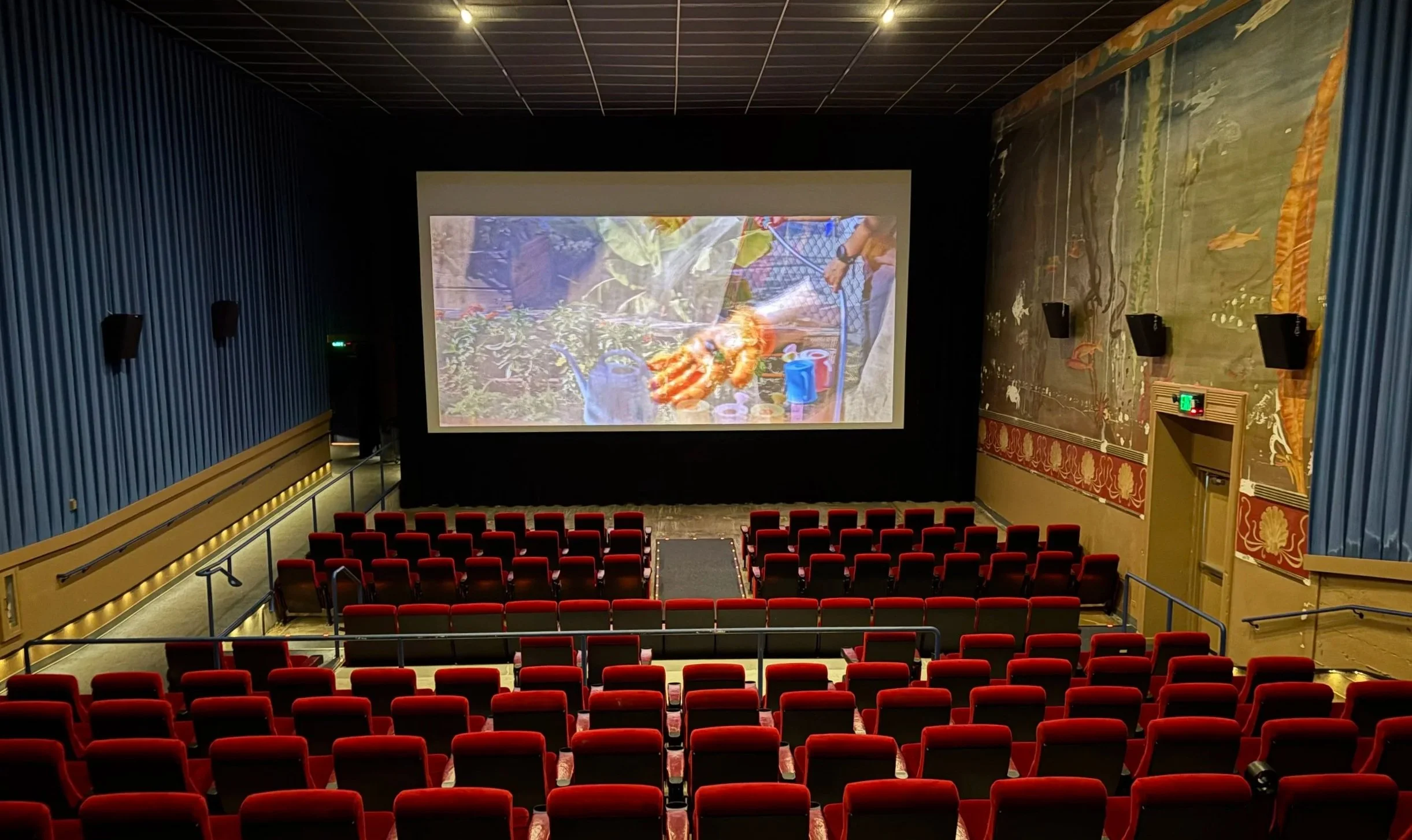
Sitting with the ghosts of filmgoers past inside the Admiral
The Evergreen Echo