
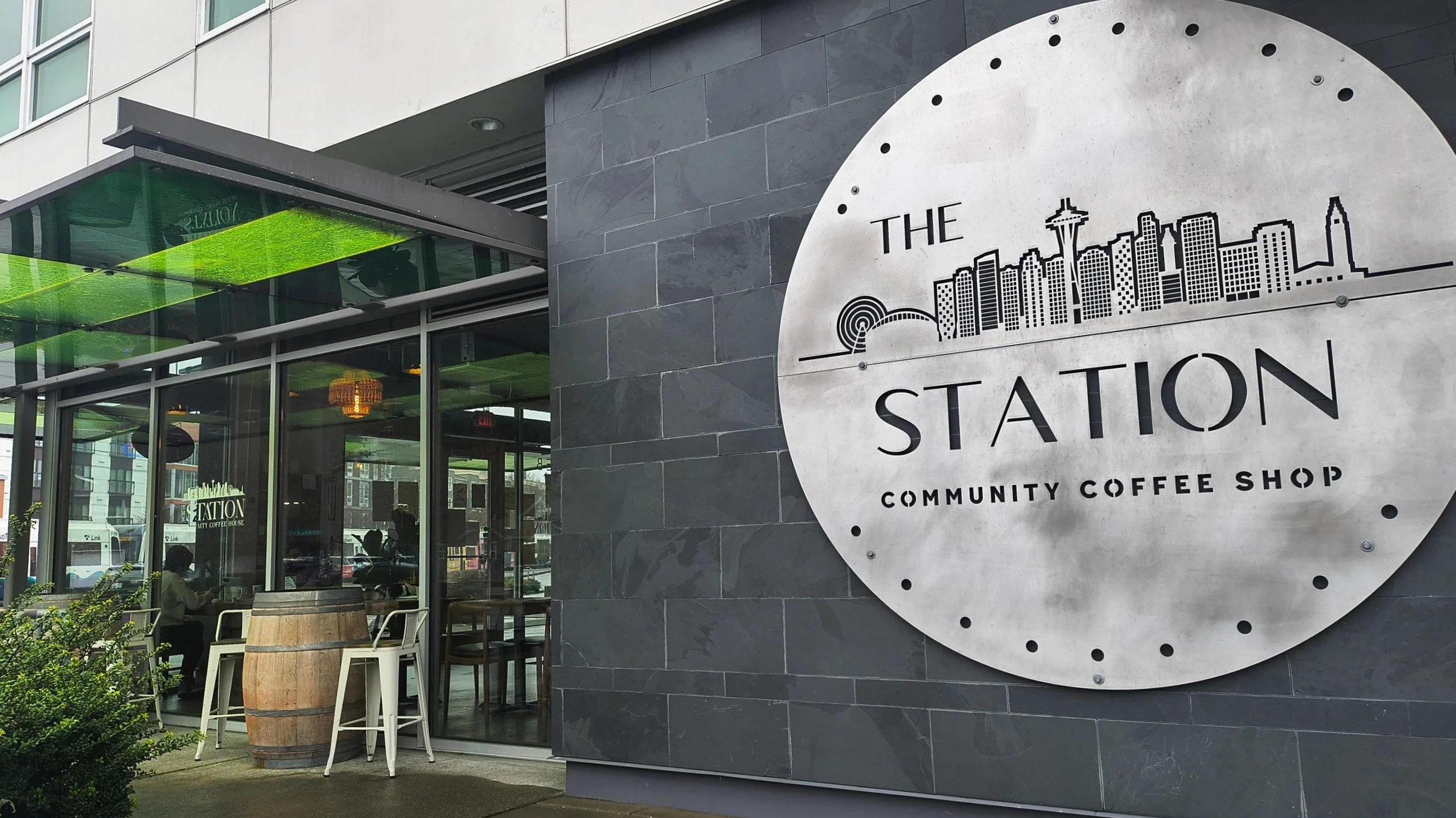
The Station, Columbia City
The Evergreen Echo
In late November, Sefer Lopez posted a warning on Instagram. In it, she describes multiple instances in which her grand-uncle Luis Rodriguez attempted to coerce her into a sexual relationship. “We need to normalize calling people out who have a big platform in Seattle,” she wrote. Rodriguez, a familiar figure in some progressive spaces, founded and owns The Station, a “community coffee house” that The Stranger once lauded as “the soul of Beacon Hill.”
Lopez’ allegations spread quickly across the city. Rodriguez’s responses (on his now private accounts) were apologetic, but denied Lopez’s allegations. Meanwhile, in Lopez’ comments, my own private conversations, and other publications, customers, acquaintances, and workers shared anecdotes of Rodriguez's unwanted sexual advances.
In short, a couple who fashioned themselves as “community leaders” and promoted their business as a safe space for BIPOC, the LGBTQ+ community, and houseless people, are alleged sex pests. Unfortunately, this happens too often. Bad faith predators in progressive spaces tarnish the reputation of those they claim to represent and care for. They wear liberation and decolonization as a costume. Their behavior runs counter to and severely undermines the politics they parrot.
Understandably hurt and betrayed, friends, networks, and organizations are distancing themselves from The Station and calling for accountability. Most materially, people seek to hold Rodriguez accountable by boycotting The Station. But will Rodriguez take accountability? Some discussions of interpersonal harm can remain private, but is Rodriguez’s overall influence large enough to warrant some sort of public outcome? What would that look like? Removing Rodriguez from his position? Shuttering The Station entirely?
In other recent news, the City of Seattle approved a controversial contract with the Seattle Police Officers Guild. Accountability figured as the public’s chief concern with the contract. More cases of police misconduct can now be handled internally instead of re-routing the investigation to the Office of Police Accountability (which is, alas, also largely police-led). Officers will continue to breeze past the consequences of their violent actions—such as the beatings of Queer protesters in Cal Anderson in May—and enjoy a hefty pay raise too. All this comes at the heels of the deaths of Christian Nelson in early December and Jack Paleli in October, both at the hands of SPD.
The word “accountability” seems impossible to avoid for anyone paying attention. Repeatedly, people with power abuse their position. Repeatedly, communities clamor for accountability, a just outcome for all affected persons, and satisfying solutions that will excise the rot from which harm festers and breeds. It is difficult not to feel disillusioned by the usual wishy-washy or dismissive responses, feigned ignorance, and lack of material progress in terms of repairing harm and promoting safety. How are we supposed to hold people accountable, so to speak, if they won’t take accountability? What does said accountability even look like?
I don’t intend to draw too-direct comparisons between the allegations against Rodriguez and SPD’s well-documented history. Still, it is undeniable that all these recent incidents challenge how we maneuver around harm, whether the perpetrators are our government or a small business owner. In this light, I want to comb through the possibilities of our so-desired “accountability” and expose and examine the considerations that make the process of obtaining justice so thorny.
(To be clear: There’s no one-size-fits-all band-aid, and I’d be remiss to claim any authority over this subject.)
The most clear and consistent demand for accountability is a call for future harm prevention. After all, Lopez primarily wanted to warn others about Rodriguez’s unsavory behavior. In a message to me, Lopez said, “The only thing I want is for people, especially women, to be careful of this man. There are many other coffee shops you can support. This one is not a good one.” Also in the vein of harm prevention, anti-cop movements seek—whether through reform or complete abolition—to end police brutality.
-
Active efforts to enact immediately executable methods to hold SPD accountable already exist and need support. SAARPR, the Seattle Alliance Against Racist and Political Repression, proposes a civilian-run Community Police Accountability Council (ComPAC).
Castill Hightower, the sibling of Herbert Hightower Jr. who was killed by SPD in 2004, is fighting the city to create the Seattle Affected Persons Program (APP), which would provide resources to people affected by police violence.
Some calls for accountability seek to avoid punitive measures. Already existing alternatives to our current norm of punitive and carceral forms of justice, such as restorative justice and transformative justice, aim to “do no harm,” center survivor healing, and address the root issues that cause interpersonal harm. Still, community-based frameworks prove rickety when considering those who refuse to come to the table or those with disproportionate and state-granted power. Further, uprooting ingrained societal prejudices (such as misogyny, which can lead to sexual harassment) is a monumental task. Broadly, it requires a concerted cultural shift; for an individual, a true sustained willingness to admit wrongdoing and improve. Even then, some may desire a weightier punishment, and not everyone can forgive and forget.
Depending on context and variables, one or another framework may best apply to one or another conflict. But when considering widespread, systematic harm, I run up against a very nebulous variable: the needs and wants of the community. Communities are often defined by a shared identity, space, interest, and/or belief, but as of late, the word “community” often reads like an empty buzzword. What exactly is a “Queer community?” Am I “in community” with millionaire NIMBY Seattleites who might happen to be Queer? How much does the concept of community lean on sociopolitical agreement?
For simplicity’s sake, I’ve recently pivoted to visualizing communities like clubs: a group of people that meet regularly, are familiar with each other, and can engage in a collective decision-making process. Think of an exercise group, an active Discord server, or co-workers. In the context of accountability, this reduced scope allows for more concrete pathways towards conflict resolution. With a zoomed-in perspective, individuals can share their grievances and perspectives, and decisions settled upon can be more easily actionable and enforceable—a perpetrator of harm can be held accountable. Taking smaller bites of a steak can make even the tough gristle digestible.
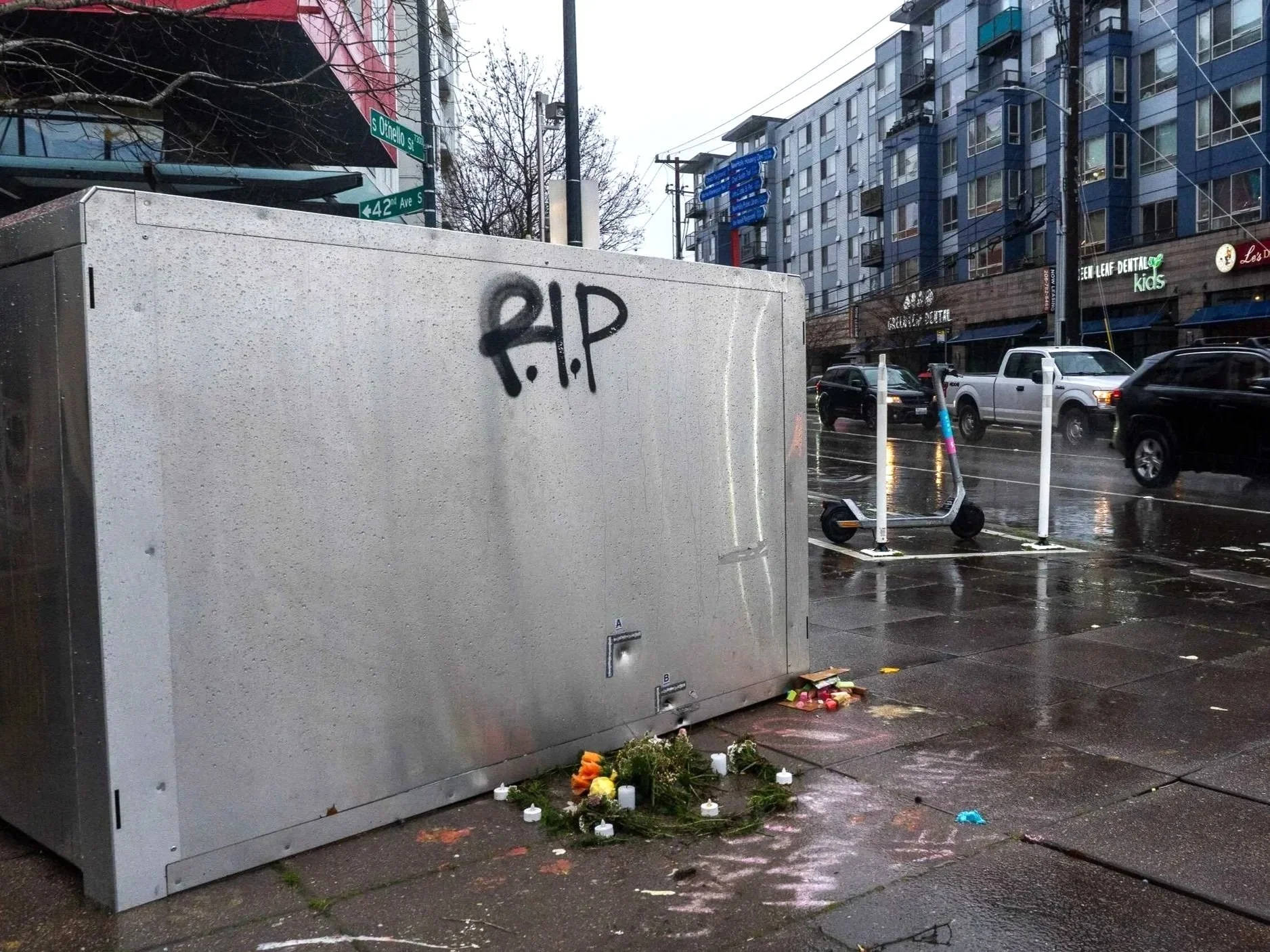
Christian Nelson memorial at the corner of Othello and S 42nd
The Evergreen Echo
Alas, the steaks are huge (forgive the pun). Conflicts seeking resolution and accountability include impossibly large and decades-old hurt, such as genocide, systemic oppression, and war crimes. Transitional justice proffers that every single person affected deserves their own forum, their own resolution. Even in the more contained context of the recent years of police violence in Seattle, enacting piece-by-piece justice and accountability requires infrastructure, time, and dedication. Despite all efforts, the perpetrator of harm might not even participate!
So, we’ve returned to the beginning. After thinking laps around the core concept of accountability, circular as it may be, I’ve found some conceptual footholds:
Accountability begins with a refusal to tolerate further harm. It is an inherently brave act, a decision to confront rather than avoid. Without conflict, without struggle, without grappling with hard questions, there can be no change.
Political conflicts are inherently personal conflicts. Every separated family, every protester injured by state-sanctioned violence, and every starved child each has their own story, emotions, conditions, and demands.
Vague conceptions of community lead to vague conceptions of accountability. For example, not everyone against police violence stands for abolition. Collective demands of accountability must stem from community discussion and unity. To borrow from Kwame Ture, “Unity is not a feeling. Unity is not an emotion. Unity is a means of challenging the energies of the people towards given objectives within principles.”
Dialogue between all parties is necessary for reparations and lasting change in behavior. Unfortunately, through social, economic, or political power, many perpetrators of harm are systematically able, and even encouraged, to dodge all accusations and accountability.
