

CHECK IT OUT
Start Reading
Archive
- August 2026 11
- July 2026 10
- June 2026 12
- May 2026 15
- April 2026 9
- March 2026 19
- February 2026 12
- January 2026 15
- December 2025 12
- November 2025 21
- October 2025 18
- September 2025 12
- August 2025 13
- July 2025 12
- June 2025 18
- May 2025 26
- April 2025 30
- March 2025 21
- February 2025 26
- January 2025 20
- December 2024 37
- November 2024 26
- October 2024 23
- September 2024 18
- August 2024 9
- July 2024 6
- June 2024 8
- May 2024 7
- April 2024 6
- March 2024 8
- February 2024 5

Max’s Musings: Mary Oliver
With summer only a couple of months away, I found Oliver’s poem “While I Am Writing a Poem to Celebrate Summer, the Meadowlark Begins to Sing” ideal for discussion this week. From her book Owls and Other Fantasies, published in 2003, Oliver’s collection takes a deep dive into the world of birds and their hidden messages for humankind. The poem is a prime reminder of Oliver’s remarkable skills as a wordsmith and eye for conjuring a secluded snapshot of a nature landscape.
![The Divided Line: Bastian [Part 2]](https://images.squarespace-cdn.com/content/v1/65456cf1d440cc19dd37c744/1746152035291-I79HGWKV751ZYTRPT389/bp-miller-ytDxz0Ue-WY-unsplash.jpg)
The Divided Line: Bastian [Part 2]
The barkeep opened a side door and waved them in. There, in the gilded haze of flame-lit lamps, artists gathered. Poets, painters, sculptors, musicians, dancers. Artists of all sorts came to the garden to talk, create, and workshop. It was a safe place for unfettered expression. One of the last of its kind.

Parker’s Pages: Emerald Street
If you’re anything like me, then you’re approaching Emerald Street knowing next to nothing about Hip Hop, but Abe has you covered. His approachable and straightforward explanations are easy to follow and even easier to enjoy. Starting us in Seattle’s Century District, we move through time and space, beginning at Seattle’s early Hip Hop days and arriving in the present where the community thrives.

Evergreen Style: Sustainable Bainbridge
Although caring for the planet is an action that should be taken every single day, engagement tends to increase during the month of April. Commonly referred to as Earth Month, people like Naomi Spinak put forth extra effort during this time to raise awareness about the importance of sustainability in their community.
If you live on or near Bainbridge Island, chances are you may be familiar with some of her work.She helped launch the annual Trashion Show with Sustainable Bainbridge nearly 10 years ago.

Iconic Convos: The Wall of Death
Nicole Bearden (NB): If you end up in the U District, on the Burke-Gilman Trail, you might run across our next guest, one of Seattle’s oddest icons: The Wall of Death. I appreciate you taking time to speak with us today. I must say, your appearance is pretty intimidating, Wall, not to mention your name. What has your experience on the Burke-Gilman been like?

Max’s Musings: e. e. cummings
Poet e. e. cummings has always reigned supreme as the king of breaking the standards of typical poetry. Offering the chance to explore one’s self and creativity by any means necessary, poetry is heightened and enlightened by cummings ability to go against what is expected as “normal” poetry.

Iconic Convos: Hat ‘n Boots
On my way back from my short hiatus, I ran into our next Iconic Convos interviewees, Hat n’ Boots at Oxbow Park in Georgetown. At 22-feet high (Boots) and 44-feet wide (Hat), these two are hard to ignore.
![The Divided Line: Bastian [Part 1]](https://images.squarespace-cdn.com/content/v1/65456cf1d440cc19dd37c744/1744752732271-LW2O9R5F6CU8I3WGDMBV/Bastian%252B1.jpg)
The Divided Line: Bastian [Part 1]
It began slowly—the plague, the greed, the riots. Revolutionaries rose up behind symbols, murals, and songs, while the masses were fed machinery and religion. In the wake of the destruction, politicians deemed art a dangerous thing—a worthless thing—and the masses agreed. They took away the paint, the books, and the instruments. But they could not wholly silence the artists. These are the stories they left behind.

Sound Cinema: The Varsity (and its Blues)
The Varsity Theater in the heart of the U District has been in operation since 1940. In 1985 the theater added two screens to make it a triplex that shows a mix of independent, blockbuster, and special engagement showings. It is operated by Far and Away Entertainment, a local company that owns and operates several movie theaters across Seattle and the Puget Sound.

Parker’s Pages: Windfall
Windfall takes us on an incredible journey, from Oregon to the North Dakota prairie, and from the present all the way back to the early 1900s. But even with these leaps through place and time, Bolstad keeps us rooted. She delivers both fact and imagination in her distinct journalistic style, helping us follow her line of inquiry into her family’s past.

Max’s Musings: Plumly
A Millennium Reflection, which was foraged from a multitude of Seattle poets and photographers, brings people together for a common cause and common love. Published in 1999, it is a love letter from its residents to their city. The collection, a celestial tribute, deeply reflects on the beauty and resilience of Seattle alongside where it started, how far it has come, and where it still plans to go. Through poems and photographs, the city of Seattle is brought to life again.
![The Divided Line: Elias [Part 2]](https://images.squarespace-cdn.com/content/v1/65456cf1d440cc19dd37c744/1743630288031-H1PLNQQ2IINZG2W6U5KR/Elias%2Bpt%2B2.jpg)
The Divided Line: Elias [Part 2]
The setting sun outside steeped the city in gold, and a pleasant breeze carried the scent of budding flowers. He remembered the open fields of Anna’s family home, breaths of summer wind rustling the curtains as Anna painted by the window.
He never should have brought her to the city.

Max’s Musings: Robert Frost
I remember first being introduced to Frost and his poetry in middle school and revisiting in high school. In reading his famous “The Road Not Taken” and “Fire and Ice” at a young age, I learned so much about my life and where I foresaw it going.
With everything going on with politics these days and as it continues to unfold, I found Frost’s poem “House Fear” to be quite fitting for many, myself included. With fear in the title, the poem investigates the topic while offering hope in overcoming it.
![The Divided Line: Elias [Part 1]](https://images.squarespace-cdn.com/content/v1/65456cf1d440cc19dd37c744/1742075526280-JQ8PK65DCWGMCSXSQXQ5/Elias.jpg)
The Divided Line: Elias [Part 1]
It began slowly—the plague, the greed, the riots. Revolutionaries rose up behind symbols, murals, and songs, while the masses were fed machinery and religion. In the wake of the destruction, politicians deemed art a dangerous thing—a worthless thing—and the masses agreed. They took away the paint, the books, and the instruments. But they could not wholly silence the artists. These are the stories they left behind.

Parker’s Pages: Notes on an Execution
I’m returning to my usual Parker’s Pages standard today and have an intense and thrilling novel to offer. Notes on an Execution by Danya Kukafka had me up all day and night, gobbling pages like a Thanksgiving feast. This novel is, quite simply, brilliant, and a great weaving of mystery, crime, horror, and intense character study. There simply isn’t anything else like it.
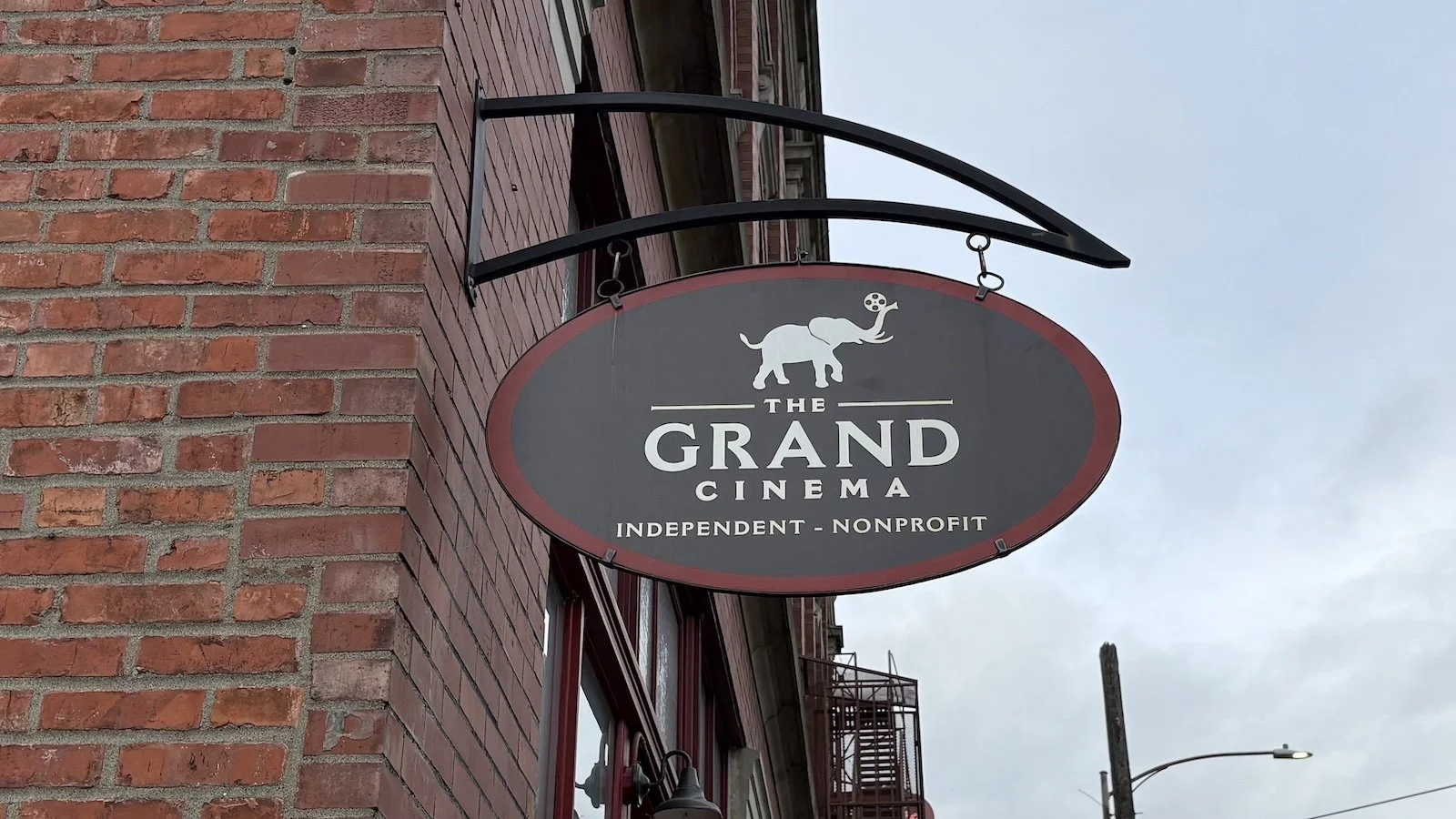
Sound Cinema: The Grand Cinema
Founded in 1997, The Grand Cinema has been Tacoma and Pierce County's destination for independent, foreign, and repertory films. This four screen theater is a non-profit cared for and kept up by tremendous and tireless volunteers. Thanks to the generous donors who have already contributed to the Save the Grand campaign, The Grand hopes to purchase The Merlino Arts building in which it resides.

Max’s Musings: Cody R. Simpson
For this week, I wanted look back at a poem and poet that fell into my lap in a time that I needed it the most. Cody R. Simpson, also known as singer/songwriter and actor Cody Simpson, released his poetry collection Prince Neptune in 2020. The collection touches on a conflicting battle between his struggle to uphold his godlike persona and reflecting on his own mortality of fame and fortune. “Simpson’s poetry combines themes of freedom and the ocean with the wisdom of an old soul.”

Iconic Convos: A Sound Garden
Nicole Bearden (NB): In honor of Seattle’s Faux Spring weather last week, I decided it was time to have a confab with one of my personal favorite Seattle Icons: A Sound Garden. Located on the NOAA campus near Magnuson Park, between Piers 15 and 17 on Lake Washington, A Sound Garden reverberates with hauntingly atmospheric intonations as the wind blows through artist Douglas Hollis’ twelve, 21-foot high, steel tower sculptures. Sound Garden, I appreciate your presence today.
A Sound Garden (SG): a chorus of metallic hums breezing through the air We are delighted to converse with you.

Max’s Musings: Sylvia Plath
It wasn’t until after her death that the poetry collection Ariel was discovered and published in 1965. The Restored Edition was published later in 2004. With an honest and heartfelt foreword written by Plath’s daughter, Frieda Hughes, the collection “found comfort in restoring the balance” of Plath as both the poet and the human.
Plath’s poem “Lady Lazareth” first exposed me to her dynamic wordcraft. Of all the poems I came across in Ariel, there was something honest and authentic about Plath’s “Barren Woman” which solidified its spot for this week.
![The Divided Line: Vero [Part 2]](https://images.squarespace-cdn.com/content/v1/65456cf1d440cc19dd37c744/1739584838970-5THDK09VYKDTVPTUWK70/Vero%2B1.jpeg)