Runway to Runway: Flight Attendant Fashions Expose Civil Rights Flashpoints
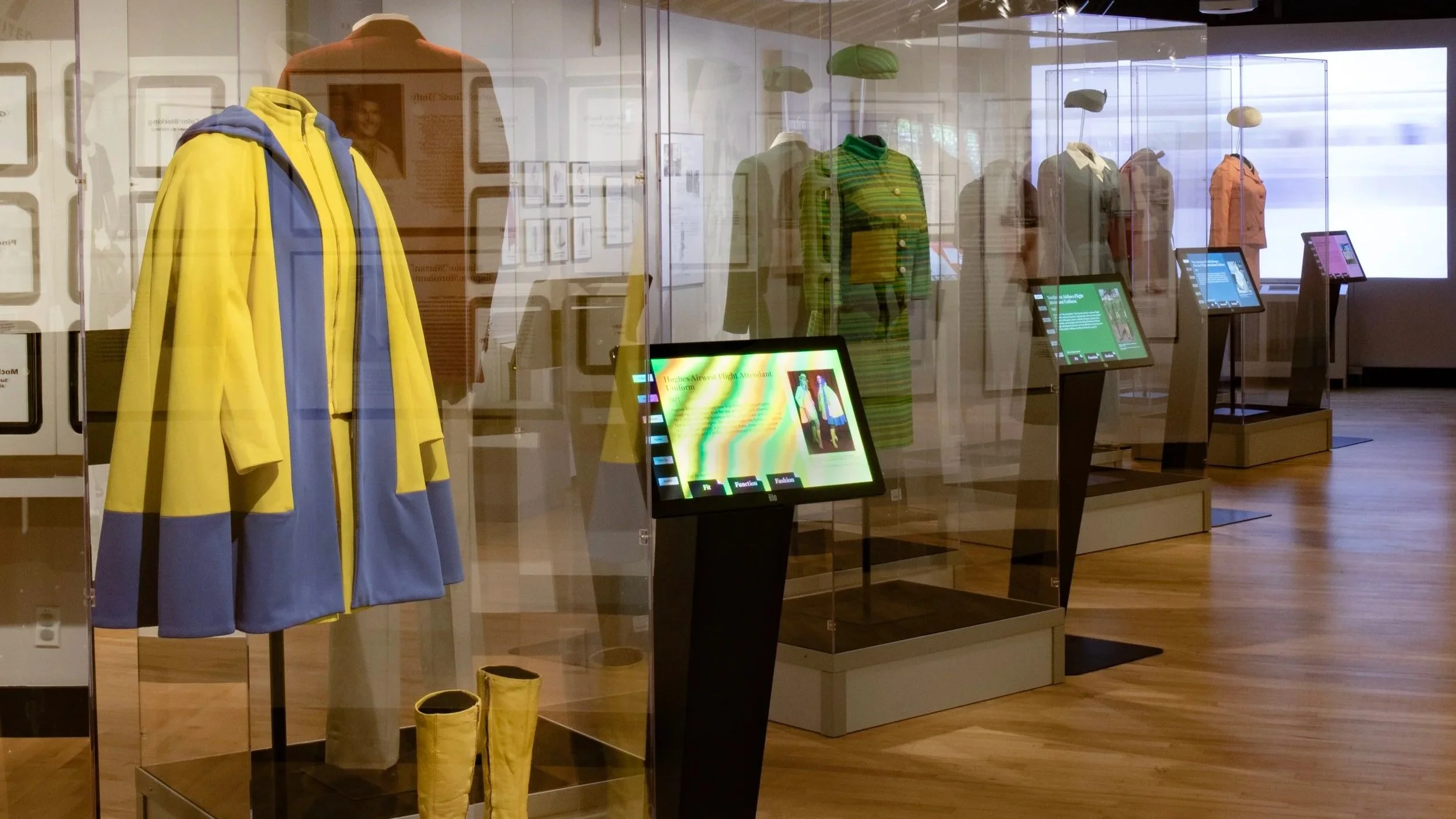
Historical flight attendant uniforms on display at Museum of Flight
Courtesy of Museum of Flight
Walking into the Museum of Flight to view Runway to Runway, I never expected to leave with such a profound sense of connection to the history of civil rights in the United States. Having studied and worked in fashion for many years, I was familiar with some of the design collaborations behind the uniforms—like Braniff Airways and Emilio Pucci—but less familiar with the stories that give them layered meaning. What I discovered was how the flight attendants and their uniforms are intricately woven into the fight for gender, labor, and racial equality.
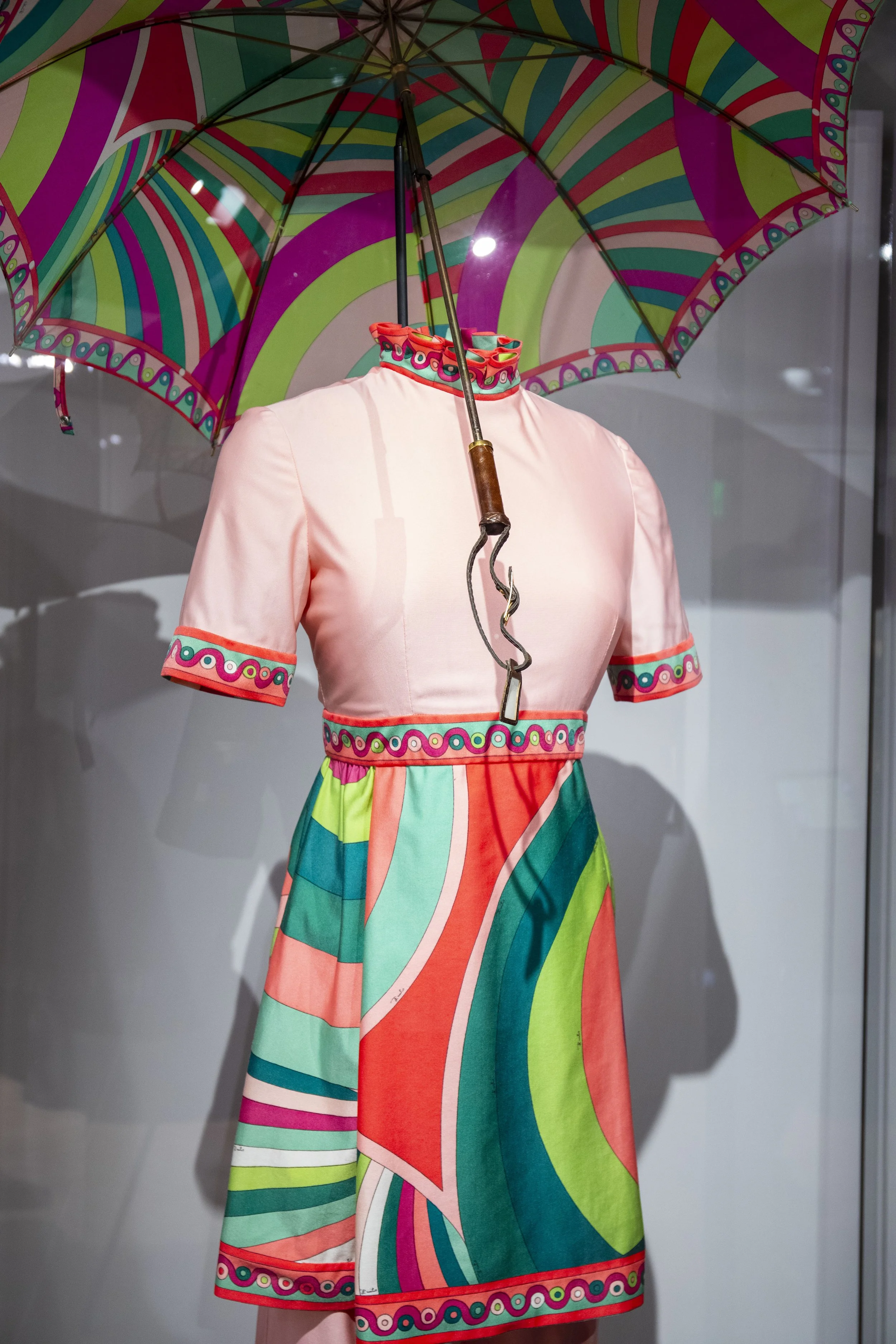
Emilio Pucci pink pant suit
Courtesy of Museum of Flight
As I stepped across the old wooden floor of the Red Barn Special Exhibits Gallery, I found myself surrounded by artifacts from the early days of aviation. My imagination ran wild. I envisioned what it must have felt like being a passenger on some of the first Boeing planes and was overcome with wonder. What would I have thought about aviation back then? Would I have wanted to become a flight attendant?
Entering the gallery, my sense of wonder was heightened by the dim lighting and the warm audio, reminiscent of the early boarding experience. To my surprise, the first uniform I saw was the famed Emilio Pucci pink pant suit. His designs “broke the mold for attracting new [aviation] clients,” Ted Huetter, Senior Manager, Public Relations and Promotions, mentioned while showing me around on my first visit. The perfect opener. Pucci’s groundbreaking work in the 1960s paved the way for other design collaborations that helped flight attendants create a unique identity to increase flight sales. The exhibition featured a few: Hughes Airwest and Mario Armond Zamparelli; Trans World Airlines and Valentino; and, more recently and locally, Alaska Airlines and Luly Yang.
Yet long before airlines turned to fashion designers, a woman named Ellen Church ideated what it could mean to be a flight attendant. She was a registered nurse and pilot who, back in 1930, suggested to United Airlines that nurses be assigned to flights to reassure fearful passengers. Uncovering little-known facts like these as we moved from display to display made it clear that the uniforms were part of a bigger story.
When looking beyond the designers, even richer stories emerged. One display in particular resonated with me: a collection of personal photos and stories from flight attendants who challenged the conventional image of the profession. Four are highlighted: Charles “Chuck” Duffy, Louise Greenwood Phipps, Betty Jo “B.J.” Elliot Prior, and Masako “Marian” Tagawa Murakami. Duffy was among the first group of men to serve as flight attendants (then referred to as stewards) hired at Continental Airlines. Phipps was the first Black flight attendant at United Airlines. Prior served as a Military Airlift Command flight attendant with Continental Airlines during the Vietnam War. Murakami was one of the first second-generation (Nisei) Japanese American flight attendants to join Pan Am as it expanded service to Japan. There were many firsts in this collection, but Phipp’s story affected me most deeply. She brought to light the racial barriers for flight attendants.
Courtesy of Museum of Flight
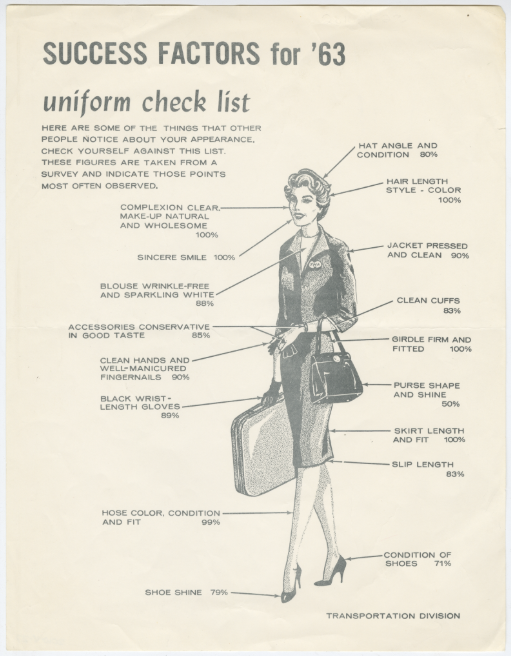
Phipps disrupted the status quo in a profession that had excluded Black women from the image it presented to passengers. It made me reconsider the meaning of the uniforms—and who was permitted to wear them. I could empathize with the pressure she felt to be, as she said, “better than perfect.” It also exposed a glaring contradiction: airlines introduced flight attendants as symbols of modernity and safety while also imposing traditional societal expectations. The exhibition showcases recruitment pamphlets outlining the expectations for flight attendants’ appearance, height, and weight. A harsh reminder that the image came with rigid standards. Phipps’ career abruptly ended when United Airlines found out she was married. This life decision is now legally protected and often taken for granted in the US. Albeit brief, her experience from 1967 to 1969 was part of a much larger movement among flight attendants challenging workplace discrimination.
In Laffey v. Northwest Airlines, for example, Mary Pat Laffey and other women flight attendants challenged unequal pay and working conditions, ultimately winning a landmark case under the Equal Pay Act and Title VII of the Civil Rights Act. The exhibition highlights their fight, illustrating how flight attendants shaped gender and labor equality. This was a contribution I had not fully realized. Huetter recommended watching Fly with Me, a PBS documentary that served as a reference material for the exhibition, to learn more about the legal cases. (Note: I highly recommend it as well for anyone interested in labor rights or women’s rights).
While the exhibition offers a tiny glimpse into the museum’s collection of more than 400 uniforms, its interactive displays encourage visitors to personalize the selection and view the uniforms as more than objects behind glass. From the fabric wall to the scarf-tying station, Runway to Runway invites visitors to imagine wearing a uniform through tactile experiences. Additionally, the exhibition seeks to welcome a broad audience by providing translations in six different languages. All things considered, the walk-through took about two hours. There are just so many interesting activities to engage in and facts to read. I wrapped up with Huetter by reviewing our knowledge on fashion construction terminology and touching the textured swatches indicative of the uniforms on display.
I returned a couple of weeks later for another walk-through and to share my reflections and questions with Mandy Faber, the Exhibition Developer. I was still amazed by these newly discovered intersections with fashion. “Commercial aviation is a great lens through which to see history,” Faber explained. She helped design the exhibition to evoke the kinds of reactions and revelations I experienced. By focusing on the more human side of aviation, she hoped it would allow visitors “to walk away recognizing a uniform is more than what you wear to work.”
-
Want to hear flight attendant stories in person? Join the Sky Lounge 1970 event on August 15 at the Aviation Pavilion. The exhibit is also open every day until January 18, 2027.
After two visits, I understood exactly what she meant. The uniforms may be the exhibition’s most visible objects, but the stories behind them are what give them meaning. I initially came to Runway to Runway expecting to see only fashion history, and left with a much deeper understanding of civil rights through the groundwork that flight attendants laid as they ventured into the unknown. I am unsure if I would have taken the opportunity to become one of the first flight attendants, but I am certain that the next time I fly, I will take Mandy’s advice to “thank your flight attendant.”