The Divided Line: Selah [Part 2]
Ethan Lee
The human machine.
Blood and sinew and bone. Existence mercilessly given form by the pumping, beating organ lodged securely within its chest. Muscles and ligaments, skin and scar tissue, and a mind rife with electricity. An organic, malleable machine, pressed and beaten into obedience and submission.
A machine, yet a beast at its core, exploited en masse for the greed of the few. How many times, he wondered, would the machine suffer its abuses before the beast emerged once more?
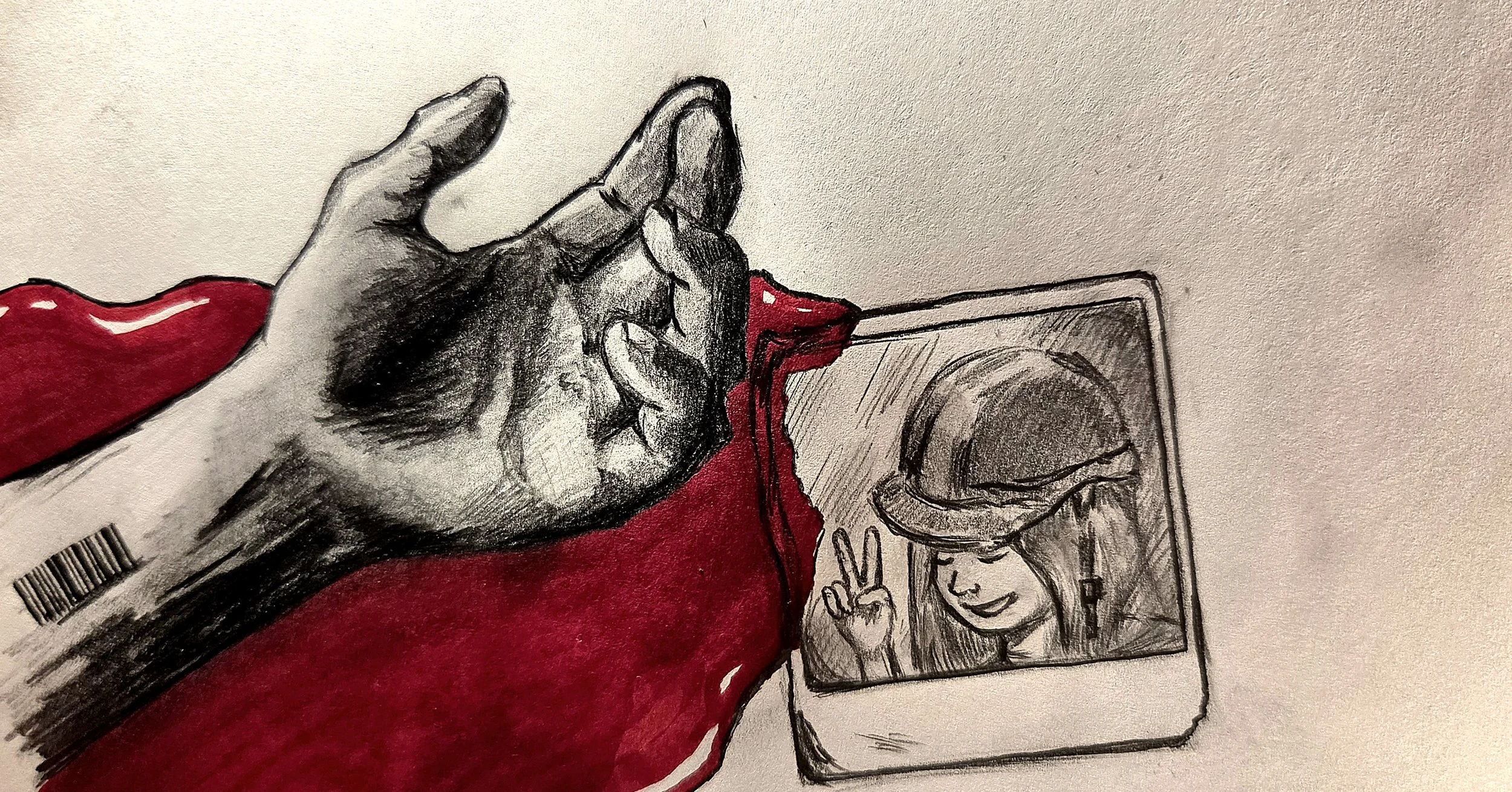
He thumbed the photo folded neatly in the pocket of his wallet. It was the only one he had left. When the fires had blazed through the city, and the mob had shown up at his door, he’d lit a match and joined them. That was the thing about machinery. One command, and the lot would follow.
He’d dragged the boxes of photos and journals and tapes of a life that was no longer his down from the attic and watched it all burn. Bright and powerful in its erasure.
Memory was a fearful thing. It infected the heart with rot. It rooted within a society and whispered desolation. He had lived long enough to know that for a certainty. And so he, alongside the others, had purged himself of memory and the misery that came with it.
Except this.
This one photograph he couldn’t bear to part with. His 3-year-old daughter, standing knee high in his work boots, his hard hat askew atop her head.
It was her smile that hurt most of all.
She’d been six when that strange sickness had swept through the city, when it had seeped into her lungs and sapped all her strength. They piled her little body into a truck with a dozen others and took her away. Buried, burned, or abandoned, he never knew. But she was gone, somewhere he could never be with her.
Memory was a ruthless thing. It festered and enraged and filled the soul with longing, the grief of it capable of stealing his breath away, of leaving him gasping for air and clutching his chest in agony.
It was proof, too. Proof of joy and hope and the existence of good in all the places it was absent now.
Selah wanted to believe what he was about to do was in service of that goodness. But in truth, it was selfishness that drove him. It was regret. It was the relentless plague of memory.
Cadmus stepped up behind him, a pipe held fast in his hand. “Cameras are off,” he said. “Don’t know for how long.”

Poem by Tara Campbell
The Evergreen Echo
Selah shuffled toward the exit, mud turning beneath his boots, and pulled the Vyzia card from behind the photo. A small, plastic thing to which his whole life was now beholden. He’d fallen into their trap, lashed and chained by treatment cost after treatment cost.
Hope was a painful thing, infinite and blinding.
He should have known they were never going to save her.
Wind rattled wires and cloth tarps, and the machinery whirred on as he crossed the worksite and entered the paystation line. Dark clouds cast looming shadows, and a misting rain sprayed Selah’s eyes. He squinted against it, raised his palm to shield his face and watched the first group slip into position.
Orders had been relayed silently, systematically—scrawled on the backs of the dissolving papers, whispered beneath the tearing of drills, and passed through rhythms and signs. He’d chosen the men carefully, entrusting only those who had nothing left to lose.
Selah stepped up to the paystation and rolled up his sleeve, exposing the inked barcode they’d needled into his skin. He held his forearm beneath the scanner and handed the Vyzia soldier his card.
“Selah McCoy,” said the electric-toned machine. “Wages earned: twenty credits.”
The soldier inserted his card into the machine and pressed his badge against the sensor to confirm the transaction. As he did so, a large shadow passed behind him, and Cadmus’ pipe swung violently down upon his head. With a crack of bone, the soldier folded, gun clattering to the ground. Selah scooped up the weapon, and Cadmus plucked the badge from the fallen soldier’s vest.
He eyed the men in line with a measuring stare and held his finger to his lips. Silence stretched for a fraughtful moment, then the first man nodded and held his arm beneath the scanner. Cadmus threw the badge to the man and took the gun from Selah.
Beast-like, pack-like, Cadmus, Selah, and two other men joined those waiting in the ramparts. Selah clapped three times, the sound of it echoing through the metal tunnels. And then boots were thumping against the stairs, his own within the mix, and Selah’s heart was racing. They burst through the door, and the first bullet erupted, discharged from Cadmus’ gun.
A soldier fell, and guns sprayed. Selah darted forward amidst the hailfire and got his hands on the disarmed weapon, but he hadn’t the strength to pick it up. Pain seared through his body, sudden and horrific. His legs buckled, and his shirt was heavy and wet. He coughed out blood and pressed his hand into the wounds as though to stop their bleeding. He could feel his life faltering, could feel it pouring out of him from too many holes.
“I’m sorry,” he muttered, both to his friends and the people still waiting in the concrete tomb beneath the streets. “I’m sorry,” he wept, to the little girl who had stooped to pick up his hard hat.
Memory was a fleeting thing. The little girl just smiled. That painful, grief-rending smile.
The Divided Line is an original serial.